Use of Big Data Analytics in Healthcare Research by Rajiv Raman
Explore how big data analytics revolutionizes healthcare research, enhancing patient outcomes and driving medical advancements through innovative data-driven approaches.
Digital Health and AI in Healthcare at IIITD by Tavpritesh Sethi
Explore AI's transformative impact on healthcare, from predictive analytics to personalized medicine, and learn how digital technologies are revolutionizing patient care and health outcomes.
Ethical and Equitable Data Sharing - Navigating the Benefits and Challenges
Explore ethical data sharing in healthcare, balancing benefits and challenges. Learn strategies for equitable access, privacy protection, and responsible use of health data for research and innovation.
Ownership and Governance of Health Data Genomics by Anurag Agrawal
Explore ethical considerations and governance frameworks for health data and genomics, focusing on ownership, privacy, and responsible use in research and healthcare settings.
Garbh-Ini Project - Machine Learning for Maternal and Child Health
Explore machine learning applications in healthcare through the Garbh-Ini Project, focusing on predicting outcomes, analyzing medical data, and bridging the gap between computational modeling and clinical practice.
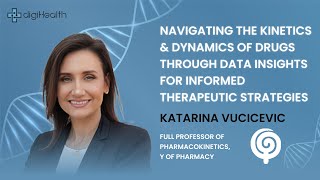
Data-Driven Insights for Drug Kinetics and Dynamics in Therapeutic Strategies
Explore how data-driven approaches and advanced statistical methods optimize drug behavior analysis and therapeutic strategies for personalized healthcare outcomes and improved treatment effectiveness.
Training Deep Learning Computer Vision Models in Pytorch Part II by Pranay Goel
Learn advanced techniques for training deep learning computer vision models using PyTorch, including optimization strategies and model architectures for improved performance and accuracy.
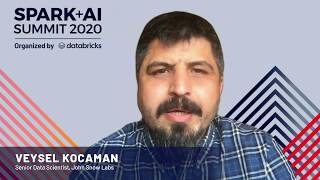
Apache Spark NLP for Healthcare - Building Real-World AI Systems
Explore real-world healthcare AI systems using NLP, covering patient risk prediction, diagnosis automation, and revenue optimization. Learn key considerations for building domain-specific models and scalable ML pipelines.
ML and Health Care - An Obgyn Perspective by Uma Ram
Explore machine learning applications in obstetrics and gynecology from an expert's perspective, focusing on potential benefits and challenges in women's healthcare.
How to Train Your DragoNN - A Primer on Deep Learning for Regulatory Genomics by Anshul Kundaje
Explore deep learning applications in regulatory genomics, focusing on techniques to analyze and interpret genomic data for understanding gene regulation and disease mechanisms.
A Cost-Effective Alternative for Treating Staphylococcal Bloodstream Infections
Comparing nafcillin and cefazolin for MSSA bacteremia treatment: A cost-effective alternative with similar clinical outcomes, benefiting patients and hospitals.
Psychiatric Phenotyping from EHR - Yes, We Can!
Discover how to leverage Electronic Health Records (EHR) for psychiatric phenotyping, exploring innovative computational methods and applications in mental health research.
Information Retrieval in the Era of Large Language Models
Explore how large language models are transforming information retrieval systems, with focus on event detection, clinical data extraction, and social media analysis for epidemic prediction.
Leveraging Machine Learning and Clinico-Genomic Data for Cancer Care and Drug Discovery
Discover how machine learning and genomic data from 500,000 cancer cases drive innovations in cancer treatment and pharmaceutical development through advanced computational approaches.
AI and Pervasive Sensing in ICU Patient Monitoring - The Future of Critical Care
Discover how AI and pervasive sensing technologies transform ICU patient monitoring, offering real-time assessment and automated data collection to revolutionize critical care delivery and improve patient outcomes.

Can AI be trusted to slash research timelines? | Max Topaz | TEDxNightingale College
True medical breakthroughs can take an average of 17 years, which can be dramatically reduced to seconds with AI, but it still needs to be watched carefully. With the proper safeguards like AI transparency, independent testing and verification systems, AI can be a valuable hack to make rapid advance

How Biased Data Shapes Healthcare AI | Tomisin Adebari | TEDxMorgan State University
Artificial intelligence is transforming healthcare, but what happens when the data behind these systems carries the same biases found in society? In this compelling talk, Tomisin Adebari explores how biased data can shape the decisions made by healthcare artificial intelligence systems. While AI ha