
Harnessing Social Capital to Enhance Collective Welfare
Explore how social networks and inequality impact collective welfare. Experts discuss the origins of social disparities and potential strategies to improve individual and societal well-being through data-driven insights.
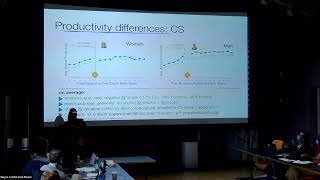
The Unequal Impact of Parenthood in Academia
Explore the disparate effects of parenthood on academic careers, examining gender inequalities and potential solutions for a more inclusive academic environment.

Quantifying Failure - Understanding Patterns and Predictors of Setbacks
Explore the science of failure and its quantification with Dashun Wang. Gain insights into measuring, understanding, and leveraging setbacks for future success in various fields.

Problems with Comparing Groups Using Instruments Designed for Only One
Explore challenges in cross-cultural comparisons using single-group instruments. Gain insights into methodological issues in anthropology and social sciences research.
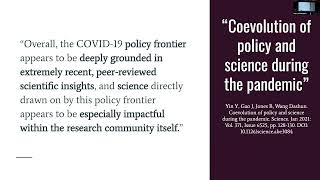
The Underappreciated Value of an Absence of Reliable Evidence
Explore the significance of lacking reliable evidence in research and decision-making, challenging assumptions and enhancing critical thinking in scientific inquiry.
Animal Dominance Hierarchies - From Pecking Orders to Human Society
Explore a century of research on dominance hierarchies in animals and humans, examining their impact on social structures, behavior, and evolution across species.
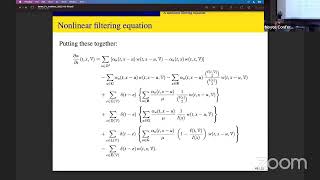
Phylodynamics and Markov Genealogy Processes
Explore phylodynamics and Markov genealogy processes to infer disease transmission from genomic data. Learn about a unified approach using exact likelihood expressions and dynamic genealogy evolution.
On the Shape of Epidemics
Explore the patterns and dynamics of epidemic spread, examining factors that influence their shape and progression through populations.
Thoughts on Rational Inference - Is Information Theoretic Inference Rational?
Exploring rational inference approaches for incomplete information in complex sciences. Discusses defining and implementing rational methods, handling misspecifications, and addressing model uncertainty and robustness.
Complexity, Privacy, and the Pandemic - Biological Mechanisms for Data Protection
Explore biological mechanisms inspiring computer algorithms to address privacy concerns during pandemics, focusing on "negative selection" for balancing data collection and privacy protection.
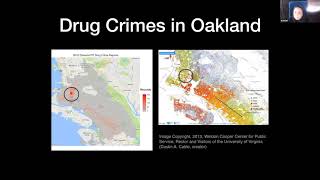
Fairness, Accountability, and Transparency in Predictive Models for Criminal Justice
Explore fairness, accountability, and transparency in predictive modeling for criminal justice, with examples highlighting their importance in real-world applications.

Statistical Workflow and the Fractal Nature of Scientific Revolutions
Explore AI's role in statistical workflow, focusing on model building, checking, and revision. Discover how automated inference and best practices can enhance quantitative data analysis across various fields.

Data Art and the Future of Science Communication
Explore data art's role in science communication with Kirell Benzi. Learn how visual representation enhances understanding, bridges disciplines, and shapes the future of scientific dissemination.
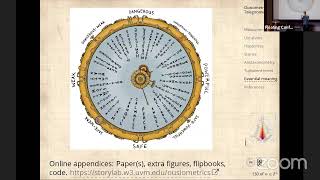
Ousiometrics and Telegnomics - Measuring Essential Meaning and Remote Knowledge
Explore the study of essential meaning and remotely sensed knowledge through innovative frameworks, examining language patterns, storytelling, and temporal dynamics in various contexts.
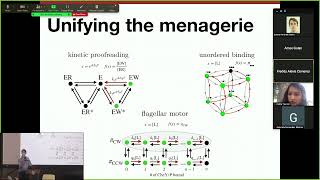
The Laws of Sensitivity for Small Nonequilibrium Systems
Explore laws constraining sensitivity in small, nonequilibrium systems. Uncover mechanisms behind biochemical switches, sensors, and molecular discrimination, with implications for gene regulation models.
Science in the Time of COVID - Lessons from the Pandemic
Insights from network epidemiologists on COVID-19's impact on scientific research, institutional interactions, and societal norms. Explores surprises, lasting effects, and future implications of the pandemic.
Text-Based Timeline Analysis and New Instruments for the Science of Stories
Exploring Twitter data as a telescope for observing collective human thought, revealing insights into sentiment, narrative power, and social dynamics through innovative text analysis techniques.
Political Polling and Polarization: Understanding Decision-Making and Identity Formation
Explore political polarization, decision-making, and identity formation through behavioral models and public polls. Gain insights into social cognition and the complexities of the US political landscape.
Calling Bullshit: The Art of Skepticism in a Data-Driven World
Learn to navigate the tidal wave of misinformation in our data-driven world. Discover techniques for skepticism, identifying fake news, and understanding the role of networks in spreading disinformation.
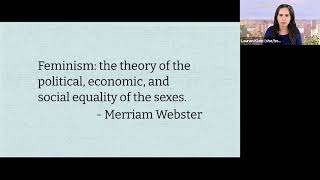
What Is Feminist Data Science? - Incorporating Feminist Thinking into Data-Driven Research
Explore feminist data science principles and their application in humanities research, including case studies on women's invisible labor, Black activism, and innovative data visualization techniques.
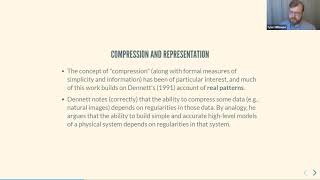
Patterns and Parsimony - High-Level Representations in Scientific Modeling
Explore the role of compression in developing effective high-level representations for scientific modeling, and discover why good representations require more than simplicity alone.