The Turing Lectures - Can We Trust AI?
Explore AI biases, their impact on fairness, and efforts to address these issues. Gain insights into critical evaluation of AI technologies and the importance of rigorous testing and corporate accountability.

Mainstreaming and Modelling
Explore gender considerations in water resource modeling, addressing gaps in implementing Dublin principles and SDGs for inclusive and sustainable water management practices.
Who Counts? Sex and Gender Configurations of "Persons Capable of Pregnancy"
Explore sex and gender configurations in data, focusing on the concept of "persons capable of pregnancy" and its implications for counting and categorization in research and policy.

Evelynn Hammonds - The Physician's Negro - IPAM at UCLA
Explore historical intersections of race, gender, and medicine in this thought-provoking talk on "The Physician's Negro" by Harvard scholar Evelynn Hammonds at UCLA's IPAM workshop.
Fairness in Machine Learning - From Theory to Practice
Explore fairness in machine learning, addressing bias, measurement metrics, and regulatory considerations to ensure ethical and just AI implementation.
Responsible AI in Banking
Explore ethical AI implementation in banking, covering bias mitigation, explainability, and continuous evaluation for responsible machine learning practices.

Avoid the Top 5 Web Data Pitfalls When Developing AI Models
Explore strategies to overcome common challenges in AI model development, including data bias, insufficient variety, overfitting, poor quality, and data drift. Learn to create more robust and effective AI models.
Hands on Data and Algorithmic Bias in Recommender Systems
Explore data and algorithmic bias in recommender systems through real-world examples, practical use cases, and mitigation techniques. Gain hands-on experience with Jupyter notebooks using data from actual platforms.

A World Transformed By AI
Experts explore AI's transformative potential across economies, societies, and human lives, discussing opportunities, risks, and ethical considerations in this rapidly evolving field.
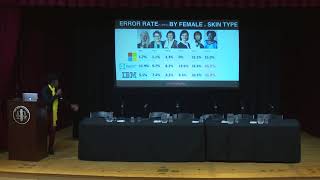
Gender Shades - Intersectional Accuracy Disparities in Commercial Gender Classification
Explore intersectional accuracy disparities in commercial gender classification systems, examining biases and implications for AI fairness and ethics in facial recognition technology.

Despicable Machines - How Computers Can Be Assholes
Explore the ethical implications of machine learning, examining bias in algorithms and its real-world consequences. Learn about cutting-edge research on counteracting bias and consider unanswered questions in AI morality.
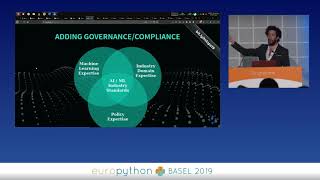
The State of Machine Learning Operations in 2019
Overview of key challenges and trends in machine learning productization, covering reproducibility, explainability, and orchestration. Includes insights on open-source tools and frameworks for tackling these issues in ML operations.
Building and Deploying Fair and Unbiased ML Systems - An Art, Not Science
Explore effective practices for developing and deploying ethical, fair, and unbiased machine learning models in production, addressing challenges of data bias and model complexity.
Artificial Intelligence? - More Like Artificial Stupidity!
Explores AI limitations, failures, and biases in machine learning, highlighting discrimination issues and discussing ways to improve AI systems for more ethical and accurate outcomes.

Ethical and Secure AI Vulnerability Disclosure - Challenges and Best Practices
Explore the complexities of AI vulnerability disclosure, focusing on ethical challenges, bias management, and security implications while examining real-world cases and solutions for responsible reporting.
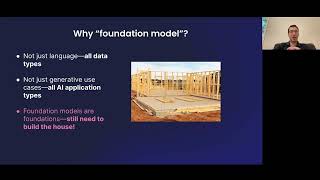
Data-Centric Development is Key to Production-Level AI
Explore data-centric AI development approaches for adapting foundation models to complex use cases, focusing on techniques for pre-training, instruction-tuning, and task-specific fine-tuning.

Why AI Needs a “Nutrition Label” | Kasia Chmielinski | TED
Kasia Chmielinski uses a sandwich metaphor to explain AI systems and advocates for "nutrition labels" on AI to ensure fairer, more transparent algorithms. She discusses how data reform can improve AI development and accountability.

Can AI be trusted to slash research timelines? | Max Topaz | TEDxNightingale College
True medical breakthroughs can take an average of 17 years, which can be dramatically reduced to seconds with AI, but it still needs to be watched carefully. With the proper safeguards like AI transparency, independent testing and verification systems, AI can be a valuable hack to make rapid advance

How Biased Data Shapes Healthcare AI | Tomisin Adebari | TEDxMorgan State University
Artificial intelligence is transforming healthcare, but what happens when the data behind these systems carries the same biases found in society? In this compelling talk, Tomisin Adebari explores how biased data can shape the decisions made by healthcare artificial intelligence systems. While AI ha

Tres estrategias para enfrentar los sesgos de la IA | Victoria Maya | TEDxMorelia
No dejes que el pasado defina tu futuro. Cuando el futuro se escribe con datos del pasado, ser una misma se convierte en un acto político. A través de ejemplos cotidianos, descubriremos cómo los modelos de inteligencia artificial reflejan las reglas ocultas de la sociedad y qué acciones simples pode

The most dangerous lie AI keeps repeating | Karen Colbert | TEDxBellarmineU
This talk challenges the dominant narrative that artificial intelligence is neutral, objective, and inevitable. Drawing on lived experience in education, engineering, and data science, Karen Colbert reveals how AI systems often reproduce historical inequities because they are built on incomplete dat