
Dam Safety Modelling Using McBreach
Leverage Monte Carlo simulations in HEC-RAS for probabilistic dam breach analysis, enhancing risk management and decision-making in the face of aging infrastructure and climate uncertainties.
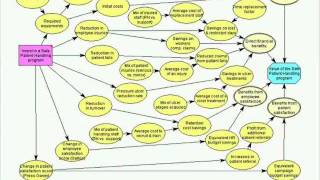
Taking Healthcare ERM to the Next Level - Strategic Decisions and Risk Management Program
Explore strategic healthcare risk management, integrating downside risk mitigation with value creation opportunities for organizational prosperity and improved patient outcomes.
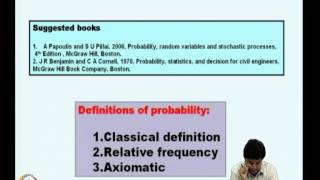
Stochastic Structural Dynamics
Comprehensive exploration of probability, random variables, processes, and vibrations in structural dynamics, covering theory and applications in earthquake engineering and system failure analysis.

Actuarial Statistics 1
Comprehensive coverage of actuarial statistics, including probability distributions, data analysis, and statistical concepts. Includes calculator tutorials and R programming for practical application in actuarial work.
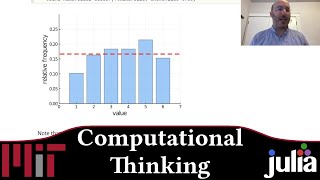
Probability via Computation - Week 4
Explore probability concepts through computational methods, covering random sampling, Monte Carlo simulations, Bernoulli trials, and the Central Limit Theorem with practical examples and visualizations.
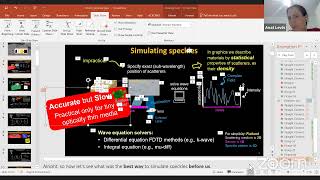
Coherent Scattering and Memory Effect in Imaging Through Scattering Layers
Explore coherent scattering, memory effect, and Monte Carlo simulations in imaging through scattering media with Prof. Anat Levin's insightful presentation on advanced signal processing techniques.
FAIR STRIDE - Building Business Relevant AppSec Threat Models
Integrating FAIR and STRIDE methodologies to create business-relevant application security threat models, translating technical risks into financial impacts for strategic decision-making.
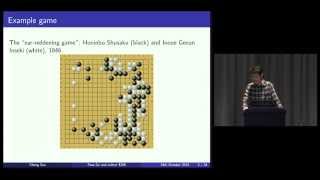
How Slot Machines Are Advancing the State of the Art in Computer Go AI
Explore Monte Carlo Tree Search in computer Go AI, covering its advantages, UCB1 strategy, and recent refinements like AMAF/RAVE, with insights into ongoing research topics.

Surface Critical Dynamics and Casimir Forces in a Binary Fluid by Sutapa Roy
Explore critical dynamics and Casimir forces in binary fluids through molecular dynamics simulations, focusing on surface properties, scaling behavior, and correlation functions in confined fluid systems.

Teaching and Learning with the MIT Atomic Scale Modeling Toolkit - Classical and Quantum Atomic Modeling
Explore classical and quantum atomic modeling using MIT's toolkit. Perform molecular dynamics, Monte Carlo simulations, and quantum chemistry computations. Learn practical applications for various physics and chemistry courses.

From Resummation to Parton Showers - Lecture 1
Explore resummation techniques and their connection to parton showers in particle physics, focusing on theoretical foundations and practical applications.

Collider Physics - Lecture 4
Explore advanced concepts in collider physics, focusing on particle interactions and experimental techniques in high-energy physics research.
Modelling of Soft-Particle Production from PP to AA Collisions in QCD Event Generators
Explore advanced QCD event generator techniques for modeling soft-particle production across collision types, from proton-proton to heavy-ion interactions.
Modelling of Soft-Particle Production from PP to AA Collisions in QCD Event Generators
Explore soft-particle production modeling in QCD event generators, from proton-proton to heavy-ion collisions, enhancing understanding of particle physics simulations.
Modelling of Soft-Particle Production from PP to AA Collisions in QCD Event Generators - Part II
Explore advanced QCD event generator techniques for modeling soft-particle production across collision types, from proton-proton to heavy-ion interactions.
Modelling of Soft-Particle Production from PP to AA Collisions in QCD Event Generators - Part I
Explore advanced QCD event generators for modeling soft-particle production across collision types, from proton-proton to heavy-ion interactions.

Power Corrections for High Accuracy Event Generators
Explore power corrections in high-accuracy event generators, enhancing precision in particle physics simulations and improving theoretical predictions for experimental results.
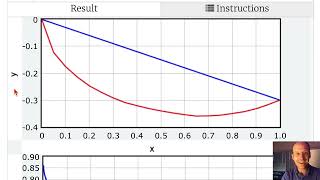
Solving the Brachistochrone Problem with Random Numbers
Discover the fastest path for a frictionless bead using random numbers to solve the Brachistochrone problem in physics.
LLM-augmented Autonomous Agents - Achieving Goals with One Prompt Without LangChain
Discover how to orchestrate multiple AI agents using advanced prompt engineering, enabling complex task resolution through collaborative interactions and digital twin simulations - no LangChain required.
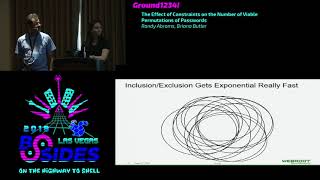
The Effect of Constraints on the Number of Viable Permutations of Passwords
Explore the impact of password constraints on permutations and security through Monte Carlo simulations, analyzing character sets, length, and user behavior.
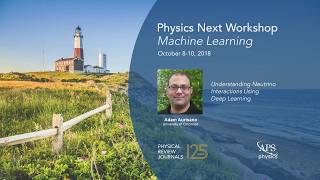
Understanding Neutrino Interactions Using Deep Learning
Explore deep learning applications in neutrino physics, from classifying interactions to analyzing events, with insights on future developments in particle detection.