Project Planning & Control
Learn effective project management techniques, from scheduling and resource allocation to time-cost trade-offs and monitoring, with practical examples and industry insights.
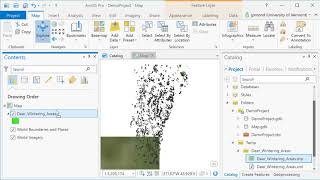
ArcGIS Pro
ArcGIS Pro is desktop GIS software developed by Esri, which replaces their ArcMap software generation. Learn the basics of using ArcGIS such a spatial joins, selections of attributes and layers, raster processing and topograpic analysis in this tutorial…

Ausführliches Wireshark Tutorial
Umfassende Einführung in Wireshark: Netzwerkanalyse, Protokolluntersuchung und praktische Anwendungen wie Telnet- und TFTP-Überwachung in sechs aufeinander aufbauenden Teilen.
Wireshark Training
Learn to capture, analyze, and troubleshoot network traffic using Wireshark. Master packet capture, audio issues diagnosis, and codec conversion techniques for effective network analysis.
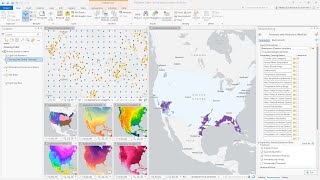
ArcGIS Pro
ArcGIS Pro is Esri’s powerful, single desktop GIS application. Technologically ahead of everything else on the market, ArcGIS Pro supports data visualization, advanced analysis and authoritative data maintenance in both 2D and 3D.
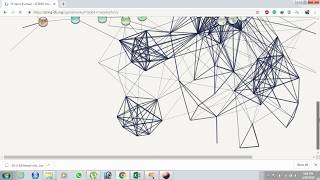
Cytoscape
Explore protein-protein interactions using String and Cytoscape, create high-quality network figures, and identify nodes and edges in cluster finder for bioinformatics research.

Machine Learning with Graphs - Fall 2019
Comprehensive exploration of machine learning with graphs, covering network properties, community structures, graph neural networks, and their applications in various domains.

MIT Computational Biology - Genomes, Networks, Evolution, Health - Fall 2018
Comprehensive exploration of computational biology, covering genomics, networks, evolution, and health applications through advanced algorithms, data analysis, and cutting-edge research topics.

Networks, Signals and Systems
Comprehensive exploration of network theory, signals, and systems, covering elements, parameters, transforms, frequency response, synthesis, graph theory, impedance, filters, and Fourier series.

Maria del-Rio Chanona on Modeling Labor Markets & Tech Unemployment
Exploring labor market dynamics and technological unemployment through network analysis and agent-based modeling. Insights on job security, skill transferability, and adapting to automation in the evolving workforce.
Jennifer Dunne on Reconstructing Ancient Food Webs
Exploring ancient food webs to uncover ecological patterns, extinction dynamics, and sustainability insights. Reconstructed trophic networks reveal hidden order conserved for half a billion years, offering new perspectives on ecosystem structure and evol…
Patterns and Surprises in Rich but Noisy Network Data
Explore patterns in noisy network data, focusing on social and biological examples. Learn techniques for estimating network structure and uncovering insights about underlying systems from error patterns.
Social Networks, Protest, and Repression
Explores the relationship between social network structures and protest dynamics, revealing nonlinear patterns in mobilization and offering insights into state repression strategies.
Penny Pexman - Multimodal Grounding for Concrete and Abstract Concepts
Explore multimodal grounding for concrete and abstract concepts with Professor Penny Pexman, examining lexical-semantic processing, sensorimotor experience, and dimensions of meaning in language comprehension.
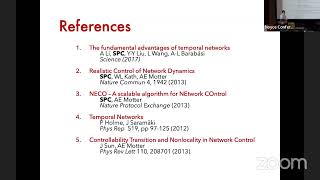
The Power of Temporal Networks
Explore how time-varying networks offer advantages in controllability, cooperation, and synchronization, challenging traditional views on network analysis and dynamics.
Complex Systems and the Brain: From Networks to Dynamics and Function
Explore complex systems in neuroscience, from network analysis to brain dynamics. Learn about connectomics, brain mapping techniques, and models of functional connectivity across various species.
Physics-Inspired Algorithms and Phase Transitions in Community Detection - 2014 Symposium
Explore physics-inspired algorithms for community detection, including phase transitions, statistical inference, and belief propagation. Learn about innovative approaches to clustering and network analysis.
Tracking and Curbing the Next Pandemic - Future Directions in Infectious Disease Research
Explore modern plagues, interdisciplinary efforts, and innovative methods for predicting and curbing pandemics through network analysis, animal studies, and advanced computational techniques.
The Connected World - Networks and Their Properties
Explore the hidden world of networks, from social connections to cellular metabolism, and discover how scientists study these complex systems to unravel their mysteries.

On Composition and Complexity
Explore the intricate relationship between composition and complexity, delving into how elements combine to create emergent properties and complex systems across various disciplines.

Emergence, Self-Organization, and Complexity
Explore the interconnected concepts of emergence, self-organization, and complexity with Carlos Gershenson, gaining insights into how these phenomena shape our world and understanding of systems.