
Learn About the Moon
Explore lunar astronomy, eclipses, Apollo 11, and moon phases in this engaging series for young space enthusiasts.

Solar System Tour
Embark on a captivating journey through our solar system, exploring planets, moons, and dwarf planets. Ideal for young astronomers eager to discover the wonders of space.
Astronomy
Explore celestial bodies, Mars, and Kepler's Laws in this comprehensive journey through our Universe, covering neutron stars, black holes, and astronomical measurements.
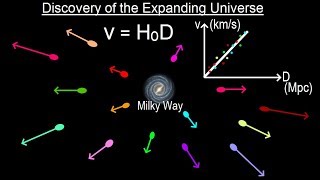
Astronomy - Hubble Law
Explore the Hubble Law, expanding universe, and age estimation. Delve into key astronomical concepts, measurement techniques, and historical developments in our understanding of cosmic expansion.
Astronomy - The Big Bang
Explore the universe's origins, from the Big Bang to galaxy formation, covering key concepts like cosmic background radiation, inflation, and nucleosynthesis in this comprehensive astronomy series.
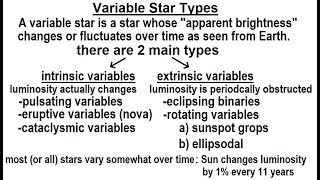
Astronomy - Variable Stars
Explore variable stars, their types, and importance in astronomy. Learn about Cepheid variables, magnitude concepts, and methods for calculating stellar distances.
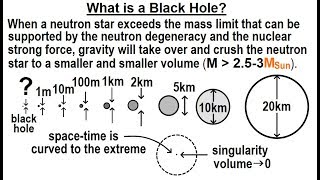
Astronomy - Black Holes
Explore the mysteries of black holes, from their basic properties to supermassive ones in galaxies. Learn about event horizons, photon spheres, and how we detect these cosmic enigmas.
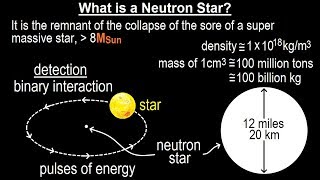
Astronomy - Neutron Stars & Pulsars
Explore neutron stars and pulsars, covering their formation, structure, properties, and behavior. Learn about key concepts like neutron degeneracy, quark pressure, and synchrotron radiation in pulsars.
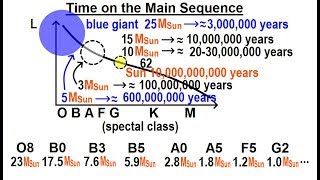
Life & Death of a High Mass Star
Explore the lifecycle of massive stars, from their main sequence to supernova explosions. Learn about red giants, iron cores, and the final moments of high-mass stellar evolution.
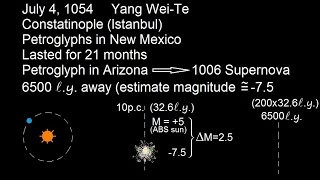
Astronomy - Supernova: The Death of Stars
Explore the fascinating world of supernovas, from historical observations to types and mechanisms. Learn about white dwarfs, electron degeneracy, and how supernovas help measure cosmic distances.
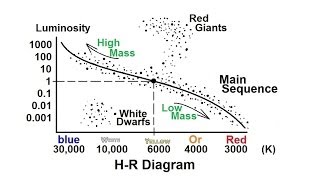
Astronomy - Life and Death of a Low Mass Star
Explore the complete life cycle of low-mass stars, from gravitational collapse to white dwarfs, through detailed stages and astronomical concepts like the H-R diagram and Hayashi track.
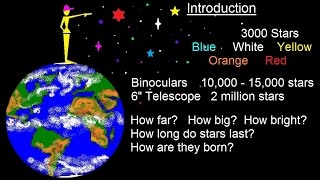
Astronomy - Stars and the H-R Diagram
Comprehensive exploration of stellar properties, classification, and measurement techniques, covering magnitude, luminosity, temperature, and mass-luminosity relationships in astronomy.
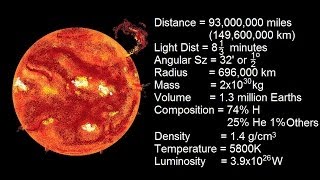
Astronomy - The Sun
Comprehensive exploration of the Sun's structure, processes, and phenomena, from its core to its atmosphere, including fusion, sunspots, and solar wind.
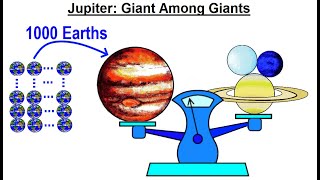
Astronomy - Jupiter
Comprehensive exploration of Jupiter's characteristics, including composition, atmosphere, interior structure, magnetic field, rings, and moons, with detailed explanations of its unique features.
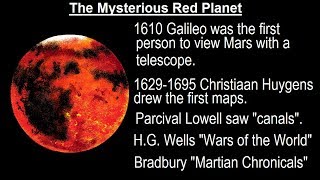
Astronomy - Mars
Explore Mars' mysteries, from its wet history to modern missions. Learn about surface features, atmosphere, moons, and the search for life on the Red Planet.
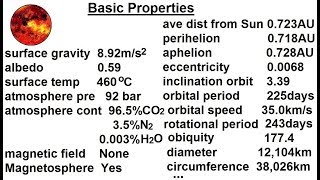
Astronomy - Venus
Comprehensive exploration of Venus, covering its properties, geography, atmosphere, and exploration history. Includes detailed calculations and explanations of planetary phenomena.
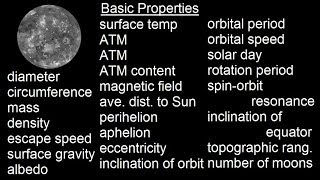
Astronomy - Mercury
Comprehensive exploration of Mercury's properties, orbit, geology, atmosphere, and space missions, including detailed analysis of Mariner 10 and MESSENGER missions and their discoveries.
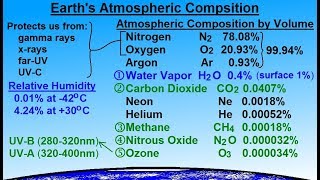
Astronomy - Earth's Atmosphere
Comprehensive exploration of Earth's atmosphere, covering composition, temperature, greenhouse effect, energy balance, and climate change implications. Includes detailed analysis of atmospheric gases and their interactions.
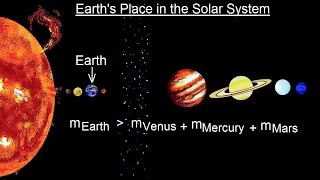
Astronomy - Earth as a Planet
Explore Earth's unique features, interior structure, plate tectonics, atmosphere, and place in the solar system through comprehensive lectures on planetary science and geology.
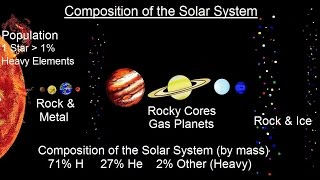
Astronomy - Origin of the Solar System
Explore the formation and evolution of our solar system, from its composition and age to planetary development and detection methods for exoplanets.
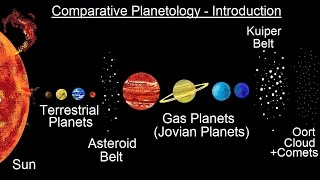
Astronomy - The Solar System - Comparative Planetology
Comprehensive exploration of solar system planets, comparing their physical properties, orbits, atmospheres, and compositions. Includes discussions on moons, asteroids, comets, and water distribution.