
Is SpaceX's Raptor Engine the King of Rocket Engines?
Comprehensive analysis of SpaceX's Raptor engine, comparing it to other rocket engines and exploring its unique methane fuel and full flow staged combustion cycle technology.

How SpaceX and Boeing Will Get Astronauts to the ISS
Detailed comparison of SpaceX's Crew Dragon and Boeing's Starliner spacecraft, exploring their designs, capabilities, and roles in transporting astronauts to the International Space Station.
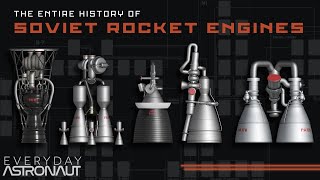
The Entire Soviet Rocket Engine Family Tree
Comprehensive exploration of Soviet rocket engine development, tracing their evolution, technological advancements, and impact on space exploration. Includes fascinating stories and lesser-known facts about these pioneering propulsion systems.

Blue Origin vs Virgin Galactic - How Do They Compare?
Comprehensive comparison of Blue Origin and Virgin Galactic's suborbital spaceflight systems, exploring their technologies, experiences, and unique features for commercial space tourism.

Complete Guide to Starship - Falcon 9 vs Starship: What's New? What's Different?
Comprehensive comparison of SpaceX's Starship and Falcon 9, exploring new technologies, materials, and design innovations for interplanetary travel. Detailed analysis of engines, reusability, and ambitious goals.
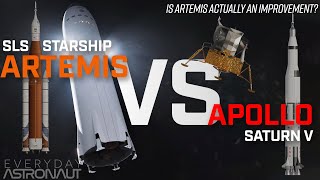
Can Starship Help Make the Artemis Program Better Than Apollo?
Comprehensive comparison of NASA's Artemis and Apollo programs, analyzing hardware, missions, safety, costs, and sustainability. Explores potential improvements and challenges in returning humans to the moon.
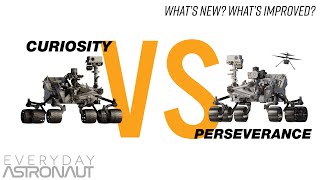
NASA's Perseverance Mars Rover vs Curiosity - What's New? What's Improved?
Detailed comparison of NASA's Perseverance and Curiosity Mars rovers, exploring their designs, instruments, and missions. Includes launch, transit, and landing information for Perseverance.
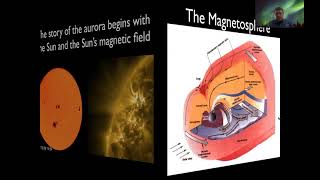
Auroral Currents
Explore the science behind auroral currents, from solar magnetic fields to Earth's magnetosphere, and their impact on navigation and technology. Gain insights from historical discoveries to modern space missions.
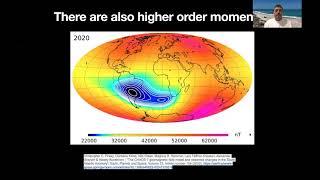
Planetary Magnetism Science
Explore planetary magnetism, dipole fields, Earth's magnetic structure, and other planets' magnetic properties in this concise lecture by Dr. Ramón López.
Gravity Simulator - Double-Planet System - Episode 3
Explore double-planet and trinary star systems using a gravity simulator. Learn to code physics simulations and visualize complex celestial interactions in VPython.
Gravity Simulator: Binary Star System - Episode 2
Explore gravitational interactions in binary star systems using a simulator. Learn about energy calculations, angular momentum, and the fascinating patterns of orbital motion.
Gravity Simulator - Sun and Earth Orbital Motion - Episode 1
Explore gravitational motion simulation using VPython, focusing on Sun-Earth dynamics. Learn about Euler-Cromer method, indices tracking, and Earth's scale in space.
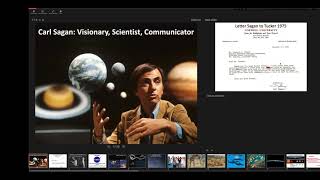
Carl Sagan Lecture Series - Introduction to Planetary and Earth Science
Explore planetary science through Carl Sagan's vision, covering NASA missions, Earth's atmosphere, climate change, and space exploration. Gain insights from a NASA scientist on Sagan's enduring influence.
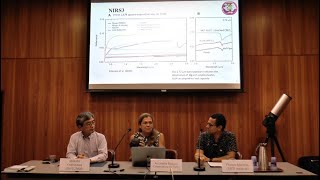
Mission Hayabusa2 and SETI Research - Press Conference Highlights
Explore Hayabusa2's impact experiment, Ryugu's surface variations, and Lucy mission's target occultation. Gain insights into asteroid exploration and SETI research from leading experts.
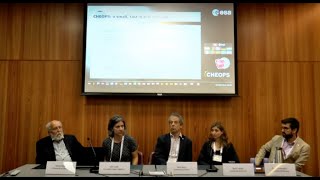
Cheops Mission Update - Exoplanets in Context
Explore the Cheops exoplanet mission's status, science goals, and context within space exploration through expert presentations and discussions on cutting-edge planetary research.
Volcanism on Mars - History, Features, and Significance
Explore Mars' volcanic history, from massive shield volcanoes to explosive eruptions, and their impact on the planet's surface. Gain insights into Martian geology and potential for past life.
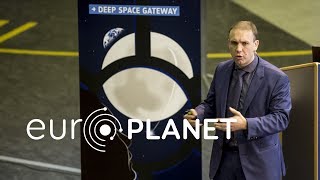
Back to the Moon: Scientific Themes and European Exploration Opportunities
Explore the new era of lunar exploration, scientific themes, and Europe's role in future missions. Insights on recent discoveries, upcoming projects, and the Moon's potential for human activities.
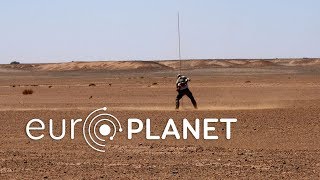
Chasing the Devil - What Dust Devils on Earth Tell Us About Mars
Explore dust devils on Earth and Mars, their formation, characteristics, and impact on planetary atmospheres. Learn about field research methods and equipment used in studying these phenomena.
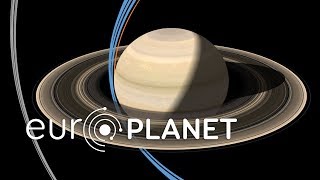
Exploration of Saturn's Icy Moons as Possible Habitats
Explore Saturn's icy moons as potential habitats and learn about European involvement in the Cassini mission, focusing on ocean worlds like Europa, Enceladus, and Titan.
Sounds of the Earth's Magnetosphere in Electroacoustic Music - Inspired by Cosmic Space
Explore the universe through sound, from Earth's magnetosphere to cosmic phenomena, in this captivating lecture blending astronomy and electroacoustic music.
Astrobiology - The Quest for Life in the Universe
Explore microbial life in extreme conditions and its implications for extraterrestrial life with expert Christine Moissl-Eichinger. Discover insights on bacterial resistance, probiotics, and planetary protection.