
Our Place in the Stars
Explore our cosmic origins, the search for extraterrestrial life, and humanity's role in space exploration with Dr. Amaya Moro-Martin in this thought-provoking astronomical journey.

Initial Exoplanet Discoveries from TESS
Explore NASA's TESS mission, its exoplanet discoveries, and how it compares to Kepler. Learn about the observatory's design and data availability through MAST at the Space Telescope Science Institute.

Black Holes and Other Dark Matters
Explore gravitational waves, black holes, and dark matter with Dr. Kamionkowski as he discusses LIGO's groundbreaking discovery and its implications for our understanding of the universe.

From Scientific Idea to Published Results - and Everything in Between!
Explore the journey from scientific idea to published results using the Hubble Space Telescope, including proposal processes, observations, data analysis, and unexpected discoveries.

Chasing Supernovae with Kepler
Explore how the Kepler spacecraft's precise measurements are used to hunt supernovae, offering insights into the early stages of stellar explosions and advancing our understanding of these cosmic events.

The Milky Way’s Bulge - From a Hypothesized Blob to a Remarkably Detailed Picture
Explore the Milky Way's central bulge, its star composition, and formation history. Gain insights into galactic evolution and the implications for planetary systems and life.

Star Formation in Orion
Explore star formation in Orion through observations from space telescopes, uncovering the birth of stars and enhancing our understanding of stellar origins and evolution.

Gravitational Wave Astronomy
Explore gravitational wave astronomy, its revolutionary impact on studying the universe, and groundbreaking discoveries about black holes and neutron stars with expert insights.

Mapping the United Federation of Planets: An Astronomer's Guide to the Galaxy
Explore the Milky Way's structure and Earth's position through astronomy and Star Trek references. Learn how scientists map our galaxy and compare it to fictional universes.

Webb in Three Acts - The Telescope, The Science, The Legacy
Explore the James Webb Space Telescope's groundbreaking capabilities in infrared astronomy, from observing distant galaxies to studying exoplanets, and its potential impact on our understanding of the universe.

Olbers' Paradox and Gravitational Light Deflection
Explore cosmic mysteries: Olbers' Paradox and gravitational light deflection. Uncover why the night sky is dark and how gravity bends starlight, offering insights into the universe's nature and structure.

Dangerous Worlds
Explore extreme exoplanets with astronomer Elizabeth Tasker, from scorching hot Jupiters to water worlds, and learn about the fascinating diversity of planets beyond our solar system.

Active Luminous Blue Variables in the Large Magellanic Cloud
Explore the enigmatic world of luminous blue variable stars, their unpredictable behavior, and their role in massive star evolution. Gain insights from long-term monitoring and recent discoveries in astrophysics.

How to Find an Inhabited Exoplanet
Explore the search for inhabited exoplanets, from detection methods to upcoming telescopes, and learn how astronomers seek chemical signs of life in distant worlds.

On the Trail of the Missing Galaxies - The Oldest Stars in the Neighborhood
Explore the mystery of missing galaxies and ultra-faint dwarf galaxies orbiting the Milky Way. Discover how reionization may explain the discrepancy between theoretical predictions and observations.

Dawn: A Journey to the Early Solar System
Explore the Dawn mission's journey to Vesta and Ceres, uncovering secrets of the early solar system through advanced spacecraft technology and scientific instruments.

Studying Virtual Universes with Supercomputer Simulations
Explore virtual universes through supercomputer simulations, uncovering galaxy evolution and predicting new astrophysics testable with advanced telescope technology.

Scale of the Solar System - Scale of the Universe - Cosmology & Astronomy
Explore the vast scale of our Solar System with Sal Khan, gaining perspective on Earth's place in the cosmos and the immense distances between celestial bodies.
Mechanics and the Solar System - Math History - NJ Wildberger
Explore the historical development of planetary motion theories, from Earth-centered models to Newton's laws, highlighting key figures and their contributions to our understanding of the solar system.
Distances to the Sun and Moon - Famous Math Problems
Explore ancient Greek methods for calculating celestial distances, from Thales to Aristarchus. Learn how early astronomers determined Earth's size and the distances to the sun and moon.
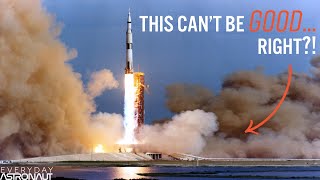
How Much Do Rockets Pollute? Are They Bad for Our Air?
Explore rocket emissions, their environmental impact, and comparisons with other pollution sources. Learn about unique aspects of rocket pollution and potential improvements in the space industry.