General Astronomy - Patterns in the Night Sky
Explore celestial patterns, constellations, and celestial sphere motions. Learn about angular sizes, distances, and the small angle formula in this astronomy lecture.
General Astronomy - Making Sense of the Universe
Explore elliptical orbits, Kepler's laws, and Newton's principles of motion in this comprehensive lecture on fundamental astronomical concepts and historical scientific breakthroughs.
General Astronomy - Lecture 3 - The Copernican Revolution
Explore the Copernican Revolution's impact on astronomy, challenging ancient beliefs and reshaping our understanding of the cosmos and Earth's place in it.

Why Did the Earth Totally Freeze for 100 Million Years? - The Snowball Earth Hypothesis
Explore the fascinating 100-million-year global freeze event, its causes, and Earth's eventual thaw. Uncover evidence, theories, and the profound impact on our planet's evolution and life.
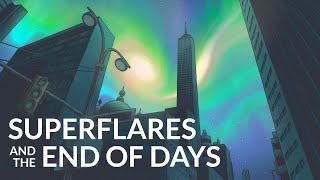
Earth's Magnetic Field: Origins, Function, and Future Challenges
Explore Earth's magnetic field: its origin, importance for life, and potential future weakening. Learn about solar flares, geomagnetic reversals, and their impacts on our planet and civilization.

What Would Earth Be Like Without Life?
Explore Earth's evolution without life, examining atmospheric composition, geological processes, and planetary dynamics in this thought-provoking scientific journey.

Where Did Earth's Water Come From? - Origins and Evolution of Earth's Hydrosphere
Explore the origins of Earth's water, from early solar system formation to comets and climate evolution, unraveling the mystery of our planet's most vital resource.

The Weird and Wonderful World of Sedimentology
Explore diverse sedimentary structures from ice to deserts, Earth's largest formations, and even exoplanets in this captivating journey through the fascinating field of sedimentology.
Earth Science - The Sun
Explore the Sun's structure, energy production, and phenomena like sunspots and solar flares in this comprehensive lecture on our nearest star.
Earth Science - The Jovian Planets and Small Solar System Bodies
Explore Jupiter, Saturn, Uranus, Neptune, and smaller celestial bodies in our solar system, including moons, asteroids, comets, and dwarf planets like Pluto.
Earth Science - The Terrestrial Planets
Explore the fascinating geology and unique characteristics of Mercury, Venus, Mars, and the Moon, including their surfaces, volcanic activity, and tectonic processes.
Earth Science - The Formation of the Solar System
Explore the origins of our cosmic neighborhood, from the solar nebula to planet formation and the heavy bombardment era.

Building New Worlds in Protoplanetary Disks
Explore planet formation in protoplanetary disks, examining theories and observations linking exoplanets to their natal environments. Dive into the mystery of how diverse worlds emerge from cosmic dust.

The Gaseous Universe
Explore the crucial role of gas in astrophysics, from planetary atmospheres to intergalactic space, and its impact on star formation and galactic evolution.

Terra Sapiens: The Human Chapter in the History of the Earth
Explore Earth's geological history and humanity's impact through the lens of planetary science. Gain insights into our current era and its implications for intelligent life and civilization's future.
Introductory Astronomy - Positions on the Celestial Sphere
Explore celestial sphere basics, horizon diagrams, and astronomical positioning concepts using simulations and NASA imagery for a comprehensive introduction to observational astronomy.
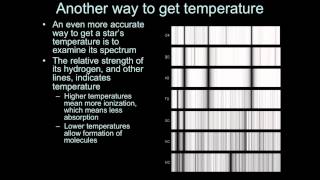
Introductory Astronomy - The H-R Diagram
Explore the Hertzsprung-Russell Diagram, a fundamental tool for analyzing stellar properties, and learn about spectral classes and white dwarfs in astronomy.
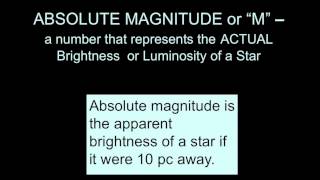
Introductory Astronomy - Magnitudes of Stars
Explore stellar brightness, comparing apparent and absolute magnitudes to understand the true luminosity of stars despite their varying distances from Earth.
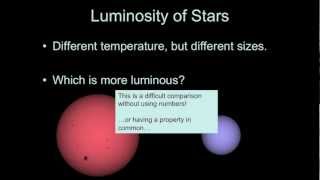
Introductory Astronomy - Luminosity, Temperature, and Surface Area
Explore the interplay of luminosity, temperature, and surface area in astronomy, understanding key concepts like the Stefan-Boltzmann Law and HR Diagram.
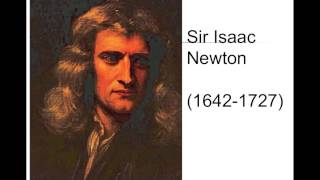
Introductory Astronomy - Newton's Laws of Motion I and II
Explore Newton's 1st and 2nd laws of motion, covering constant velocity, forces, and free-body diagrams. Gain foundational knowledge for understanding celestial mechanics in astronomy.

What Sparked the Big Bang?
Explore cosmic inflation and repulsive gravity as potential triggers for the Big Bang with Brian Greene. Delve into fields, energy sources, and mathematical predictions in this engaging discussion on the universe's origins.