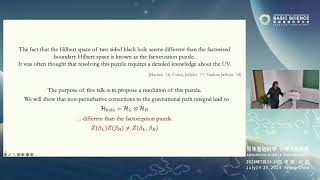
How the Hilbert Space of Two-Sided Black Holes Factorizes - ICBS 2024
Explore the factorisation puzzle in AdS/CFT, examining how spacetime wormholes contribute to Hilbert space factorisation in two-sided black holes and its implications for holography.
Quantum Spacetime in the Sky: From Horizon to Horizon
Explore quantum spacetime fluctuations in gravitational wave observatories, including Hawking emission, detector noise, and cosmic glitches near cosmological horizons.
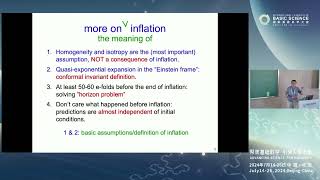
Inflation as a Tool to Explore the Physics of the Early Universe
Explore inflation's role in understanding the early Universe, including primordial black hole formation and its implications for cosmology.
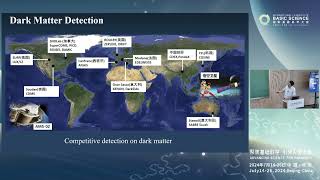
Comparative Lattice Analysis of SU(2) Dark Glueball
Explore SU(2) glueballs as dark matter using lattice simulations. Compare traditional and machine learning methods for mass calculation and scattering cross-section analysis.
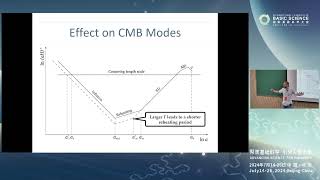
The Early Universe as a Probe of Fundamental Physics
Explore nonequilibrium quantum processes in the early universe and their implications for particle physics and cosmology, bridging fundamental physics with cosmic observations.
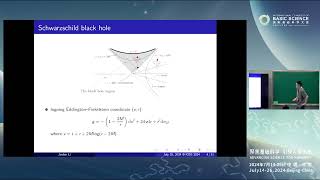
Construction of Collapsing Spacetimes in Vacuum - ICBS 2024
Explore the construction of collapsing spacetimes in vacuum, featuring black hole regions and Cauchy hypersurfaces, without symmetries.
Black Holes from Supercharge Cohomology
Explore supercharge cohomology in holographic CFTs, classifying into monotone and fortuitous types, and examine their connections to smooth geometries and black holes in N=4 super-Yang-Mills theory.
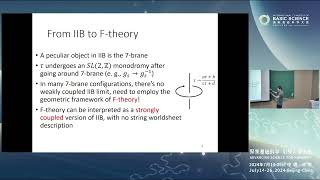
Updates on 4D F-Theory Landscape - ICBS2024
Explore recent developments in 4d F-theory geometric landscape, including massive spectrum and new base ensemble measures.
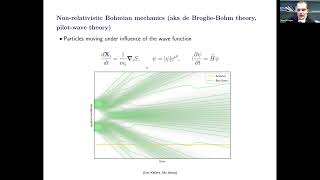
Cosmic Acceleration as a Quantum Effect in Bohmian Quantum Gravity
Explore Bohmian quantum gravity's impact on cosmic acceleration, examining modified Friedmann equations and wave functions that explain universal expansion without a cosmological constant.
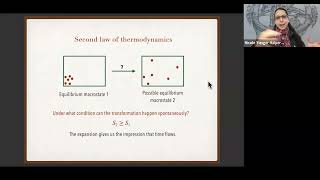
Updates to the Second Law from Quantum Thermodynamics
Explore quantum thermodynamics' impact on the second law of thermodynamics, examining its evolution and implications for small systems and quantum phenomena.
Newgrange and JWST: Humanity's Enduring Quest to Understand the Universe
Explore humanity's cosmic quest through Newgrange and JWST, bridging ancient and modern astronomy to unravel our place in the universe.
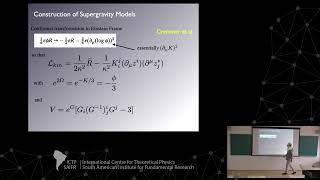
Reheating and Particle Production in No-Scale Supergravity and Starobinsky-like Models of Inflation
Explore inflationary models in no-scale supergravity, focusing on R+R^2 gravity and Starobinsky-like models. Examine reheating processes and gravitational matter production mechanisms.
Exploring the World of Cilium: A Hands-on Workshop on Cilium, Tetragon and eBPF
Dive into Cilium, Tetragon, and eBPF through hands-on labs. Master cloud-native networking, security, and observability using cutting-edge Linux kernel technology for microservices and Kubernetes environments.
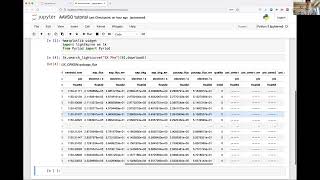
Python: Finding Frequency Solutions for Variable Star Light Curves
Learn to measure frequencies in variable star light curves using Python and Pyriod. Explore periodograms, significance testing, and iterative prewhitening for astronomical data analysis.
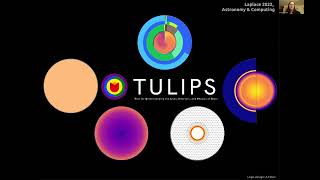
Visualizing MESA Models with TULIPS - How to Python
Learn to visualize MESA stellar evolution models using TULIPS Python package. Create plots and animations showing changes in stars over time. Enhance understanding of stellar structure and evolution.
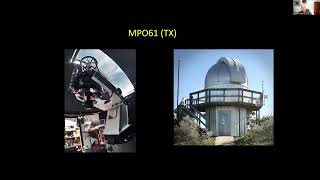
How to Use AAVSOnet to Remotely Observe Variable Stars
Learn to remotely observe variable stars using AAVSOnet's global telescope network. Explore exciting projects, precision photometry techniques, and expert insights for studying celestial objects brighter than 18th magnitude.
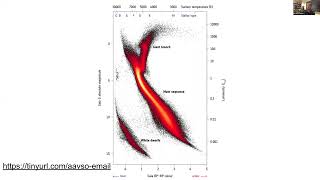
How to Model Isochrones Using Images of Star Clusters
Explore star cluster physics through image analysis. Learn to construct color images and model isochrones, revealing stellar evolution insights in this art-meets-science approach.
AB Aur: Investigating a Potential Protoplanet - Special Webinar
Explore findings on AB Aur's variability and learn how to contribute to an ongoing protoplanet investigation through photometry and spectroscopy observations.
Urban Astronomy: How to Observe in the City
Discover urban astronomy techniques: overcome light pollution, find safe spots, navigate limited horizons, and explore smart telescopes for productive city stargazing.
Understanding Photometric Transforms and Filters
Explore photometric transforms and filters with Dr. Brian Kloppenborg. Learn about light's journey, standardizing measurements, and improving photometry quality through practical insights and Q&A.
Introduction to AAVSO's Solar, Eclipsing Binary, and Long Period Variable Sections
Explore AAVSO's Solar, Eclipsing Binary, and Long Period Variable Sections through expert presentations and Q&A. Gain insights into these astronomical phenomena and learn how to get involved in research.