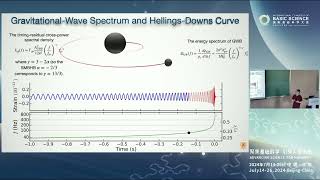
Search for Gravitational-Wave Background in Pulsar Timing Array
Explore recent pulsar timing array observations and their implications for gravitational wave detection, including evidence for scalar transverse polarization modes and challenges in confirming gravitational waves.
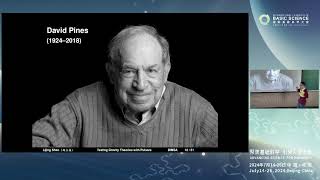
Testing Gravity Theories with Radio Pulsar Timing
Explore radio pulsar timing techniques and their application in testing alternative gravity theories using binary pulsars.

Machine Learning for Space Exploration
Explore AI's role in revolutionizing space exploration, from autonomous robots to planetary science, and learn about challenges and applications in safety-critical systems.
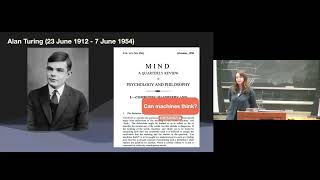
A Universe To Be Decided: Towards Specialized Foundation Models for Advancing Astronomy
Explore specialized foundation models in astronomy, including AstroLLaMa-1 and AstroLLaVA, to enhance scientific inquiry and democratize access to astronomical knowledge.
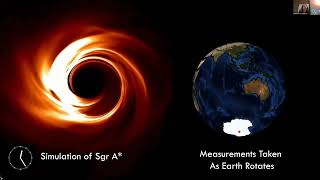
Moving Beyond the First Portrait of Our Milky Way's Black Hole by Leveraging Underlying Structure
Explore computational imaging techniques used to capture black hole images and leverage data structure to extract evolving details of the Milky Way's supermassive black hole.
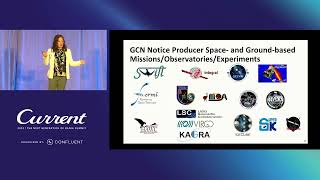
General Coordinates Network: Harnessing Kafka for Real-Time Open Astronomy at NASA
Explore NASA's use of Kafka for real-time astronomy data sharing, including architectural choices and OAuth2 implementation for public access in the General Coordinates Network.
High Contrast Imaging for Exoplanet Exploration
Explore advanced techniques in high contrast imaging for exoplanet detection with Caltech expert Dimitri Mawet in this KISS short course lecture.
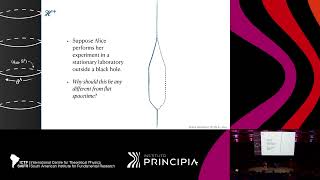
Black Holes and Cosmological Horizons Decohere Quantum Superstitions
Explore how black holes and cosmological horizons impact quantum superpositions, delving into the intersection of gravity and quantum mechanics.
Lunar Earth Flyby: Perspectives from Navigation, Science and Radiation - Europlanet Juice Webinar 3
Explore the Lunar Earth Gravity Assist from navigation, science, and radiation perspectives. Gain insights into spacecraft operations, instrument considerations, and radiation challenges in space exploration.
On the Energy and Helicity of Inflexional Magnetic Braids
Explore energy and helicity in inflexional magnetic braids, examining their properties and implications for astronomical phenomena.

Building Platforms for Sustainable IT - Strategies for Decarbonizing and Optimizing Energy Efficiency
Craft eco-friendly IT environments using platforms. Learn to enhance transparency, adjust applications dynamically, and educate users on sustainable practices in tech infrastructure.

Meeting Public Sector Requirements on Google Cloud
Learn to create secure, compliant services on Google Cloud for public sector needs. Explore zero-trust, compliance-as-code, and Assured Workloads to address various regulatory requirements.
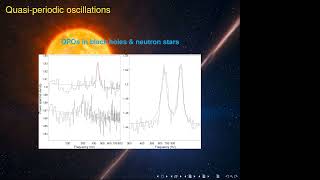
High-Frequency Quasi-Periodic Oscillations and Oscillations of Accretion Disks
Explore high-frequency variability in X-ray light curves of accreting black holes and neutron stars, focusing on orbital motion and oscillations of thin accretion disks, their linear modes, and nonlinear interactions.
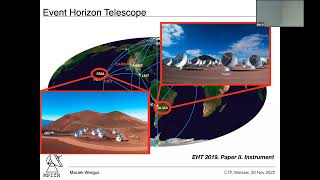
First Image of the Black Hole Shadow in the Galactic Center - Sagittarius A*
Explore groundbreaking images of Sagittarius A*, the Milky Way's central supermassive black hole, captured by the Event Horizon Telescope. Delve into data analysis, theoretical interpretations, and implications for black hole physics.
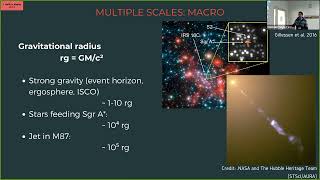
Simulating the Multi-Scale Environment of Supermassive Black Holes
Explore simulation techniques for modeling supermassive black holes, focusing on incorporating large-scale environmental data into event horizon simulations to enhance EHT observations.
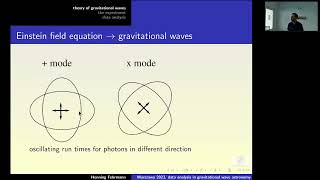
Data Analysis in Gravitational Wave Research
Explore data analysis methods for detecting gravitational waves from various cosmic sources, including mergers and continuous waves, with insights into the Atlas data analysis facility.

Statistical Analysis in Cosmology: Goodness-of-Fit and Model Selection - Part 2
Explore advanced statistical methods in cosmology, including model selection, MCMC, chi-square, and p-value analysis for robust data interpretation.
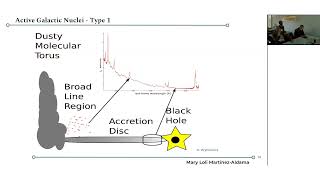
UV Quasar Main Sequence - Exploring the Eigenvector 1 Sequence in Active Galactic Nuclei
Explore the UV Eigenvector 1 sequence in quasars, examining spectral properties and their correlation with Eddington ratio to identify AGN subpopulations and physical differences.
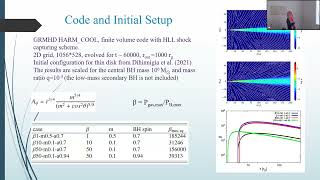
Gas-Rich Environment Effect on Low-Frequency Gravitational Waves from Supermassive Black Hole Binaries
Explore how gas-rich environments impact low-frequency gravitational waves from supermassive black hole binaries, focusing on LISA's potential to detect these effects and inform AGN accretion disk physics.
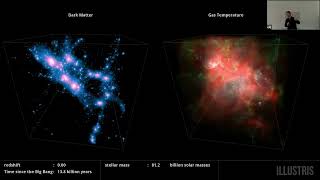
Exploring the Local Group with Constrained Simulations
Explore the Local Group using constrained simulations to study low-mass galaxies, including ultra-diffuse galaxies, and their implications for dark matter and galaxy evolution.
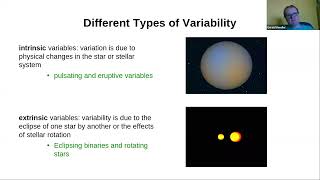
The Enigmatic Maia Variables: An Impossible Class of Pulsating Stars? - Lecture
Explore the controversial "Maia variables" - pulsating stars outside known instability strips. Examine recent findings, spectral analyses, and TESS data to determine their existence and nature.