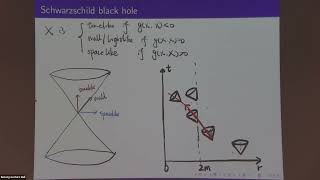
Stability Problems in General Relativity
Explore stability problems in general relativity, focusing on mathematical challenges and recent advancements in understanding gravitational phenomena.
Searching for Extraterrestrial Intelligence Using Google Cloud
Explore how Google Cloud aids in the search for extraterrestrial intelligence through radiofrequency data analysis and technosignature detection, featuring insights from SETI Forward Award winner Raffy Traas.
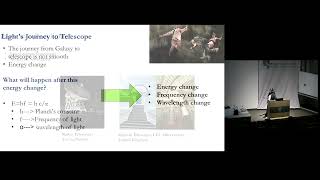
Mysteries of Redshift: Unlocking the Secrets of the Expanding Universe
Explore redshift's role in understanding cosmic expansion, the Big Bang theory, and the universe's structure. Discover how this phenomenon reveals celestial objects' age, distance, and composition.
Building a 3D Model of the Solar System with Python
Construct a 3D solar system model using Python and Web VPython, exploring numerical modeling and adding multiple planets.
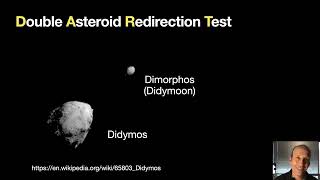
Modeling the DART-Dimorphos Collision in Python
Model the DART-Dimorphos collision using Python, exploring binary orbits, elastic and inelastic collisions, and conservation of momentum. Experiment with different parameters to understand asteroid redirection techniques.
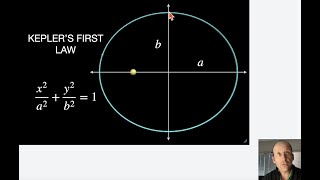
Modeling Kepler's First Law with Python
Model Kepler's first law of planetary motion using Python, demonstrating elliptical orbits through code implementation and visual plotting.
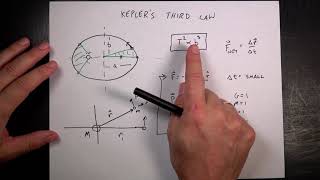
Demonstration of Kepler's Third Law Using Python
Explore Kepler's Third Law through Python modeling, calculating orbital periods and semi-major axes for various orbits to verify the law's validity.
Can ChatGPT Make a VPython Program for Orbital Motion?
Explore ChatGPT's ability to create a VPython program simulating ISS orbital motion, examining code output and discussing limitations.
Modeling the Earth-Moon System with Python
Model the Earth-Moon system using Python to simulate orbital dynamics and explore celestial mechanics.
How to Achieve Circular Orbits in the Three-Body Problem
Explore stable circular orbits for three equal-mass planets using Python simulations and gravitational calculations.
Calculating Asteroid Collision Velocities
Calculate asteroid collision velocities using gravitational potential energy and Python simulations. Explore physics concepts through practical space scenarios.
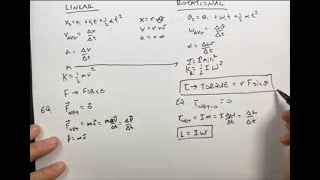
College Physics Chapter 8 Summary - Torque and Angular Momentum
Explore rotational dynamics, including kinetic energy, moment of inertia, torque, and angular momentum principles in physics.
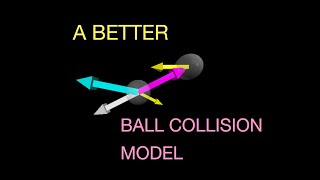
Building a Better Ball Collision Model for Solar System Simulation in Python
Improve ball collision modeling for a flat solar system simulation, focusing on conservation of momentum and angular momentum.
Python Physics: Building a 3D Model for Orbital Motion
Develop a 3D model for orbital motion using Python and Web VPython, breaking down complex calculations into manageable time intervals for accurate simulations.
Introduction to Radio Astronomy
Explore the fundamentals of radio astronomy, including electromagnetic spectrum and its significance in astronomical research. Learn course structure and logistics.
Малый Пулковский базис и его связь с градусными измерениями
Изучите связь Малого Пулковского базиса с градусными измерениями и его значение в военной топографии. Повысьте свои навыки в геодезии и картографии.
Cosmic Map Making - Exploring Similarities Between Cosmic and Everyday Maps
Explore cosmic map making's intricacies and surprising similarities to everyday maps with Prof. Adrian Liu, uncovering the Universe's history and the birth of first-generation stars and galaxies.
Examining Microbes and Biosignatures with Acidic Mars Analog Gypsum
Explore microbes and biosignatures in acidic Mars-like gypsum environments. Gain insights into astrobiology research and potential extraterrestrial life detection methods.
Mineralogy of Evaporites and Sediments in Phosphate-Rich Lakes - AbGradCon 2023
Explore mineralogy of evaporites and sediments in phosphate-rich lakes, focusing on hydrated minerals and their implications for astrobiology research.
The Climates of G1514 b - AbGradCon 2023
Explore the climates of exoplanet G1514 b through cutting-edge astrobiology research presented by Héctor Delgado Díaz at AbGradCon 2023, fostering interdisciplinary collaboration in planetary science.
Differences in Climates and Transit Spectra of Habitable Planets
Explore differences in climates and transit spectra of habitable planets, focusing on key factors influencing planetary habitability and detection methods for exoplanets.