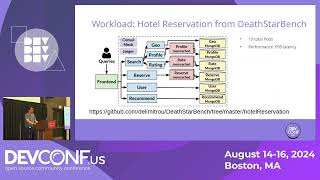
Power Efficiency Aware Kubernetes Scheduler (PEAKS)
Explore PEAKS, a sustainable Kubernetes scheduler leveraging Kepler for power-efficient pod allocation, addressing underutilization and reducing carbon footprint.
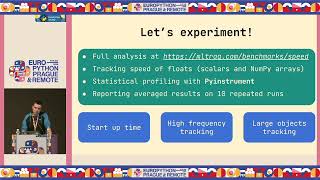
MLtraq - Track Your ML/AI Experiments at Hyperspeed
Explore MLtraq's superior speed and capabilities for tracking ML/AI experiments. Compare leading tools, understand performance factors, and learn efficient Python object serialization techniques.

OpenAI Strawberry's Innards - How It Works and What Comes Next for OpenAI
Explore OpenAI Strawberry's inner workings and future developments, from bootstrapping INSTRUCT models to advancing reasoning capabilities in AI systems.
Offensive Security Testing for Mission Control Systems - Safeguarding Space Operations
Explore security vulnerabilities in space mission control systems and learn offensive testing strategies to protect critical spacecraft operations from potential cyber threats.
Do You Believe in AI
Astronaut-in-training Mike Mongo shares captivating AI experiences, from zero-gravity simulations with androids to conversations with AI-powered fictional characters, exploring the current possibilities and future potential of artificial intelligence.
Shifting Perspectives and Exploring Passions
Inspiring journey of self-discovery and passion for space exploration, highlighting the power of perspective shifts and pursuing dreams to create a fulfilling life and career in science communication.
Physical Limits to Cognition - How I Learned to Stop Worrying and Love Black Hole Thermodynamics
Explore the intersection of information theory, cognitive science, and black hole thermodynamics to understand fundamental limits of physically-embodied computational systems and cognitive processes.
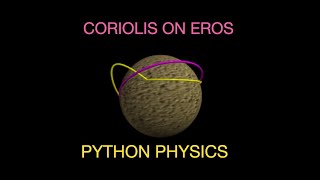
Classical Mechanics: Modeling Coriolis Force for a Kicked Ball on Eros
Explore the fascinating effects of Coriolis force by modeling the trajectory of a kicked ball on asteroid Eros, using Python to visualize non-inertial reference frames.
How One Line of Code Led to the Mars Polar Lander Catastrophe
Uncover the fascinating story of how a single software error led to the Mars Polar Lander's devastating crash, exploring crucial lessons in spacecraft engineering and the importance of thorough testing.
Probing Reionization of the Universe Using Signal from Hydrogen
Explore the fascinating process of cosmic reionization and how scientists study the early universe through hydrogen signals in this engaging astronomy presentation.
Beyond the Visible Universe - Discovering Wonders in Radio and X-rays
Explore the mysteries of space through radio and X-ray astronomy, uncovering celestial phenomena beyond human vision and discovering how scientists observe the invisible cosmos.

1.2 Tb/s Packet Processing of Radio Telescope Data on GPU
Discover how to process massive radio telescope data streams at 1.2 Tb/s using NVIDIA Grace Hopper GPUs, optimizing packet handling and reducing energy consumption through innovative system architecture.
Exploring Multiple Copies of You in the Quantum and Inflationary Multiverse
Explore fascinating theories of multiple universes, from quantum mechanics to eternal inflation, and discover how different versions of yourself might exist across parallel realities.
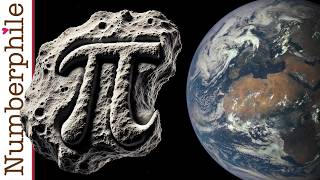
Exploring Minor Planets and the Story of Planet Pi
Explore the fascinating connection between asteroid classification numbers and Pi through Matt Parker's engaging mathematical journey through the solar system.
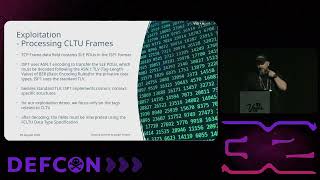
Hacking the Space Link Extension Protocol - Security Vulnerabilities in Ground Control Systems
Explore security vulnerabilities in space mission communications through the Space Link Extension protocol, focusing on ground segment exploits and practical mitigation strategies for spacecraft control.

Should We Build a Geothermal Power Plant in Yellowstone? - A NASA Proposal Analysis
Explore NASA's intriguing proposal to harness Yellowstone's geothermal energy through power plant construction, examining the scientific rationale and potential environmental impacts.
Prototyping a Remote-Controlled Telescope with Elixir
Explore the process of designing and building a remote-controlled telescope using Elixir and Rust, from initial research to software prototypes and final physical construction.
Moon to Mars: Planning and Executing for the Long Term
Explore long-term planning strategies for ambitious projects, from establishing cross-team relationships to continuous testing and measurement for building confidence in goals.
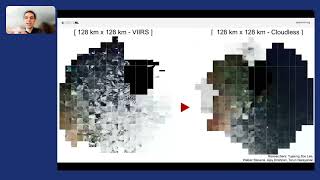
An Inside Look at NASA's SpaceML Worldview Search
Explore NASA's SpaceML Worldview Search with insights from Machine Learning Lead Anirudh Koul, covering innovative applications in space exploration and data analysis.

Japan's Game-Changing Moon Mission - Analysis of Moon Sniper/SLIM
Explore Japan's groundbreaking Moon Sniper/SLIM mission, analyzing its successful lunar landing and its implications for future space exploration.

The Bizarre Shape of the Universe - Exploring Topology and Geometry in Cosmology
Explore the universe's shape through topology, geometry, and recent research. Delve into flat geometries, 2D and 3D torus models, and the search for closed loops in space.