
Getting Beyond Earth - Exploring the Solar System
Explore the solar system through expert presentations on past and present missions, gaining insights into planetary bodies and Earth while understanding the importance of continued space exploration.
New Access to Space
Panel discussion on new opportunities in lunar exploration, featuring commercial spacecraft programs, small satellites, and international missions to unexplored lunar regions.
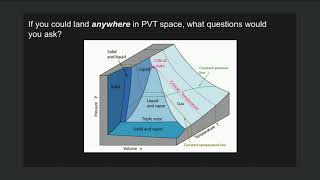
Novel Experiments for Understanding the Interior of the Earth, Planets, and Exoplanets
Explore cutting-edge techniques to unravel the mysteries of Earth's interior and other celestial bodies, from high-pressure experiments to dynamic compression and advanced spectroscopy.
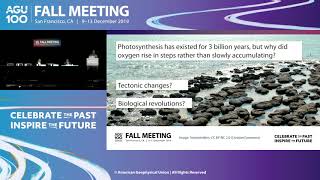
What Controlled the Rise of Oxygen on Earth?
Explore new findings challenging theories on Earth's oxygenation events, their sources, and implications for understanding oxygen history on Earth and other planets.
Science to Action - How to Work with Communities and Make an Impact
Explore collaborative practices between scientists and communities to enhance research impact, promote equity, and address societal challenges through interdisciplinary approaches and knowledge co-production.
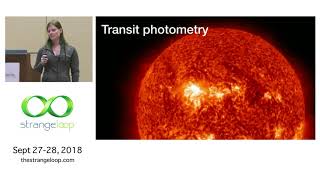
PANOPTES - Open Source Exoplanet Discovery
Discover exoplanets using open-source PANOPTES: a distributed network of robotic telescopes combining cloud computing, affordable electronics, and innovative software.

Uptime 15,364 Days - The Computers of Voyager
Explore the enduring computing systems of NASA's Voyager probes, launched in 1977 and still operational. Learn about their design, adaptability, and resilience in space exploration.
Democratizing AI - Back-Fitting End-to-End Machine Learning
Explore LinkedIn's journey in democratizing AI, enhancing modeler efficiency, and scaling machine learning across engineering teams through innovative infrastructure and practices.
The Moon - Gateway to the Solar System
Explore the potential of human return to the Moon, its scientific importance, and role as a catalyst for solar system exploration. Learn about past missions, current projects, and future plans.
School's Out, but Science Never Stops - Live Discussion
Live Q&A exploring black holes, time travel, the Big Bang, and the multiverse with physicist Brian Greene. High school students engage in a thought-provoking discussion about cutting-edge scientific concepts and theories.

Riddles of Reality - From Quarks to the Cosmos
Nobel Laureate Frank Wilczek and Brian Greene explore quantum mysteries, from quarks to the cosmos, discussing current insights and their implications for our understanding of reality.
Universe or Multiverse
Explore the concept of the multiverse with renowned physicist Andrei Linde, delving into inflationary theory, string theory, and the future of cosmology in this thought-provoking lecture.

Fundamentals - Ten Keys to Reality - A Conversation with Nobel Laureate Frank Wilczek
Explore quantum mechanics, dark matter, and cosmology with Nobel Laureate Frank Wilczek and Brian Greene as they delve into the ten fundamental keys to understanding reality.

Quantum Mechanics, Black Holes and String Theory
Renowned physicists explore groundbreaking concepts in quantum mechanics, black holes, and string theory, discussing holographic principle, quantum entanglement, and the reconciliation of quantum mechanics with gravity.
How Black Holes Became Real
Explore supermassive black holes with astrophysicist Priyamvada Natarajan, from their formation to galactic impact. Discover cutting-edge research and gain insights into these fascinating cosmic phenomena.
The Hunt for Supermassive Black Holes - A Conversation with Andrea Ghez
Nobel Laureate Andrea Ghez discusses her groundbreaking discovery of a supermassive black hole at our galaxy's center, exploring the technological advances and long journey that led to this remarkable achievement.
History and Mysteries of The Universe
Explore the cosmos with MIT physicist Max Tegmark, delving into the universe's origins, size, and future. Uncover cosmic mysteries and cutting-edge theories in this captivating journey through space and time.
From Chemistry to Life
Explore the search for alien life with astronomer Dimitar Sasselov, examining physical and chemical phenomena beyond our solar system and discussing potential forms of extraterrestrial existence.
From Cancer to Covid-19 - Tackling Today's Medical Issues
Nobel laureate Harold Varmus and Brian Greene discuss the COVID-19 pandemic, scientific literacy, cancer research advancements, and the role of scientists in today's political climate.
Gravitational Waves - Einstein’s Astrophysical Messengers
Explore gravitational waves with physicist Gabriela González: learn about LIGO's detection methods, recent discoveries, and the potential to unravel cosmic mysteries through this cutting-edge field of study.
Fundamental Lessons From String Theory
Explore string theory's past, present, and future with experts Brian Greene and Cumrun Vafa. Discover how puzzles sparked Vafa's physics passion and delve into fundamental concepts, contradictions, and potential implications.