Data-Efficient AI for Accelerating MRI Acquisition
Explore physics-guided AI techniques for accelerating MRI acquisition, including unsupervised and semi-supervised approaches. Learn about a new 1.5TB dataset for evaluating MRI reconstructions with clinically-relevant metrics.
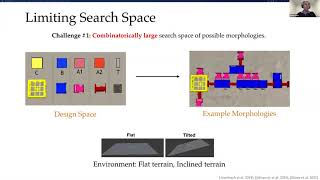
Towards Understanding and Building Embodied Intelligence
Exploring embodied intelligence: evolution, morphology, and learning in complex environments. Insights into AI agents' adaptability and performance using the DERL framework.
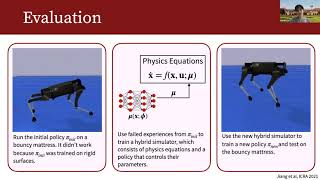
The New Role of Physics Simulation in AI
Explore advancements in physics simulation for AI, focusing on overcoming sim-to-real gaps and improving human-robot interactions through learnable physics engines and efficient training techniques.
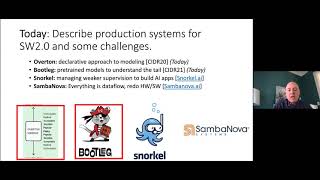
How Machine Learning is Changing Software
Explore how machine learning is revolutionizing software development, from weak supervision to self-supervised systems, with insights from Stanford's Chris Re on emerging challenges and industry applications.
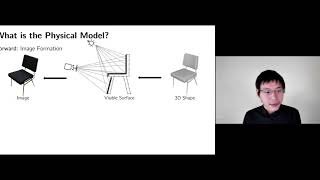
Learning to See the Physical World
Explore physical scene understanding through AI, combining computer graphics, physics, and language with deep learning to create versatile machines that see, reason, and interact with the world.
Solana Larsen- Who Has Power Over AI?
Explore power dynamics in AI through Mozilla's Internet Health Report, featuring global perspectives on shifting control and fostering diverse AI applications for a more inclusive future.
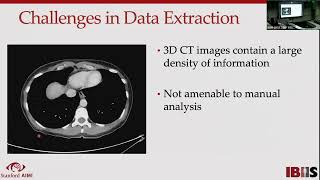
Disease Prediction Using Medical Imaging and Deep Learning - Summer 2022
Explore innovative techniques for predicting diseases using medical imaging and deep learning, focusing on opportunistic approaches with existing data for improved patient outcomes.
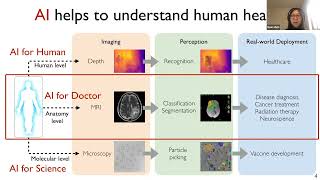
Time Before Birth: A Look at Developing Human Brain
Explore the developing human brain before birth through advanced imaging techniques and machine learning models, offering insights into fetal neurodevelopment and potential clinical applications.

AI and Robotics: Current Challenges and Future Directions
Explore AI and robotics with Chelsea Finn and Andrew Ng, discussing career paths, current capabilities, challenges, and future prospects in the field. Gain insights into robotics research and learn how to enter this exciting domain.
Creating Human-Computer Partnerships - Stanford Seminar
Exploring design strategies for effective human-computer partnerships, balancing user simplicity with system power, and enhancing human capabilities through interactive intelligent systems.

Human-Centered AI for Mental Health Prediction in Social Media Data
Exploring human-centered machine learning for ethical and compassionate mental health predictions on social media, combining Media Studies and Computer Science approaches.
Forecasting Disruption: Assessing Technological Risks and Opportunities
Explore forecasting techniques to assess technological disruptions' impact on business models, with insights on evaluating risks and opportunities to inform strategic decisions.
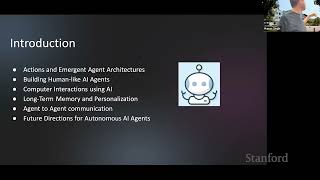
Beyond LLMs - Agents, Emergent Abilities, Intermediate-Guided Reasoning, and BabyLM - Stanford CS25
Exploración de sistemas de IA autónomos, habilidades emergentes de LLMs, razonamiento guiado intermedio y modelos de lenguaje eficientes. Discusión sobre avances técnicos e implicaciones éticas en IA.
Stanford Seminar - Human-AI Interaction Under Societal Disagreement
Explores Jury Learning, an interactive AI architecture enabling developers to consider diverse perspectives in machine learning, addressing societal disagreements in AI decision-making processes.
How You Can Use ChatGPT to Increase Your Creative Output
Explore practical applications of ChatGPT for enhancing creativity and innovation in various professional fields through real-world examples and in-tool demonstrations.
Stanford Seminar - On and Out-of-Body Interactions & Experiences
Explore novel interaction techniques for on-body and out-of-body technologies, including wearables, robots, and drones, to enhance human-machine integration and extend physical abilities.
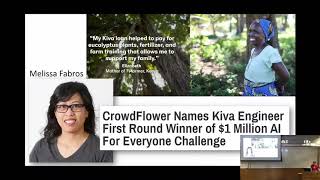
Stanford Seminar - Fastai: A Layered API for Deep Learning
Explore fastai, a deep learning library offering high-level components for quick results and low-level components for research flexibility, built on a layered architecture with Python and PyTorch.
Current Status of TinyML and the Enormous Opportunities Ahead - Panel Discussion
Panel discussion exploring tinyML's current state and future potential, featuring experts from Qualcomm and Google. Covers applications, challenges, privacy concerns, and emerging opportunities in ultra-low power embedded AI computing.
Edge Computing in Autonomous Vehicles - Panel Discussion
Experts discuss edge computing in autonomous vehicles, exploring technological advancements, challenges, and future implications for the automotive industry and society.
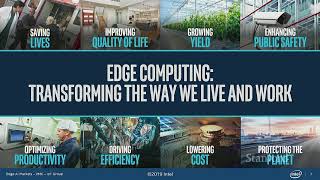
Stanford Seminar - New Chip Technologies for AI and for Asia - The Edge is Where the Action Is
Explore edge computing and AI chip technologies, their applications in IoT and smart devices, and the future of the semiconductor industry with Intel's AI marketing director.
Stanford Seminar - Promise of 5G Wireless – The Journey Begins
Explore the future of wireless technology with a Stanford expert, covering 5G's potential, challenges, and impact on various industries like AI, transportation, and computing.