Alpha Missense: Proteome-Wide Missense Variant Effect Prediction
Explore Alpha Missense, an AI model predicting missense variant pathogenicity. Learn how it combines structural context and evolutionary conservation to achieve state-of-the-art results in genetic benchmarks.
Getting Started with ESM Metagenomic Atlas with API and Large Language Models
Introduction to Meta AI's ESM Metagenomic Atlas, exploring protein structures and their importance. Covers API usage, large language models, and practical demonstrations using various tools and resources.

Understanding AlphaFold - AI in Protein Structure Prediction
Explore AlphaFold's revolutionary impact on protein structure determination with Dame Janet Thornton. Discover how this AI program is transforming bioinformatics and its potential future applications.

DeepMind AlphaFold - A Gift to Humanity
Explore DeepMind's AlphaFold, a revolutionary AI system for protein structure prediction, and its potential impact on biology, medicine, and scientific research.
AI in Structural Biology: Roots of Success
Explore the history and impact of AI in protein structure prediction, focusing on AlphaFold 2's breakthrough and its implications for structural and cell biology research.
Generalized Biomolecular Modeling and Design with RoseTTAFold All-Atom
Explore advanced biomolecular modeling using RoseTTAFold All-Atom. Learn to predict and design complex biological assemblies, including proteins, nucleic acids, and small molecules, with applications in drug discovery and synthetic biology.
Accelerating Cryptic Pocket Discovery Using AlphaFold and Markov State Modeling
Explore cryptic pocket discovery using AlphaFold and Markov State Modelling. Learn about Plasmepsin II, transition states, and activation mechanisms in drug discovery.
Models, Inference and Algorithms: Lightning Talks on Machine Learning and Computational Biology
Discover cutting-edge research presentations on machine learning in healthcare, protein modeling, chemical space exploration, and DNA sequence generation from leading researchers at MIT, Harvard, and Broad Institute.
The Key to Unlock AI Accuracy Through Feature Generation
Discover how sophisticated feature generation acts as the cornerstone for developing accurate and effective AI models, illustrated through real-world examples from DeepMind and global corporate implementations.

DeepMind's AlphaFold 2 Explained - AI Breakthrough in Protein Folding - What We Know and What We Don't
Comprehensive exploration of DeepMind's AlphaFold 2, a groundbreaking AI system that solved the protein folding problem. Covers the science, previous approaches, and potential implications for biology and medicine.
How AI Is Unlocking the Secrets of Nature and the Universe
Demis Hassabis explores AI's potential to accelerate scientific discovery, from predicting protein shapes to unraveling mysteries of the mind and universe, showcasing its transformative impact on human knowledge.
Converging Advances to Accelerate Molecular Simulation
Explore advances in molecular simulation through deep learning, ASIC architectures, and quantum computation. Discover potential applications in sustainable technologies, drug development, and material design.
Pre-trained Ensembles for Bayesian Optimization of Protein Sequences
Explore pre-trained ensembles for Bayesian optimization of protein sequences, enabling accurate predictions with minimal data and guiding iterative design for novel peptide inhibitors.
Accelerating Cryptic Pocket Discovery with Deep Learning
Explore deep learning techniques for accelerating cryptic pocket discovery in protein structures, focusing on simulation, key degrees of freedom, and tools like PocketMiner and AlphaFold.
AI for Science - Expo Stage Talk - AAAS Annual Meeting
Explore the impact of deep learning on scientific research, from cryoelectron microscopy to AlphaFold, and discover how AI is revolutionizing various scientific disciplines.
Deep Learning for Protein Structure Prediction
Explore deep learning techniques for predicting protein structures, from traditional methods to AlphaFold's advancements. Gain insights into molecular dynamics, homology modeling, and cutting-edge AI approaches in structural biology.
AI Design of Molecular Machines - Understanding Proteomics and Protein Structure Prediction
Explore how AI systems like AlphaFold2 revolutionize protein folding prediction and molecular machine design, advancing precision medicine and environmental solutions.
Graphs and Transformers - Exploring the Next AI Frontiers
Explore the evolution of deep learning models, focusing on graphs and transformers as fundamental building blocks in modern AI architectures for natural language, protein research, and image generation.
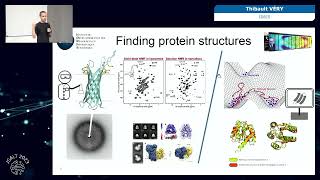
Deep Learning for Protein Structure Discovery
Explore deep learning techniques for uncovering protein structures, revolutionizing molecular biology and drug discovery.
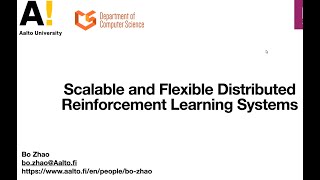
Scalable and Flexible Distributed Reinforcement Learning Systems
Explore scalable distributed reinforcement learning systems, focusing on flexible training loops, statement management, and GPU allocation. Gain insights into building efficient RLHF systems for large-scale applications.
AlphaFold and Beyond - How AI and Data Science are Revolutionizing Biology
Explore AI's impact on biology, focusing on AlphaFold's protein structure prediction and advancements in health data science and genomics with Professor Tim Hubbard.