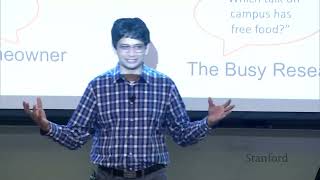
Stanford Seminar - Deploying Autonomous Service Mobile Robots, and Keeping Them Autonomous
Explore challenges and solutions in deploying autonomous mobile robots in dynamic environments, covering robustness, failure anticipation, and efficient adaptation to user needs through advanced perception and learning techniques.
EI Seminar - Recent Papers in Embodied Intelligence
Explore cutting-edge research in embodied intelligence, covering topics like experiment design, neuro-symbolic models, robot design, speech recognition, and social perception.
Herb.jl: Teaching Programs How to Program with Program Synthesis
Explore Herb.jl, a Julia library for program synthesis, unifying various approaches and providing tools for developing new synthesizers and solving complex problems.

Towards Intelligent Application Security
Exploring the evolution of application security and proposing an automated approach integrating security into development and operations, aided by learning techniques and threat intelligence.
Towards Higher-level Abstractions for Molecular Programming
Explore higher-level abstractions for molecular programming using chemical reaction networks, inspired by functional reactive programming. Build modular CRN programs with a Haskell library.
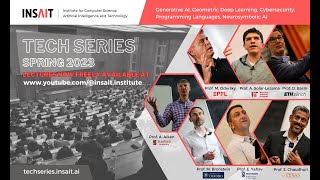
Neurosymbolic Programming - An Emerging Subarea of AI
Explore neurosymbolic programming's fusion of deep learning and program synthesis, discovering how it enhances AI robustness, interpretability, and efficiency through symbolic and neural approaches.
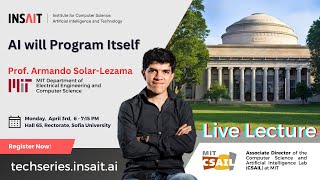
AI Will Program Itself: Synthesis, Learning and Beyond
Explore how AI and program synthesis combine to revolutionize software development, enabling more reliable and introspective systems through code-based knowledge representation.
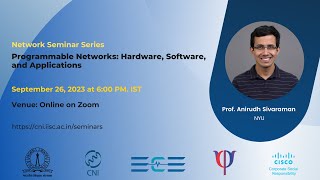
Programmable Networks: Hardware, Software, and Applications
Explore cutting-edge developments in programmable networks, from multi-tenant packet processing to compiler technology and distributed applications, with insights into future RPC processor designs.

Data Extraction via Semantic Regular Expression Synthesis
Explore semantic regexes for advanced data extraction, combining syntactic and semantic reasoning. Learn about a novel algorithm synthesizing these regexes from minimal examples.
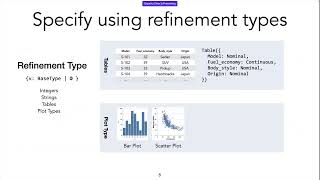
Type-Directed Synthesis of Visualizations from Natural Language Queries
Explore a novel technique for generating visualizations from natural language queries using program synthesis and refinement types, outperforming existing tools.

Synthesis II - Session Preview for POPL 2023
Explore advanced program synthesis techniques and their applications in software development, presented by expert Nate Foster at POPL 2023.

Languages with Decidable Learning: A Meta-theorem
Explore finite-aspect checkable languages and their role in decidable learning, connecting expression syntax tree evaluation to finite tree automata for new learning results.

Explainable Program Synthesis by Localizing Specifications
Explore explainable program synthesis through subspecifications, enhancing implementation understanding with logical formulas. Learn algorithms for constructing and verifying subspecifications, their properties, and impact on code comprehension.

Algebro-geometric Algorithms for Template-Based Synthesis of Polynomial Programs
Explore algebro-geometric algorithms for template-based synthesis of polynomial programs, offering a scalable approach to program sketching without sacrificing completeness.

Improving Oracle-Guided Inductive Synthesis by Efficient Question Selection
Explore efficient question selection in Oracle-Guided Inductive Synthesis. Learn about LearnSy, a novel selector improving OGIS solver performance through effective and efficient optimization techniques.

Synthesizing Specifications - Automatic Generation of Program Behavior Descriptions
Explore automatic synthesis of program specifications using Spyro, a tool that generates precise L-properties based on user queries and domain-specific languages, applicable in various programming contexts.

Mobius: Synthesizing Relational Queries with Recursive and Invented Predicates
Explore an innovative approach to synthesizing relational queries with recursion and invented predicates, outperforming state-of-the-art baselines in runtime and accuracy.

Message Chains for Distributed System Verification
Explore an automated bookkeeping method using message chains to simplify verification of asynchronous distributed programs, revealing execution structure and aiding in system-level reasoning.

Synthesizing Efficient Memoization Algorithms
Explore an automated approach for synthesizing efficient memoization algorithms from declarative specifications, addressing challenges through novel synthesis techniques and evaluation on real-world benchmarks.

Equality Saturation Theory Exploration à la Carte
Explore Enumo, a new language for programmable theory exploration in equality saturation. Learn to guide rule inference, build rulesets, and develop strategies for optimizing compilers and synthesizers.
Optimal Program Synthesis via Abstract Interpretation - POPL 2024
Explore a framework for optimal program synthesis using abstract interpretation, improving scalability with A* search and heuristics for numerical constant optimization in domain-specific languages.