
Playing With Language
Explore language's evolution, structure, and impact through diverse topics like word origins, rhetoric, translation, grammar, and communication, enhancing linguistic understanding and skills.
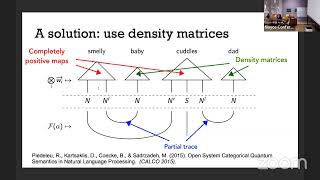
Compositionality in Vector Space Models of Meaning
Explore compositional structures in vector space models of meaning, focusing on deep neural networks, grammar, and role-filler bindings to understand language representation.
Eating Our Words: What the Language of Food Reveals About History and Culture
Explore how language in food reveals insights on history, economics, and culture. From ketchup's origins to menu linguistics, uncover surprising connections between words and cuisine.

Large Language Models and the Changing Face of Computational Linguistics
Explore the impact of Large Language Models on computational linguistics, discussing their transformative effects and future implications for language processing and understanding.
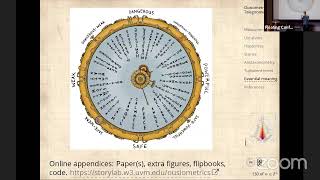
Ousiometrics and Telegnomics - Measuring Essential Meaning and Remote Knowledge
Explore the study of essential meaning and remotely sensed knowledge through innovative frameworks, examining language patterns, storytelling, and temporal dynamics in various contexts.
Text-Based Timeline Analysis and New Instruments for the Science of Stories
Exploring Twitter data as a telescope for observing collective human thought, revealing insights into sentiment, narrative power, and social dynamics through innovative text analysis techniques.
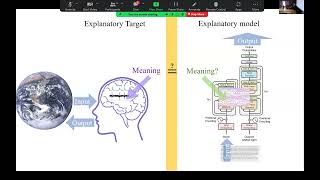
Do AI Systems Model Meaning and Understanding?
Explore the philosophical question of whether AI systems truly model meaning and understanding, delving into the nature of intelligence and consciousness in artificial systems.
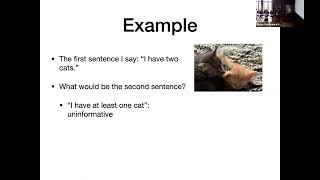
Language Models Could Learn Semantics - No Matter How You Define It
Explore how language models can acquire semantic understanding through form, entailment, and Gricean principles, with insights on practical limitations and future possibilities.
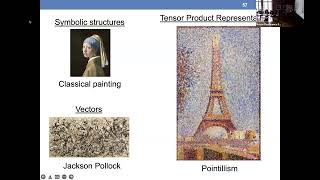
Bridging the Divide Between Vectors and Symbols in Language Processing
Explore the intersection of vectors and symbols in language processing, focusing on innovative approaches to bridge computational and cognitive models of meaning.
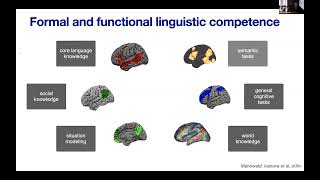
Language Understanding Goes Beyond Language Processing
Explore how language comprehension extends beyond traditional processing, delving into cognitive mechanisms and neural networks that shape our understanding of communication and meaning.
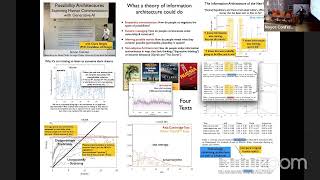
Possibility Architectures - Exploring Human Communication with Generative AI
Explore the intersection of human communication and generative AI, examining how these technologies reshape our interactions and open new possibilities for expression and understanding.
Simple Models of Language Evolution
Explore the fascinating world of language evolution through simple models, uncovering insights into how communication systems develop and change over time.
Steering Large Language Models for Cross-lingual Information Retrieval - Multilingual Retrieval
Explore techniques for leveraging large language models in cross-lingual information retrieval, enhancing multilingual search capabilities and improving global information access.
Exogenous and Endogenous Data Augmentation for Low-Resource Complex Named Entity Recognition - Lecture 1
Explore data augmentation techniques for improving complex named entity recognition in low-resource scenarios, enhancing NLP model performance.
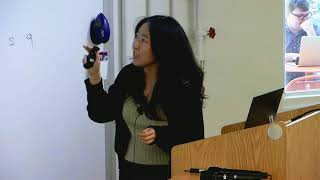
Human and Machine Inductive Biases for Compositional Linguistic Generalization
Explore compositional linguistic generalization in humans and artificial neural networks. Compare model results with human patterns, highlighting challenges and opportunities in structural generalization research.
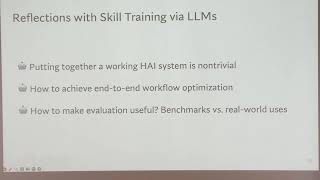
Adaptive Generalization: The Role of Dynamic Evaluation in Low-Resource Settings
Explore adaptive generalization techniques and dynamic evaluation strategies for enhancing AI performance in low-resource environments.
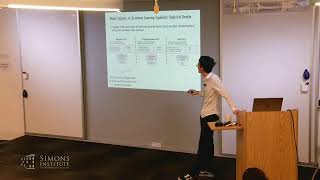
Toward Understanding In-Context Learning
Dive into the mechanisms of in-context learning in large language models, exploring theoretical explanations and simplified data distributions with Stanford's Tengyu Ma.
NLP in Python - Natural Language Processing
NLP is a field concerned with the ability of a computer to understand, analyze, manipulate and potentially generate human language.In this course we study about NLP and use the NLP toolkit or NLTK in Python.
Natural Language Processing
Explore natural language processing (NLP) concepts, review Text preprocessing and data cleaning, learn forward propagation and back propagation in neural networks, Word Embedding using Keras and deep learning with examples
Natural Language Processing
Learn Python-based NLP techniques including text resource access, word cloud generation, WordNet usage, and word processing methods like stemming and lemmatization.
Natural Language Processing
This course provides an understanding of natural language processing, its tools, techniques, philosophy and principle. It will cover Tokenization, Stop Words and Word Embedding.