Introduction to Probability, Statistics, Statistical Testing
Explore fundamental concepts of probability, statistics, and statistical testing, essential for understanding data analysis and machine learning in health and disease research.
Data- Access, Analysis and Distillation by K VijayRaghavan
Explore data access, analysis, and distillation techniques for machine learning in healthcare. Learn to harness computational methods for understanding health-related data across multiple domains.
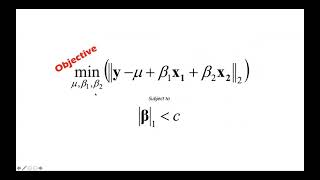
LASSO in One Hour
Discover sparse modeling techniques for linear regression, PLS, and PCA with the LASSO method in this concise introduction.
Heterogeneity of Type-2 Diabetes in India - I by V Mohan
Explore the diverse manifestations of Type-2 Diabetes in India with Dr. V Mohan, gaining insights into its unique characteristics and implications for diagnosis and treatment in the Indian population.

Uncertainty-Tracking Computation Hardware for Processing Data from the Physical World
Explore innovative processor architecture for tracking uncertainty in computations, enhancing accuracy and efficiency in various domains from quantum algorithms to sensor data processing.
Online and Hybrid System Identification Directly From Raw Sensory Signals
Explores neural networks with physical model biases for efficient system identification from sensory data, applicable to robotics, molecular modeling, and X-ray scattering inversion.
Seeing Faces in Things: A Model and Dataset for Pareidolia
Explore face pareidolia through computer vision, examining human vs. machine detection abilities and proposing a statistical model for general object pareidolia in images.
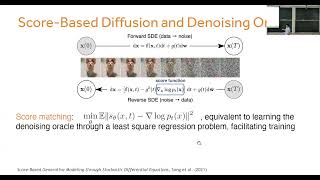
Provable Posterior Sampling with Score-Based Diffusion through Tilted Transport
Explore score-based diffusion methods for posterior sampling, focusing on tilted transport techniques and their applications in machine learning and dynamical systems.
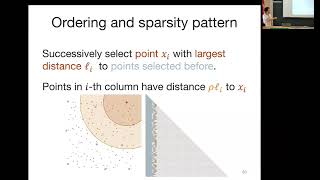
Ensemble Forecasts in Reproducing Kernel Hilbert Space Family
Explore advanced techniques for ensemble forecasting using reproducing kernel Hilbert spaces, enhancing predictive accuracy in dynamical systems and machine learning applications.

ShiffBot and Gemini API Integration with Node.js and p5.js - Coding Train Livestream
Explore ShiffBot, showcase reviews, and create a Node.js and p5.js example for the Gemini API. Learn about AI-powered tools and practical coding applications in this interactive session.

Gatling Step-by-Step Masterclass - Correlation, Commands, and Assertions
Explore advanced Gatling features: correlation, assertions, command-line execution, and integration with CI/CD tools. Learn to optimize performance tests and use Gatling Enterprise for scalable testing.

Understanding and Overcoming the Statistical Limitations of Decision Trees
Explores decision trees' statistical limitations, proposes FIGS algorithm to improve performance, and demonstrates its effectiveness in clinical decision-making and other real-world applications.

Learning from Aggregate Responses
Explore aggregate learning techniques for privacy-protected data, including loss construction, bagging schemes, and iterative boosting algorithms to improve model accuracy while maintaining data privacy.

Sample Complexity of Estimation in Logistic Regression - Lecture
Explore sample complexity in logistic regression, examining parameter estimation across temperature regimes. Gain insights into non-asymptotic analysis and critical points in the complexity curve.

Deep Generative Modeling - MIT 6.S191 Lecture 4
Explore deep generative modeling, including autoencoders, VAEs, GANs, and recent advances. Learn about latent variables, training techniques, and applications in AI-driven content creation and data analysis.

Dynamic Denoising for AMP Applied to Sparse Regression Inner Codes with Outer Codes
Explores dynamic denoising in AMP for sparse regression codes with outer codes, discussing performance improvements, state evolution approximations, and extensions to multi-user scenarios and multiple measurement vectors.
List-Decoding Random Code Ensembles - Advances in Error-Correcting Codes
Explore advanced error-correcting code theory, focusing on list-decoding techniques for random code ensembles. Gain insights into cutting-edge research in coding theory.
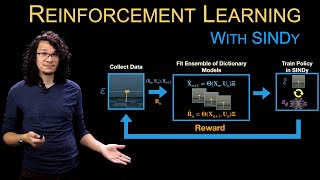
SINDy-RL: Interpretable and Efficient Model-Based Reinforcement Learning
Explores SINDy-RL, a framework combining sparse identification of nonlinear dynamics with reinforcement learning for efficient, interpretable control policies in complex environments.
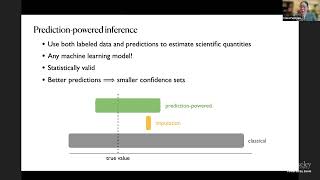
Error Embraced - Making Trustworthy Scientific Decisions with Imperfect Predictions
Explore prediction-powered inference for valid statistical analysis using machine learning predictions, with applications in proteomics, genomics, and astronomy. Learn about reliable ML-guided decisions in biological sequence design.
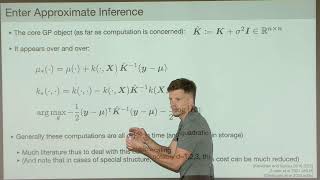
Data is as Data Does - The Influence of Computation on Inference
Exploring the impact of computational approximations on probabilistic models in machine learning, with focus on Gaussian Process approximations and their applications in neurobiology.
Some Problems Regarding Bayesian Networks
Exploration of challenges in Bayesian networks, discussing structural properties, dynamics, and applications in probability theory and network science.