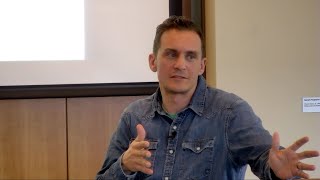
Statistical Applications of Wasserstein Gradient Flows
Explore statistical applications of Wasserstein gradient flows in optimal transport, covering Otto calculus, Riemannian structures, and applications to variational inference and Gaussian mixture models.
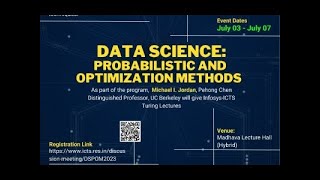
Learning from Dependent Data - Lecture 1
Explore techniques for learning from dependent data, focusing on probabilistic and optimization methods in data science. Gain insights into handling interconnected information effectively.
Reproducible Builds for Ubuntu
Explore Ubuntu's reproducible builds effort, its progress compared to Debian, and potential community involvement in enhancing software transparency and security.
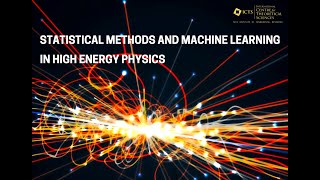
Machine Learning for LHC Theory - Lecture 2
Explore advanced machine learning techniques for Large Hadron Collider theory, focusing on statistical methods and their applications in high-energy physics research.
Drift, Jitter, and Expectations - A Story of Kernel Timers
Explore kernel timers in Zephyr, their importance, and how testing ensures quality. Learn about timer drivers, potential issues, and the significance of setting expectations.
Right-Sizing and Auto-Scaling of MySQL Containers in Kubernetes
Optimizing MySQL container resources in Kubernetes using statistical analysis and algorithms for dynamic sizing and scaling, improving performance and efficiency while reducing costs.

Cyclic Tests Unleashed: Large-Scale Real-Time Analysis with Jitterdebugger
Explore real-time Linux kernel testing with Jitterdebugger. Learn about cyclic task analysis, latency measurement, and statistical evaluation for improved system performance and reliability.
Distinguished Seminar in Optimization and Data - Ryan O'Donnell
Explore quantum state tomography, distribution metrics, and independence testing with insights on quantum-inspired improvements to classical problems in optimization and data analysis.
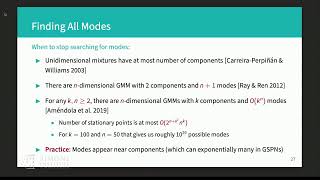
On Finding Modes of Gaussian Sum-Product Networks
Explore challenges and tractability of finding modes in Probabilistic Circuits, focusing on Gaussian Sum-Product Networks for machine learning tasks like structured prediction.
Tracking Significant Changes in Bandit - IFDS 2022
Explores significant changes in bandit algorithms, focusing on adaptive procedures and random replays for tracking environmental shifts in reward and context distributions.
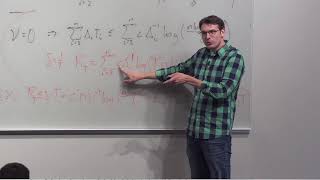
Bandits II - Advanced Algorithms and Applications
Explore advanced bandit algorithms and their applications in decision-making under uncertainty with Kevin Jamieson from the University of Washington.
Basic Data Structures in R Programming - Vector, List, Data Frame, Matrix, Array - R Language
Comprehensive overview of essential data structures in R programming, covering vectors, lists, data frames, matrices, and arrays for effective data manipulation and analysis.
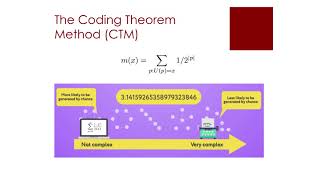
Computing the Uncomputable: The Coding Theorem Method - Unit 6, Module 2
Explore the Coding Theorem Method for computing uncomputable functions, delving into algorithmic information dynamics and its applications in causality and living systems.
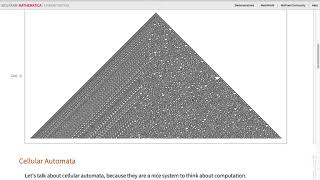
Cellular Automata: Algorithmic Information Dynamics in Living Systems
Explore cellular automata, a computational model for complex systems, and their applications in studying causality and living systems from networks to cells.
Insight and Inequity by Gagandeep Kang
Exploring health inequities and insights in India, focusing on challenges in data collection, analysis, and implementation for improved public health outcomes.
Novel Statistical and Machine Learning Methods for Single Cell Data Analysis
Explore innovative statistical and machine learning techniques for analyzing single-cell data, enhancing understanding of cellular heterogeneity and biological processes at unprecedented resolution.
Public Health Data Sources for Machine Learning and Examples of Research
Explore public health data sources for machine learning and discover research examples in this informative talk. Learn how to leverage data for innovative health studies and applications.
ML and Health Care - An Obgyn Perspective by Uma Ram
Explore machine learning applications in obstetrics and gynecology from an expert's perspective, focusing on potential benefits and challenges in women's healthcare.
Digital Twins in Healthcare by Anurag Agrawal
Explore the potential of digital twins in healthcare, focusing on their applications, benefits, and impact on patient care, medical research, and healthcare systems optimization.
How to Train Your DragoNN - A Primer on Deep Learning for Regulatory
Explore deep learning techniques for regulatory genomics, focusing on key benefits and applications in analyzing genomic data for improved understanding of gene regulation.
Bayesian Networks for Causal Reasoning - Lecture 1
Introduction to Bayesian networks for causal reasoning in healthcare, exploring their application in analyzing clinical data and inferring patterns to improve patient outcomes and medical decision-making.