Why Nature Does Not Like Zombies - Unifying Lower and Higher Order Theories of Consciousness: A Computational Approach
Explore a computational theory unifying consciousness levels, explaining why natural selection favors conscious beings over unconscious zombies through causal learning and self-awareness mechanisms.
Taming Regression Using APL - From Basic Linear Models to Advanced Applications
Master statistical regression techniques using APL through practical examples, from basic linear models to advanced non-linear and logistic regression, with hands-on demonstrations using TamStat software.
Recurrence Plots and Cross Recurrence Plots for Data Science Visualization and Analysis
Explore advanced visualization techniques using recurrence plots to uncover hidden patterns and trends in complex time series data through interactive analysis methods.

Exponential Curve Fitting Using Least Square Method in Applied Statistics
Master exponential curve fitting through practical examples and learn to apply the least square method for statistical analysis and problem-solving in mathematics.
The Value and Pitfalls of Proof
Explore the critical balance between computational methods and mathematical proofs through real-world examples where simulations fail and theoretical proofs triumph in solving complex problems.
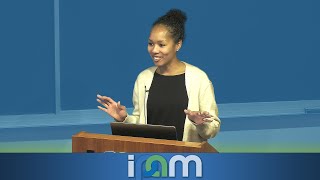
An Enriched Category Theory of Language
Explore how enriched category theory provides a mathematical framework for analyzing language structure and semantics, with applications to large language models and linguistic expressions.
Predictability in General Relativity - Session 2
Dive into advanced concepts of predictability within General Relativity theory, exploring mathematical frameworks and theoretical implications for spacetime dynamics.
Predictability in General Relativity - Session 3
Delve into advanced concepts of predictability within General Relativity theory through expert discussions and mathematical explorations of spacetime dynamics and gravitational phenomena.
Predictability in General Relativity - Day 2 Session 1
Delve into advanced concepts of predictability within General Relativity through theoretical frameworks and mathematical analysis of spacetime dynamics and gravitational phenomena.

Predictability in General Relativity - Day 2 Session 2
Delve into advanced concepts of predictability within General Relativity theory through detailed mathematical analysis and theoretical frameworks in this academic session.
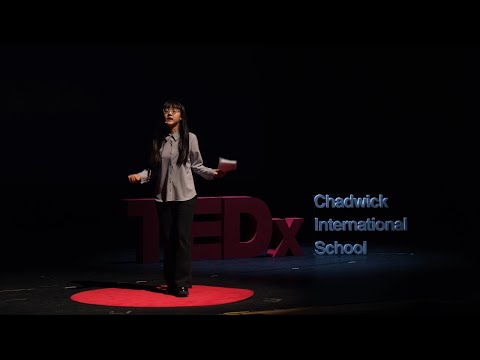
Flip a coin. | Minnie Hwang | TEDxChadwick International School
If a coin lands, was it really 50/50? This Tedx-talk directly challenges the idea that our society must accept probabilities. Probabilities never described our world, it described our assumptions on it. So, it probability is more based on assumption, than it is on truth, to what extend can we really