Counterfactual Prediction in Transport Modelling - Ricardo Silva & Charisma Choudhury
Explore counterfactual prediction in transport modeling, enhancing decision-making capabilities through causal inference and machine learning for 'what if' scenarios and fairness considerations.

Assignment Control Plots for Causal Inference Study Design - Rocky Aikens
Explore visual tools for causal inference study design, focusing on assignment-control plots to analyze covariate distribution and improve observational and experimental studies.
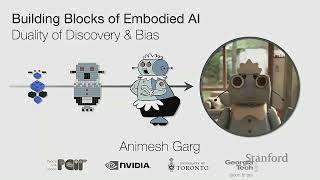
Towards Generalizable Autonomy - Duality of Discovery & Bias
Exploring generalization in embodied AI, focusing on interactive learning, representational biases, and causal inference for robotics and decision-making in complex environments.
Causal Inference Bootcamp - Your Guide to Experiments
Comprehensive guide to causal inference, covering experimental design, analysis, and real-world applications. Explores controlled experiments, natural experiments, and key issues in research methodology.
Deep End-to-end Causal Inference and Introduction to Causal Discovery
Explore deep end-to-end causal inference and discover its applications in data-driven decision-making across various domains. Learn about causal discovery, inference, and the Microsoft causal AI suite.
Large-Scale Differentiable Causal Discovery of Factor Graphs - Lecture and Primer
Explore large-scale causal discovery using factor directed acyclic graphs and differentiable optimization. Learn about causal representation learning for genetic perturbations and combinatorial extrapolation.
GRN-Guided Simulation of Single-Cell RNA-Seq and Primer on Causal GANs
Explore GRouNdGAN for simulating single-cell RNA-seq data and learn about CausalGANs for gene regulatory network analysis and in-silico perturbation experiments.
Inferring Causal Cell Types Driving Human Disease and Complex Traits - MPG Primer 2023
Explore causal cell types in human diseases through GWAS and functional genomics integration. Learn about colocalization, TWAS, and TCSC for identifying disease-critical genes and tissues.

Evolutionary Human Sciences: Causal Inference
Explore advanced methods for drawing causal inferences from observational data, with a focus on social influence and cultural evolution in human behavior.

Hierarchical Causal Models
Dive into hierarchical causal models with David Blei in this EWSC-MIT EECS Joint Colloquium, exploring novel insights in biomedical research and machine learning advancements.
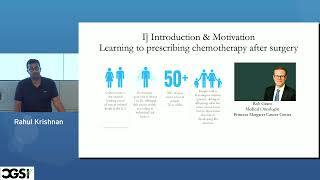
Bridging the Gap: Deep Learning and Causality
Explore the intersection of deep learning and causality, focusing on bridging the gap between these fields. Gain insights into recent advancements and their applications in computational genomics.
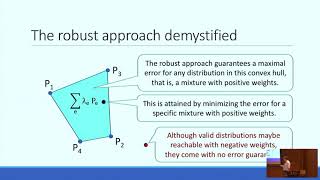
Learning Representations Using Causal Invariance - Leon Bottou
Explore causal invariance in machine learning representations, focusing on stable properties, extrapolation, and robust supervised learning techniques for improved model performance and generalization.
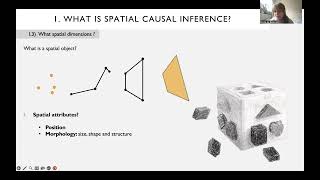
Spatial Causal Inference and Neighborhood Effects
Explore spatial causal inference, interference problems from social interactions, and neighborhood effects in multilevel analyses. Examine agent-based models to question area-level effects and their causal interpretations.
COVID-19 Lockdowns - Evaluating the Effectiveness of Government Interventions
Podcast explores research on effectiveness of government interventions against Covid-19 during first wave, featuring Oxford PhD students discussing their published findings on pandemic policy impacts.

Building Blocks of Generalizable Autonomy
Explore key aspects of generalizable autonomy in robotics, including representational biases, causal inference, and interactive policy learning under uncertainty for efficient and adaptable AI systems.
Instrumental Variable Estimation - Part VII: Testing Overidentification and Instrument Validity
Explore test for overidentification, validity of instruments, and calculus interpretation of IV in instrumental variable estimation.
Instrumental Variable Estimation - Part VI: Testing for Endogeneity and Hausman Test
Explore endogeneity testing, implement the Hausman Test, and apply it to multiple endogenous variables in instrumental variable estimation.
Instrumental Variable Estimation - Testing Endogeneity and Hausman Test - Part 5
Explore advanced endogeneity testing techniques, including Hausman Test implementation for multiple variables in instrumental variable estimation.
Instrumental Variable Estimation - Part II
Explore advanced IV estimation techniques, addressing endogeneity issues and understanding key conditions for effective implementation in econometric analysis.
Instrumental Variable Estimation - Part III
Explore IV techniques for MLRM, Generalised MLRM, multiple instruments, and endogenous variables in econometric analysis.
Instrumental Variable Estimation - Part I
Explore IV estimation, endogenous explanatory variables, and conditions for instrumental variables in econometric analysis.