
Everything Is a Network, but the Network Is Not Everything - Dynamics of Stage-Structured Food Webs
Explore how stage-structured food web models challenge traditional views on ecological community stability, offering new insights into the relationship between biodiversity and ecosystem resilience.
Metabolic Ecology of Humans
Explore how human metabolism relates to ecology, geography, and civilization through scaling perspectives and energy dynamics.
The Mother of Mass Extinctions: How Life on Earth Nearly Ended 250 Million Years Ago
Explore the greatest biodiversity crisis in Earth's history, examining causes and consequences of the end-Permian mass extinction through global research and geological evidence.
Andy Dobson on Disease Ecology & Conservation Strategy
Exploring disease ecology, conservation strategies, and complex systems thinking to address global challenges in biodiversity, economics, and public health through interdisciplinary research and innovative approaches.

Environment X Everything Interactions - From Evolution to Epidemics and Beyond
Explore environment-actor interactions across various fields, from evolution to epidemics, using mathematical frameworks and simulations to understand complex systems and their impacts.
IP Fest 2018: Autonomous Ecosystems
Explore the complexities of self-sustaining ecosystems, planetary habitability, and ecological design in this panel discussion featuring experts from diverse fields. Gain insights into the challenges of creating autonomous ecosystems.
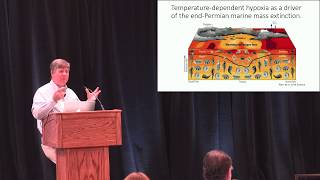
The Collapse of Ecosystems
Explore ecosystem collapse through the lens of mass extinctions, focusing on the End-Permian event and its aftermath. Gain insights into biodiversity patterns and ecological dynamics.

The Evolution of Root Systems & Biogeochemical Cycling
Exploring root system evolution and its impact on biogeochemical cycles. Insights into plant adaptation, nutrient acquisition, and ecological interactions, with implications for understanding complex systems and future technologies.
Glacial Optics: Creating Lenses from Arctic Ice for Glacier Photography
Explore an artist's Arctic expedition to create lenses from glacial ice, capturing portraits of the glaciers themselves. Discover the challenges, innovations, and profound insights gained from this unique photographic project.
Energy, Scaling, and The Future of Life on Earth
Explore the roles of energy and information in 21st century biology with Geoffrey West's lecture on scaling laws, energy dynamics, and their implications for life on Earth and our future.
Genetically Modified Foods - Monsters or Miracles?
Explore the science, history, and controversies surrounding genetically modified foods, examining their potential benefits and risks for global food security and environmental impact.

Forecasting Natural Disasters in Complex Earth Systems - SFI Lecture
Explore forecasting natural disasters using satellite data, nonlinear dynamics, and numerical simulations. Learn about ensemble forecasting and pattern methods for predicting extreme events.
A Cooperative Species - Evolutionary Origins of Human Altruism - Lecture 1
Explore the evolutionary origins of altruistic cooperation, challenging traditional notions of 'selfish genes' and Homo economicus through archaeological, genetic, and climatic evidence.
The Inevitability of Life: Geochemistry and the Emergence of Living Systems
Explore the inevitability of life's emergence and persistence on Earth through geochemistry, challenging the notion of improbable events in life's origin.
The Hidden Order of Complex Ecosystems
Explore hidden ecological patterns in food webs, from ancient biodiversity to modern ecosystems. Learn how underlying forces shape nature and strategies to fortify ecosystems against threats.
The Fabric of our Lives - Cities, Slums, Neighborhoods, People
Explore how cities are defined by connections, examining urban fabric through neighborhood data and individual interactions, with insights on slums as gateways to urban life.
Better Forecasting Our Ecological Future - Taming Big Data with Big Theory
Explore how big data and theoretical frameworks can improve ecological forecasting and our understanding of complex ecosystems and their future.
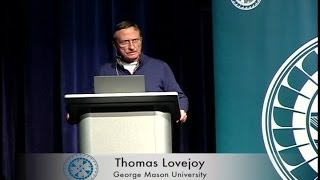
A Wild Solution for Climate Change
Explore the intricate link between climate and biodiversity, and discover innovative biological solutions to mitigate long-term climate change impacts with conservation pioneer Thomas Lovejoy.
Keystone Individuals in Animal Societies - Pros and Cons
Explore the impact of influential individuals in animal societies, focusing on social spiders in African deserts. Learn about their effects on group dynamics and adaptability.
Quantifying Resilience in Complex Systems - From Humans to Ecosystems
Explore quantitative methods for measuring resilience in diverse systems, from ecosystems to human psychology, using critical slowing down and probabilistic approaches to understand tipping points and recovery.
Evolution and Development of the Earliest Land Plant Rooting Systems
Explore the evolution of plant rooting systems, from ancient unicellular rhizoids to complex multicellular structures, and their impact on Earth's climate and ecosystems over 400 million years.