Early Life in the Oceans - From Sea to Changing Sea
Explore the origins and evolution of marine life with leading experts, discussing microbial ecosystems, deep-sea organisms, and the impact of changing oceans on early life forms.
Plot to Continent: Reflections from Studying the Terrestrial Carbon Cycle at Multiple Scales
Explore the terrestrial carbon cycle across scales, from plot to continent, with insights from Ken Davis's research at Pennsylvania State University.
Estimating Fluxes in the Carbon Cycle
Dive into estimating fluxes in the carbon cycle with insights from Anna Michalak's talk at the Keck Institute for Space Studies short course on quantifying emissions.
Flow and Self-Organization in the Biological Pump
Dive into the dynamics of active matter and biological systems, exploring collective phenomena, self-organization, and the biological pump with insights from Stanford researcher Rahul Chajwa.
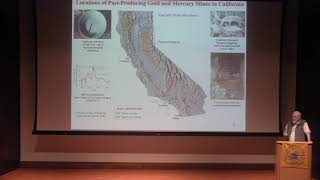
The Environmental Legacy of Mercury, Gold, and Asbestos Mining - Evaluation of Long-Term Impacts
Explore long-term environmental impacts of mercury, gold, and asbestos mining, focusing on sustainable development and future challenges in mineral resource management.
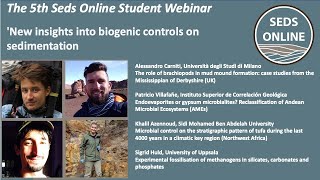
New Insights into Biogenic Controls on Sedimentation
Explore biogenic influences on sedimentation through case studies on brachiopods, endoevaporites, tufa formation, and microbial fossilization, offering new perspectives on geological processes.
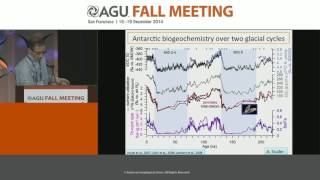
Southern Ocean Biogeochemical Control of Glacial/Interglacial Carbon Dioxide Change
Explore the Southern Ocean's role in glacial/interglacial CO2 changes through biogeochemical processes, Antarctic data, and model results in this comprehensive AGU presentation.
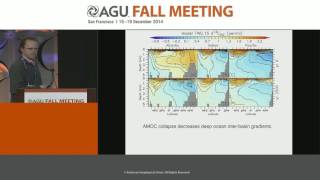
Carbon Isotopes and Atlantic Meridional Overturning Circulation Decline as Triggers for Early Deglacial CO2 Rise
Explore how carbon isotopes support the theory of Atlantic Meridional Overturning Circulation decline triggering early deglacial CO2 rise, challenging existing hypotheses.
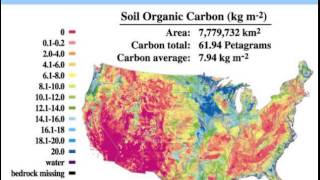
The Global Carbon Cycle and Human Impact - AGU Fall Meeting 2001
Explore the global carbon cycle, human impacts, and key processes affecting atmospheric CO2 levels in this comprehensive overview of Earth's carbon budget and climate change dynamics.
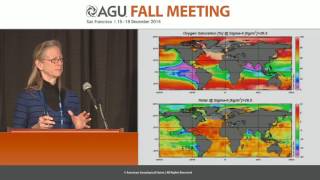
Nitrogen Loss Processes and Nitrous Oxide Turnover in Oceanic Oxygen Minimum Zones
Explores nitrogen loss in oceanic oxygen minimum zones, focusing on denitrification and anammox processes, their environmental controls, and implications for nitrous oxide production and ecosystem function.
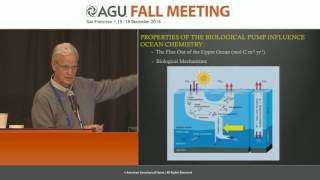
Evaluating the Ocean's Biological Carbon Pump
Explore the ocean's biological carbon pump, its role in climate regulation, and methods for evaluating its efficiency in this comprehensive lecture on marine biogeochemistry.
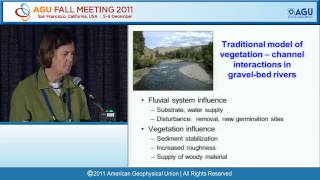
Predictive Understanding of Coupled Interactions Among Water, Life, and Landforms
Explore coupled interactions among water, life, and landforms in this AGU Fall Meeting session, focusing on predictive understanding and cutting-edge research in Earth sciences.
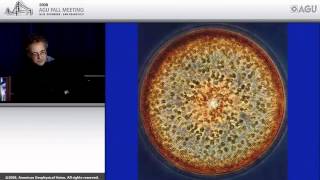
The Story of O: Evolution of Earth's Oxygen Cycle and Its Relevance to Extraterrestrial Life
Explore Earth's oxygen cycle evolution and its implications for extraterrestrial life in this captivating lecture by Paul Falkowski, delving into planetary sciences and astrobiology.
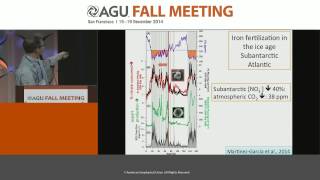
Southern Ocean Biogeochemical Control of Glacial-Interglacial Carbon Dioxide Change
Explore the Southern Ocean's role in glacial/interglacial CO2 fluctuations through Antarctic and subantarctic data analysis, modeling, and deglaciation insights.

Exoplanetary Ecosystems - What We Know and Need to Know
Explore the fascinating world of exoplanetary ecosystems, examining current knowledge and future research directions in this captivating plenary talk by Hilairy E. Hartnett.
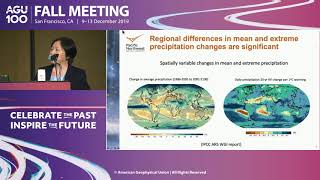
The Bert Bolin Global Environmental Change Lecture
Exploring groundbreaking research and leadership in global environmental change, honoring Bert Bolin's legacy in climate science and international collaboration.
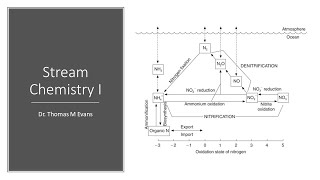
Stream Chemistry I: Introduction to P, N, and O - Lecture 4
Introduction to phosphorus, nitrogen, and oxygen in stream ecosystems, exploring nutrient limitations and transformations crucial for understanding aquatic ecology and biogeochemical cycles.
Marine and Near Surface Diagenesis in Carbonate Systems
Explore marine and near-surface carbonate diagenesis through expert presentations on biogeochemical drivers, karst geobody extraction, microporosity distribution, and petrophysical properties of calcitic and aragonitic deposits.
Biomarker Analysis Techniques and Applications in Geochemistry - Reeburgh Lecture
Explores advanced biomarker analysis techniques in geochemistry, including continuous flow, capillary methods, and isotope ratio mass spectrometry, with applications in soil science and Proterozoic studies.
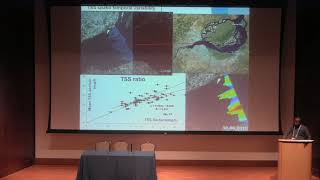
Carbon and Hydrology in the Congo Basin - 2018 Chapman Conference
Explore sedimentary fluxes and carbon cycle changes in the Congo Basin. Gain insights into greenhouse gas emissions and biogeochemical patterns in Africa's largest river system.
Primary Productivity Driven by Escalating Arctic Nutrient Fluxes - PEANUTS
Exploring the impact of increasing Arctic nutrient fluxes on primary productivity, with implications for climate change and ecosystem dynamics in the rapidly changing polar region.