
AI, Archaeology, and Archives - How Data Science is Helping to Reveal Past Epidemics
Exploring malaria's impact through data science, integrating archaeological, historical, and genetic datasets to reveal socio-political influences on disease spread over the last 300 years.
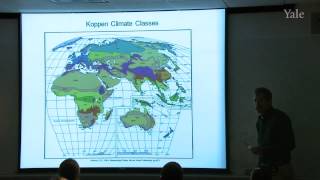
Seasons and Climate Classification - Lecture 18
Explore Earth's seasonal cycles, climate zones, and weather patterns. Learn about precipitation shifts, polar fronts, and climate classification systems in this comprehensive lecture.
A Cooperative Species - Evolutionary Origins of Human Altruism - Lecture 1
Explore the evolutionary origins of altruistic cooperation, challenging traditional notions of 'selfish genes' and Homo economicus through archaeological, genetic, and climatic evidence.

Complete Geography for UPSC - IAS
Comprehensive exploration of physical, climatic, and human geography concepts for UPSC exams, covering global and Indian perspectives with practical exam preparation guidance.
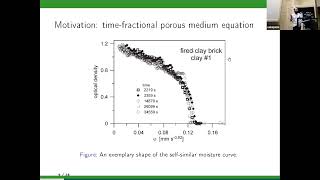
Numerical Methods for Nonlocal and Nonlinear Parabolic Equations with Applications in Hydrology and Climatology
Odkryj metody numeryczne dla nieliniowych równań parabolicznych i ich zastosowania w hydrologii i klimatologii.
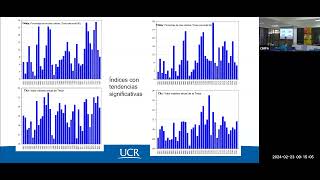
Regional and Local Trend Significance of Precipitation and Temperature Extremes in Central America
Analiza tendencias de precipitación y temperatura extremas en Centroamérica, explorando su significado regional y local.
Climate Change and Energy Transition
Explorez les liens entre le changement climatique et la transition énergétique avec un expert du Laboratoire de Météorologie Dynamique et de l'Institut Pierre Simon Laplace.
Climatological, Meteorological and Environmental Factors in COVID-19 - Day 3 Part 2
Explores environmental and meteorological factors in COVID-19 forecasting, discussing actionable insights for decision-makers and outlining future research directions in pandemic management.
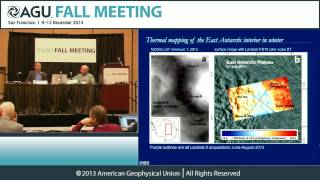
Taking Landsat to the Extreme - Exploring Earth's Coldest Spots
Explore Earth's coldest spots using satellite data, including Landsat 8. Discover record-breaking temperatures, locations, and weather patterns in extreme cold environments.
Linear Algebra II
Explore advanced linear algebra concepts and their applications in data analysis, machine learning, and scientific computing. Enhance problem-solving skills and mathematical reasoning.

When Life Moved to Land and the Disastrous Consequences
Explore the evolutionary journey of life from sea to land, its climatic impacts, and the resulting mass extinctions. Learn about key transitions in Earth's history and their far-reaching consequences.
Gravity Wave Dynamics in the Atmosphere - Bjerknes Lecture
Explore atmospheric gravity waves and their impact on climate in this AGU Fall Meeting lecture by M. Joan Alexander, offering insights into wave dynamics and modeling.
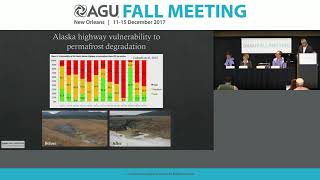
The Melting Cryosphere - Climate Change Effects on Earth's Frozen Regions
New research on shrinking glaciers, ice sheets, melting permafrost, and sea level rise due to climate change, presented by experts from various institutions.
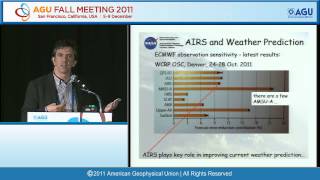
Earth Science Advances Following 10 Years of Aqua Observations - Part 2
Explore Earth science advancements from a decade of Aqua satellite observations, covering atmospheric, oceanic, and terrestrial discoveries at AGU's Fall Meeting 2011.
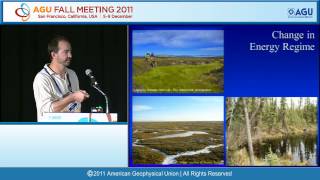
Coupled Processes in the Arctic System - Feedbacks, Amplification, and Impacts on Midlatitudes
Explore coupled processes in the Arctic system, examining feedbacks, amplification, and impacts on midlatitudes. Gain insights into complex Arctic dynamics and their global implications.
Climatological, Meteorological and Environmental Factors in COVID-19 Pandemic - Day 3 Part 1
Experts discuss environmental and meteorological factors in COVID-19 forecasting, addressing challenges in communicating predictions and informing decision-makers amidst uncertainty.
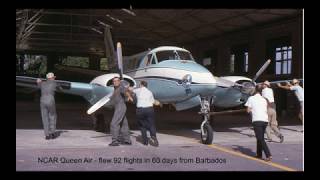
Atmospheric Sciences: From Past Research to Future Challenges - Part 3
Explore tropical convection and long-term climate change prediction with experts Ed Zipser and Reto Knutti, discussing research findings, challenges, and future prospects in atmospheric sciences.
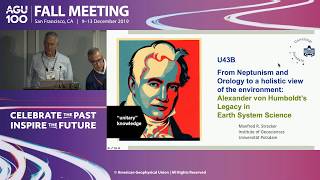
Two Hundred Fifty Years of Alexander von Humboldt - Humboldtian Systems Science in the 21st Century
Explore Alexander von Humboldt's holistic approach to Earth sciences and its modern relevance. Discover his groundbreaking contributions and how they shape today's understanding of our planet's complex systems.
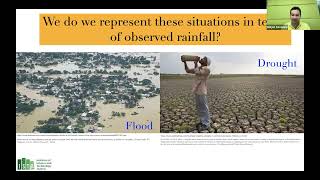
Investigations in Climate Extremes - Impacts and Relationships with Earth's Ecosystems
Explore climate extremes' impacts on ecosystems with early career scientists presenting cutting-edge research on atmospheric and environmental interactions.
The Climate Trio: Stochastic Climate Variability, Seasonal Cycle, and El Niño
Explore the complex interplay between El Niño, seasonal cycles, and climate variability. Gain insights into ENSO's global impacts and advancements in seasonal predictions using conceptual models.
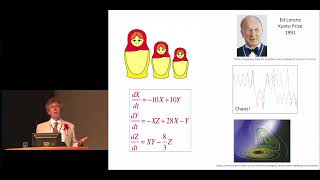
From Determinism to Probability: Development of Ensemble Forecasting in Weather and Climate Prediction
Discover how ensemble forecasting revolutionized weather prediction by shifting from deterministic to probabilistic approaches, enhancing accuracy and reliability in meteorological and climate forecasting systems.