
From Sea to Changing Sea - The Role of Oceans in Climate
Explore the critical role of oceans in climate change with leading oceanographers. Gain insights into sea level rise, ocean circulation, and their impact on global climate systems.
Earth Science
Explore Earth's systems, climate change, and human impacts through expert lectures on topics like carbon cycles, freshwater ecosystems, climate modeling, and glaciology.

Stanford Seminar - We Can Restore the Earth's Climate If We Want to -- And We Should
Explore innovative approaches to climate restoration, including natural processes, geoengineering, and methane removal strategies for oceans and atmosphere.
Combining Physical and Statistical Models in Projected Global Warming
Combining physical and statistical models to narrow uncertainty in global warming projections, focusing on Earth's energy budget and model-observation relationships for more accurate future warming estimates.

El Niño and La Niña - Understanding the ENSO Phenomenon
Explore El Niño/Southern Oscillation: its impact on climate, ocean temperatures, and global weather patterns. Learn about ENSO indices, current data, and the role of ice in climate systems.

Introduction to Atmospheres - Earth's Climate System
Explore Earth's climate system through atmospheric and oceanic studies, with a focus on Hurricane Irene's impact and the fundamental nature of our atmosphere.

Global Warming: Emissions Scenarios and Climate Impacts - Lecture 29
Explore greenhouse gas emissions scenarios, climate warming projections, and potential impacts. Discuss advantages, disadvantages, and mitigation strategies for global warming.
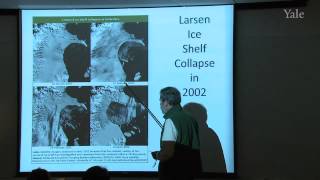
Ice in the Climate System - Types and Formation
Explore five types of ice in the climate system: sea ice, ice sheets, ice shelves, icebergs, and mountain glaciers. Learn about their formation, characteristics, and roles in Earth's environment.
Greenhouse Effect and Earth's Energy Balance - Lecture 6
Explore Earth's energy balance, black body radiation, and the greenhouse effect. Learn about planetary energy budgets and the role of greenhouse gases in atmospheric dynamics.
Water Security: Recent Changes in Victorian Rainfall and Runoff
Explore recent changes in Victorian rainfall and runoff patterns, examining climate models, weather systems, and their impacts on water resources and stream flows.
Making the Most of 2022 to Accelerate Climate Action - Melbourne Climate Futures
Experts discuss climate action progress since COP26, challenges ahead for COP27, youth leadership in emissions reduction, and strategies for accelerating a just transition to green energy.
Quantifying Resilience in Complex Systems - From Humans to Ecosystems
Explore quantitative methods for measuring resilience in diverse systems, from ecosystems to human psychology, using critical slowing down and probabilistic approaches to understand tipping points and recovery.
Time Scales and Tradeoffs in Crisis Management - SFI Flash Workshop
Exploring complex tradeoffs in COVID-19 response: balancing health, economics, and long-term impacts. Experts discuss managing conflicting timescales and applying insights from climate science and sustainability to navigate the crisis.
Time Scales and Tradeoffs in Crisis Management - Daniel Schrag Excerpt
Exploring tradeoffs between health, economics, and environment during COVID-19, with insights on managing complex, multi-timescale challenges for coordinated solutions and crisis mitigation.
Time Scales and Tradeoffs in Crisis Management - An Excerpt
Exploring tradeoffs in pandemic response: balancing health, economics, and long-term impacts. Insights on managing complex challenges across different time scales, drawing from climate science, network dynamics, and global policy.
The Future of Physics
Exploring physics beyond fundamental laws: designing new forms of matter and addressing Anthropocene challenges. Insights into the evolving landscape of physics research and its societal implications.
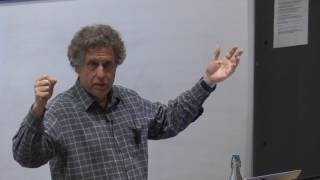
The Butterfly Effect - What Does It Really Signify?
Explore chaos theory, determinism, and unpredictability through the lens of Ed Lorenz's work and the true meaning of the Butterfly Effect in meteorology and climate physics.
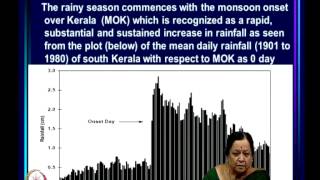
The Monsoon and Its Variability
Comprehensive exploration of the Indian monsoon system, its variability, global connections, and impacts on agriculture, including prediction methods and seasonal transitions.

Climate in Deep Time - From the Archean to the Ice Ages
Explore Earth's 4.5-billion-year journey through geological evidence, from planet formation to the present, uncovering life's evolution and its impact on our world.
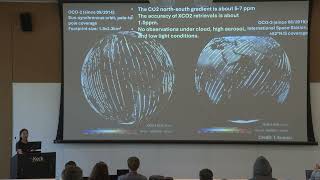
Maximizing the Role of Atmospheric CO2 Observations in Carbon Cycle Science and Carbon-Climate Policy
Explore the impact of atmospheric CO2 observations on carbon cycle science and climate policy with NASA JPL expert Junjie Liu.
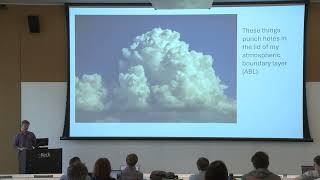
Plot to Continent: Reflections from Studying the Terrestrial Carbon Cycle at Multiple Scales
Explore the terrestrial carbon cycle across scales, from plot to continent, with insights from Ken Davis's research at Pennsylvania State University.