
Species and Speciation - Principles of Evolution, Ecology and Behavior
Explore the process of speciation, including definitions, mechanisms, and stages. Learn about reproductive isolation, ecological specialization, and genetic factors in species divergence.
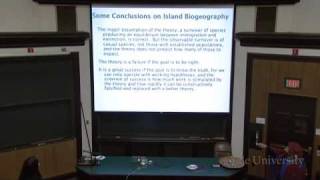
Island Biogeography and Invasive Species - Principles of Evolution, Ecology and Behavior
Explore island biogeography, metapopulations, and their ecological significance. Learn how these concepts apply to species distribution, extinction risks, and even epidemiology in this insightful lecture.

Major Events in the Geological Theatre - Principles of Evolution, Ecology and Behavior
Explore how geology and climate have shaped life's evolution, from atmospheric changes to mass extinctions, and how life has impacted Earth's geology through various processes.
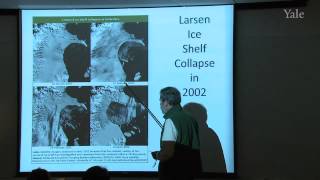
Ice in the Climate System - Types and Formation
Explore five types of ice in the climate system: sea ice, ice sheets, ice shelves, icebergs, and mountain glaciers. Learn about their formation, characteristics, and roles in Earth's environment.

Seasons and Climate - Factors Affecting Earth's Climate Systems
Explore factors influencing Earth's climate: latitude, terrain, continentality, and seasonality. Learn about precipitation patterns, ocean currents, biomes, and the impact of Earth's rotation on climate variations.
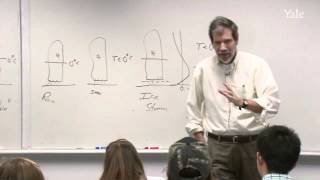
Clouds and Precipitation - Cloud Formation and Precipitation Mechanisms
Explore cloud formation, precipitation mechanisms, and detection methods through experiments and real-world applications. Gain insights into atmospheric processes and their environmental impact.
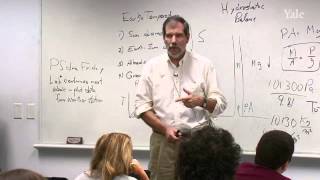
Hydrostatic Balance in Atmosphere and Ocean - Lecture 7
Explore hydrostatic balance in the atmosphere and ocean, including calculations, experiments, and real-world applications of the hydrostatic law.
Greenhouse Effect and Earth's Energy Balance - Lecture 6
Explore Earth's energy balance, black body radiation, and the greenhouse effect. Learn about planetary energy budgets and the role of greenhouse gases in atmospheric dynamics.
The Perfect Gas Law - Atmospheric Pressure, Density, and Temperature
Explore the Perfect Gas Law's impact on atmospheric dynamics, including buoyancy, pressure variations, and gas behavior, with applications to weather patterns and environmental phenomena.
Origins of the Duke Marine Lab
Explore Duke Marine Lab's 85-year journey: groundbreaking research, innovative teaching, and community impact in Beaufort. Discover its evolution, from early days to cutting-edge drone technology and climate initiatives.
Ocean - Elements of Ocean Engineering
Comprehensive exploration of ocean engineering, covering physical oceanography, waves, offshore structures, mooring systems, and platform designs for both fixed and floating installations.
Water Security: Recent Changes in Victorian Rainfall and Runoff
Explore recent changes in Victorian rainfall and runoff patterns, examining climate models, weather systems, and their impacts on water resources and stream flows.
Water Security Series - Environmental Outcomes from the Basin Plan
Explore environmental outcomes of the Basin Plan, including water management, monitoring projects, and ecological impacts. Learn about sustainable research and socioeconomic benefits of water markets.
The Anthropocene: How Humans Are Changing Earth's Geological Behavior
Explore how human activities are reshaping Earth's geology, from altering mountain heights to influencing earthquakes, in this examination of the Anthropocene epoch.
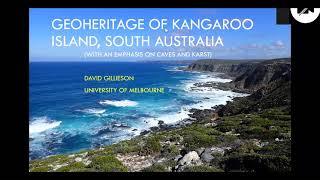
Geoheritage of Kangaroo Island, South Australia
Explore Kangaroo Island's rich geological history, from ancient caves to unique rock formations. Learn about geodiversity, climate records, and the impact of recent wildfires on this Australian treasure.
Mining Threats to Biodiversity and Consequences of Green Energy Transition
Explore mining's impact on biodiversity, future threats, and policy challenges in the green energy transition. Gain insights into compensation strategies and global case studies.
Making the Most of 2022 to Accelerate Climate Action - Melbourne Climate Futures
Experts discuss climate action progress since COP26, challenges ahead for COP27, youth leadership in emissions reduction, and strategies for accelerating a just transition to green energy.
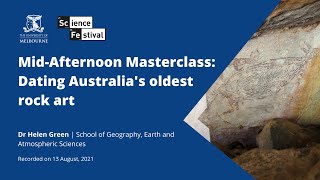
Mid-Afternoon Masterclass - Dating Australia's Oldest Rock Art
Explore scientific techniques for dating ancient Australian rock art, integrating traditional knowledge and western science to uncover the stories behind 12,700-year-old paintings.
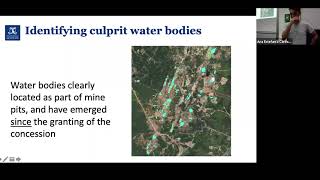
Multidisciplinary Approaches to Geographies of Extraction
Explore multidisciplinary perspectives on extractive geographies with experts from the School of Geography, Earth and Atmospheric Sciences, focusing on Colombia and broader implications.
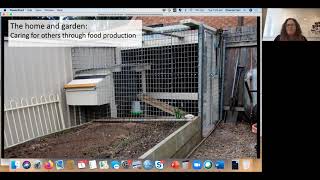
Maintaining Lives - Care in an Industrial City
Explore care practices in deindustrialized urban settings, examining gender dynamics, social bonds, and cultural impacts on Australian identity and community well-being.
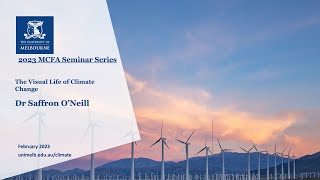
The Visual Life of Climate Change - Imagery and Public Engagement
Explore the power of visual imagery in shaping public perception and engagement with climate change, examining dominant narratives and their impact on society and policy.