Building Life from Scratch - Panel Discussion at IPFest 2019
Panel discussion exploring origins of life, synthetic biology, and astrobiology. Experts discuss building life from scratch, technological advancements, and implications for understanding life's emergence on Earth and beyond.
Unifying the Study of Biodiversity Across Timescales - What a MESS!
Explore a mechanistic model of community assembly that integrates macro-ecology, phylogeography, and macro-evolution to predict biodiversity patterns and infer complex histories of island assembly.
Hybridizing Mechanism and MaxEnt - Ecological Theory for the Anthropocene
Explore a groundbreaking ecological theory combining maximum entropy and mechanism to predict ecosystem patterns and responses to anthropogenic stresses in the Anthropocene era.
Governing the Ungovernable - Nuclear Waste Management Through Consent-Based Siting
Explore the challenges of nuclear waste management through consent-based siting, focusing on environmental justice, intergenerational impacts, and future governance of radioactive materials.
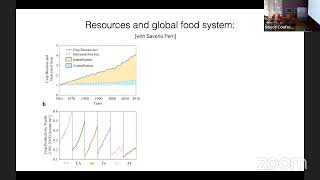
Resources and the Assembly of the Land Biosphere
Explore the intricate relationship between resources and the formation of Earth's land biosphere, uncovering key insights into ecological assembly and evolution.
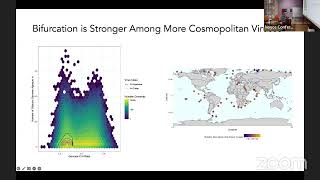
Emergent Spatial and Temporal Patterns in the Biochemistry of Earth's Open Oceans
Explore emergent patterns in ocean biochemistry, examining spatial and temporal dynamics that shape Earth's marine ecosystems and their impact on global processes.
Canopy Biology and Human Societies - Lessons from Treetops to Urban Jungles
Explore canopy biology's insights into ecosystem diversity and human societies. Discover how structural ecology in treetops reveals lessons for urban life and the organization of super-organisms like ant colonies and human groups.
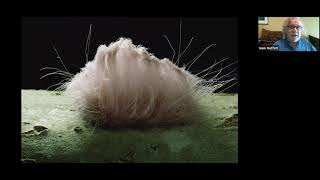
Comparative Canopy Biology and the Structure of Ecosystems
Explore the emerging field of comparative canopy biology, its challenges, and potential for understanding ecosystem structures across various biological communities, from forest canopies to periphyton.
Time Scales and Tradeoffs in Crisis Management - SFI Flash Workshop
Exploring complex tradeoffs in COVID-19 response: balancing health, economics, and long-term impacts. Experts discuss managing conflicting timescales and applying insights from climate science and sustainability to navigate the crisis.
Time Scales and Tradeoffs in Crisis Management - Daniel Schrag Excerpt
Exploring tradeoffs between health, economics, and environment during COVID-19, with insights on managing complex, multi-timescale challenges for coordinated solutions and crisis mitigation.
Time Scales and Tradeoffs in Crisis Management - An Excerpt
Exploring tradeoffs in pandemic response: balancing health, economics, and long-term impacts. Insights on managing complex challenges across different time scales, drawing from climate science, network dynamics, and global policy.
Mutualistic Networks: Moving Towards a Predictive Theory
Explore predictive theories for plant-pollinator networks, including foraging preferences, invasion impacts, and drought responses. Brief insight into integrating human dynamics in ecological food-web models for fisheries.

Olivia Judson on Major Energy Transitions in Evolutionary History
Explore major energy transitions in evolutionary history with Olivia Judson, examining how life's processes shaped Earth's atmosphere, ecosystems, and geological features over billions of years.
The Origins of Life - From Darwin's Warm Little Pond to Modern Theories
Explore theories on life's origins with experts discussing abiogenesis, evolutionary processes, and the implications for interplanetary exploration and our understanding of life itself.
The Future of Physics
Exploring physics beyond fundamental laws: designing new forms of matter and addressing Anthropocene challenges. Insights into the evolving landscape of physics research and its societal implications.
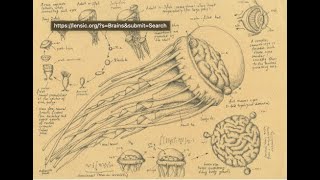
Evolving Brains: Solid, Liquid and Synthetic - Lecture 1: Liquid Brains and Solid Brains
Explore diverse intelligences across life forms, from cells to humans. Examine brain evolution, commonalities, and differences, and consider possibilities for new types of minds.
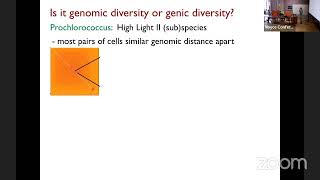
Why is There So Much Fine Scale Microbial Diversity - Ecology and Evolution in High Dimensions
Explore the ecological and evolutionary factors driving microbial diversity at fine scales, examining high-dimensional perspectives on this complex phenomenon.
Fungi, Forests, and Group Selection - Ecological Mutualism and Competition
Explore mutualism and competition in ecosystems, focusing on plant-microbe communities. Discover how group selection in patchy environments can lead to optimal resource allocation and discuss societal implications.
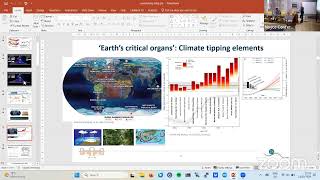
Overshooting Climate Targets - Increased Risks for Tipping Elements in Climate and Biosphere
Explore the risks of exceeding climate targets and their impact on tipping elements in Earth's systems, with insights on potential consequences for our planet's future.
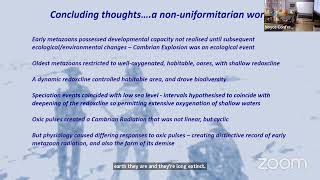
The Cambrian Explosion: Triggers and Drivers - Rachel Wood
Explore the rapid emergence of animal life during the Cambrian Explosion, examining potential genetic and environmental drivers, and the unique conditions of Earth during this revolutionary period in evolutionary history.
Why is Life So Diverse? - Episode 3
Exploring biodiversity's origins, constraints, and threats. Discusses scaling laws in evolution, exceptions to rules, and the potential for forecasting biosphere changes, featuring insights from ecology and evolutionary biology experts.