Distributed Deep Learning on Apache Mesos with GPUs and Gang Scheduling
Explore distributed deep learning on Apache Mesos, leveraging GPU clusters for efficient model training in self-driving cars, trip forecasting, and fraud detection at UBER.
How to Eliminate I/O Bottleneck and Continuously Feed GPU While Training in the Cloud
Optimize I/O for GPU-intensive machine learning training in the cloud. Learn a new architecture to maintain data throughput and implement it in Kubernetes for PyTorch workloads.
Automatic Operator Generation for Open AI Frameworks - MindSpore and AKG
Explore AKG, an automatic AI/DL operator generation solution for MindSpore. Learn about its architecture, capabilities, and role in optimizing performance for various hardware platforms.
Fireside Chat: PyTorch Foundation - Evolution, Usage, and Future
Insightful discussion on PyTorch's open-source journey, its widespread adoption, and future direction under the PyTorch Foundation. Explores governance, contributions, and upcoming developments.

How Linux Foundation is Changing the Machine Learning World
Explore Linux Foundation's initiatives in AI, including open-source projects like Acumos AI and Horovod, aimed at reducing fragmentation and fostering collaboration in machine learning development.
Deep Learning Neural Network Acceleration at the Edge
Explore neural network acceleration for edge computing, covering frameworks, formats, and hardware solutions. Learn about efforts to consolidate technologies and enable innovation in intelligent devices.
Evolving Deep Learning Platform with Knative
Enhance deep learning workflows with Knative: automate training-to-inference pipelines, implement smart routing and auto-scaling, and streamline image generation for improved resource efficiency and platform capabilities.
Angel 3.0 - A Full Stack Machine Learning Platform
Explore Angel 3.0, a comprehensive machine learning platform featuring auto feature engineering, hyperparameter tuning, model serving, and PyTorch integration for enhanced graph embedding and GNN algorithms.
Minimizing GPU Cost for Deep Learning on Kubernetes
Learn to optimize GPU usage for deep learning on Kubernetes, reducing costs by up to 40%. Explore GPU sharing solutions, API design, scheduling, and isolation techniques with practical Tensorflow examples.
Large Scale Distributed Deep Learning on Kubernetes Clusters
Explore distributed deep learning deployment on Kubernetes, comparing tf-operator and mpi-operator for TensorFlow training jobs, and optimizing resource utilization for better economics in machine learning tasks.
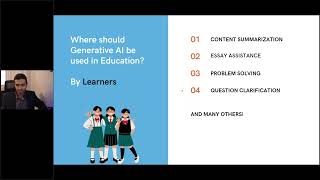
Leveraging Generative AI in Education - A M Aditya
Explore how Generative AI revolutionizes education, enhancing learning experiences and empowering students globally. Discover its impact, benefits, challenges, and real-world applications in this insightful presentation.
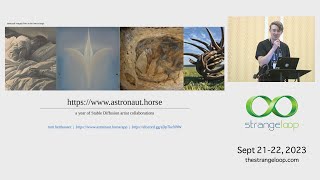
Astronaut Horse - Stable Diffusion Artist Collaborations
Explore open-source AI tools for visual art creation, featuring Stable Diffusion collaborations between developers and artists. Learn about innovative techniques and see generated artworks and physical responses.
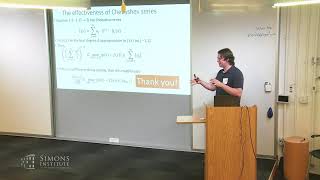
Fast Attention Requires Bounded Entries
Explore the relationship between fast attention mechanisms and bounded entries in machine learning, with insights from Josh Alman's research on sketching and algorithm design.
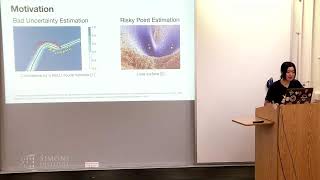
Weighted Model Integration
Explore advanced probabilistic inference in hybrid domains using Weighted Model Integration. Learn about solvers, tractability analysis, and applications in Bayesian deep learning.
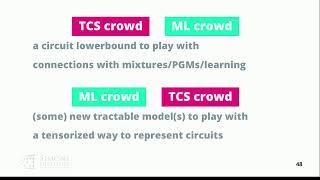
Subtractive Mixture Models: Representation and Learning
Exploring subtractive mixtures in probabilistic circuits: increased expressiveness, efficient learning, and inference for complex distributions. Theoretical and empirical advantages over traditional additive mixtures.
AI News: Open Source Advancements and Recent Developments
Explore latest AI advancements: new models, papers, and tools. Learn about HyperAttention, MemGPT, Self-RAG, PaLI-3, Fuyu-8B, MistralLite, and more. Stay updated on AI developments in various domains.
GPU Accelerated Deep Learning for Scala 3 with Storch
Discover Storch, a new PyTorch-based library for GPU-accelerated deep learning in Scala 3. Learn about tensor operations, automatic differentiation, and neural network APIs for building enterprise-grade machine learning applications.

Doubling Stable Diffusion Inference Speed with RTX Acceleration and TensorRT - A Comprehensive Guide
Comprehensive guide on boosting Stable Diffusion performance with RTX Acceleration TensorRT, covering installation, optimization, and troubleshooting for various models and extensions.

A Decade of Machine Learning Accelerators: Lessons Learned and Carbon Footprint
Exploring a decade of machine learning accelerators, lessons learned, and strategies to reduce the carbon footprint of deep neural networks through optimizing models, machines, mechanisms, and mapping.
Artificial Intelligence for Geometry Processing
Explores deep learning techniques for processing irregular 3D geometric data, addressing challenges in surface reconstruction and geometric modeling. Highlights potential applications and future research directions.
Fast and Accurate Deep Neural Networks Training
Exploring LARS and LAMB optimizers for scaling deep learning on supercomputers, enabling faster training and higher accuracy in AI applications across various industries.