All Things VQGAN - Variational AutoEncoder and VQ-VAE with Codebook Explanations - Part 2
Explore Variational AutoEncoders and Vector Quantized VAE, focusing on codebook explanations. Learn how these advanced techniques improve upon traditional autoencoders for better image generation and representation.
All Things VQGAN - AutoEncoder with Latent Space and Reconstruction Error - Part 1
Explore AutoEncoders, latent space, and reconstruction error in VQGAN. Learn key concepts and their applications in AI, with practical examples and in-depth explanations.
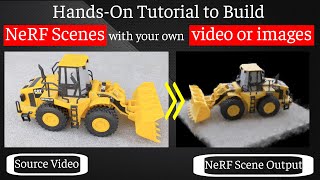
Nvidia Instant-NGP - Create Your Own NeRF Scene From a Video or Images - Hands-On Tutorial
Learn to create NeRF scenes from videos or images using NVIDIA Instant-ngp. This hands-on tutorial covers environment setup, data preparation, and various NeRF visualization techniques on Ubuntu 22.04.
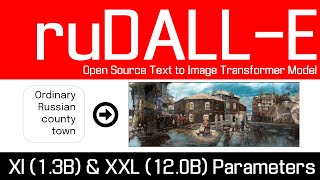
Text to Image Generation Using ruDALL-E Open Source Model
Explore ruDALL-E, an open-source text-to-image model based on DALL-E. Learn about its architecture, models, and try it out in Google Colab for generating images from text descriptions.
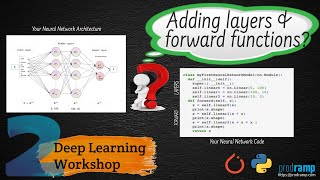
Adding Layers and Forward Functions to Your Neural Network in PyTorch
Learn to create neural networks in PyTorch: design layers, implement forward functions, and adapt models for various data types. Hands-on examples cover basic to complex architectures for structured and unstructured data.
Everything You Need to Know About Tensors in Deep Learning With PyTorch
Comprehensive guide to PyTorch tensors: creation, operations, data types, and GPU usage. Hands-on examples cover essential concepts for deep learning beginners.
Graph Neural Networks Implementation in Python
Learn Graph Neural Networks implementation in Python, covering graph representations, node embeddings, message passing, and practical applications using NetworkX and PyG libraries.
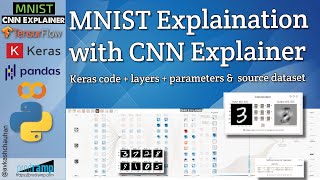
Deep Understanding of MNIST Problem and Its CNN Solution Using CNN Explainer
Comprehensive tutorial on MNIST problem and CNN solution using CNN Explainer. Covers dataset preparation, model architecture, training, and evaluation. Ideal for beginners in deep learning and neural networks.
CNN Explainer
Interactive visualization tool demystifies Convolutional Neural Networks (CNNs) for beginners. Explore network structures, mathematical operations, and train your own model using hands-on demonstrations and explanations.
Create and Visualize Your First Convolutional Neural Network in Python
Learn to create and visualize a Convolutional Neural Network (CNN) in Python, covering key concepts like convolution, pooling, flattening, and dropout with practical examples and code implementation.
Create and Visualize Your First Perceptron and Feed Forward Network in Python
Learn to build and visualize Perceptron and Feed Forward networks in Python using Keras and TensorFlow. Ideal for beginners, this hands-on tutorial covers network creation, visualization, and fundamental deep learning concepts.
Create and Visualize Your Very First Neural Network in Python
Create and visualize your first neural network in Python using Keras and TensorFlow. Learn step-by-step, from basic concepts to building a sequential model, with helpful visualizations and a pre-trained network example.
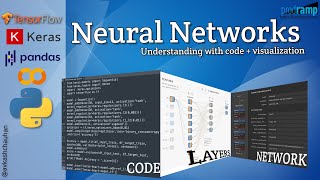
How to Transform and Improve Your Deep Learning Code to a Visual Neural Network
Learn to visualize and improve deep learning neural networks, making them easier to understand and explain through code transformation and network visualization techniques.
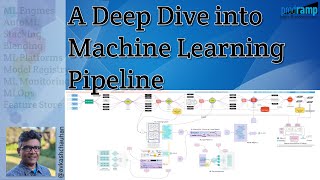
A Deep Dive into Machine Learning and MLOps Pipeline with Model Registry and Feature Store
Explore key components of modern ML pipelines: AutoML, observability, model registry, transformation, and feature store. Learn to build scalable, reliable MLOps systems for enterprise-level machine learning.

Stable Diffusion- LyCORIS for Style - LoRA Part 2
Explore advanced techniques in Stable Diffusion, focusing on LyCORIS for style transfer. Learn about LoCon and LoHa, analyze grid results, and optimize hyperparameters for improved AI-generated art.
Build a Neural Network for Classification from Scratch with PyTorch
Learn to build a neural network for classification using PyTorch, covering data preparation, network structure, and implementation. Gain hands-on experience in deep learning fundamentals.

Vector Similarity Search
Explore vector similarity search, its applications in deep learning, and how it revolutionizes search across text, multimedia, and recommendations. Learn from industry experts about implementation and future possibilities.

Recurrent Neural Networks, Transformers, and Attention
Explore recurrent neural networks, transformers, and attention mechanisms in deep learning. Learn design principles, applications, and advanced concepts like LSTM and backpropagation through time.

AI Avatars with Dreambooth Alternative LORA Based Stable Diffusion Fine-Tuning on Free Colab
Learn to create personalized AI avatars using LORA, a faster Stable Diffusion fine-tuning method. Explore efficient model adaptation, small file sizes, and improved performance on Google Colab.

Dreambooth with LoRA and Automatic1111
Learn to use LoRA for efficient Stable Diffusion fine-tuning with Automatic1111 webui. Discover how to create improved quality images using this new technique for local Dreambooth training.

Dreambooth and LoRA Tutorial - Checkpoints, The Basics and Walkthrough
Learn to create custom AI image models using Dreambooth and LoRA techniques. Explore image processing, checkpoint creation, and concept settings for tailored results in Stable Diffusion.