LambdaNetworks- Modeling Long-Range Interactions Without Attention
Explore LambdaNetworks, a novel approach to modeling long-range interactions in AI without traditional attention mechanisms, offering improved efficiency and performance in computer vision tasks.
Descending Through a Crowded Valley - Benchmarking Deep Learning Optimizers
Comprehensive analysis of popular deep learning optimizers, comparing performance across tasks and providing evidence-based recommendations for algorithm selection and parameter tuning.
Training More Effective Learned Optimizers, and Using Them to Train Themselves - Paper Explained
Explores a novel approach to machine learning optimization using neural networks, discussing its architecture, training process, and potential to revolutionize model training through self-improvement and generalization.
Axial-DeepLab - Stand-Alone Axial-Attention for Panoptic Segmentation
Explore a novel approach to image processing using axial-attention, combining positional embeddings and factorized self-attention to achieve state-of-the-art results in image segmentation tasks.
Hopfield Networks Is All You Need - Paper Explained
Explores the connection between Hopfield networks and transformer attention, analyzing BERT through this lens and applying Hopfield attention to immune repertoire classification.
ImageNet Classification with Deep Convolutional Neural Networks - Paper Explained
Detailed explanation of AlexNet, the groundbreaking deep convolutional neural network that revolutionized computer vision and kickstarted the deep learning era in image classification.

Generative Adversarial Networks - Paper Explained
Explore the groundbreaking Generative Adversarial Networks paper, covering its innovative approach, theoretical foundations, and practical implications for AI-driven image generation and deep learning advancements.

Deep Residual Learning for Image Recognition - Paper Explained
Explore deep residual learning for image recognition, covering the problem of depth, residual connections, and their impact on neural network performance in computer vision tasks.
NVAE- A Deep Hierarchical Variational Autoencoder
Detailed explanation of NVAE, a deep hierarchical variational autoencoder for high-resolution image generation, covering architecture, training techniques, and state-of-the-art results.
Author Interview - Typical Decoding for Natural Language Generation
Interview exploring typical sampling, a new decoding method for language models that balances generating high-probability and high-information samples, aiming to produce more diverse and interesting text while reducing repetitive outputs.
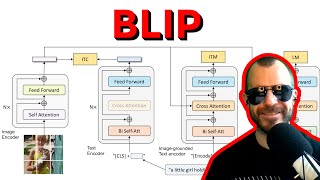
BLIP- Bootstrapping Language-Image Pre-Training for Unified Vision-Language Understanding and Generation
BLIP: A versatile vision-language pre-training framework that excels in both understanding and generation tasks. Utilizes bootstrapping to improve noisy web data, achieving state-of-the-art results across various vision-language tasks.

Active Dendrites Avoid Catastrophic Forgetting - Interview With the Authors
Interview exploring how active dendrites in neural networks can mitigate catastrophic forgetting, enabling better multi-task and continual learning for AI systems in dynamic environments.
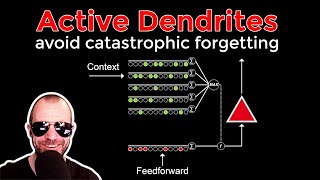
Avoiding Catastrophe - Active Dendrites Enable Multi-Task Learning in Dynamic Environments
Explore how active dendrites in neural networks mitigate catastrophic forgetting, enabling multi-task learning and adaptation in dynamic environments through context-sensitive gating and sparse representations.
Author Interview - VOS- Learning What You Don't Know by Virtual Outlier Synthesis
Interview exploring Virtual Outlier Synthesis for out-of-distribution detection in neural networks. Discusses motivations, methodology, and key findings of novel approach to improve model robustness using synthesized outlier data.
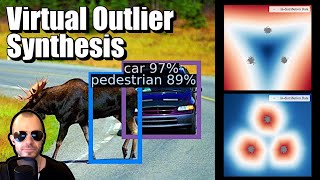
Learning What You Don't Know by Virtual Outlier Synthesis - Paper Explained
Explore Virtual Outlier Synthesis, a novel method for improving out-of-distribution detection in deep learning models by generating synthetic outliers during training to enhance decision boundary regularization.
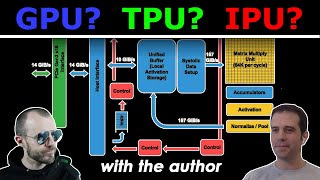
All About AI Accelerators - GPU, TPU, Dataflow, Near-Memory, Optical, Neuromorphic & More
Comprehensive exploration of AI accelerator technologies, from GPUs to emerging innovations like neuromorphic computing, discussing their principles, advantages, and future potential in advancing artificial intelligence.
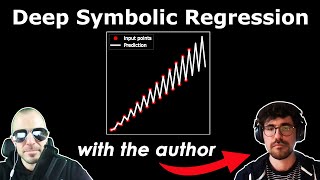
Predicting the Rules Behind - Deep Symbolic Regression for Recurrent Sequences
Explore deep symbolic regression for predicting rules behind number sequences using transformers. Learn about data encoding, training processes, and applications beyond mathematics in this in-depth interview.
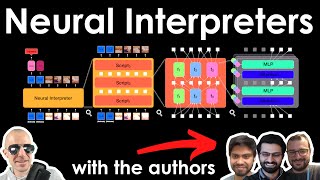
Dynamic Inference with Neural Interpreters - Interview with the Authors
Explore Neural Interpreters: a modular deep learning architecture for systematic generalization. Learn about its structure, function routing, and applications in image classification and abstract reasoning.
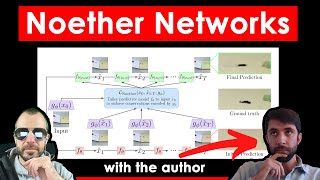
Noether Networks - Meta-Learning Useful Conserved Quantities
Explore Noether Networks: a novel approach to meta-learning conserved quantities in sequential prediction problems, inspired by Noether's theorem and aimed at discovering useful symmetries and inductive biases.

Resolution-Robust Large Mask Inpainting with Fourier Convolutions - With Author Interview
Explore LaMa, an advanced image inpainting system using Fourier convolutions for large mask removal. Learn about its architecture, loss function, and impressive results in reconstructing complex structures.
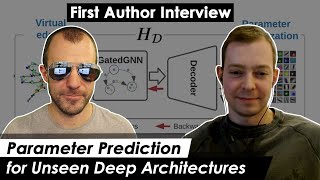
Parameter Prediction for Unseen Deep Architectures - With First Author Boris Knyazev
Explore parameter prediction for neural networks using graph hypernetworks. Learn about DeepNets-1M dataset, training techniques, and experimental results for efficient network training paradigms.