Expert-Informed, User-Centric Explanations for Image Classification with Deep Learning
Explore expert-informed, user-centric explanations for image classification using deep learning. Gain insights into diagnostic feature labeling and its applications in various fields.
Unified-IO: A Unified Model for Vision, Language, and Multi-Modal Tasks
Explore a unified neural model for diverse AI tasks, including computer vision, image synthesis, and NLP. Learn about its innovative approach to homogenizing inputs and outputs across multiple domains.
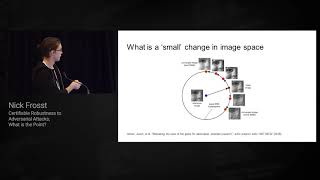
Capsule Networks: An Introduction
Explore capsule networks and their potential to revolutionize computer vision, addressing limitations of convolutional neural networks in image recognition tasks.
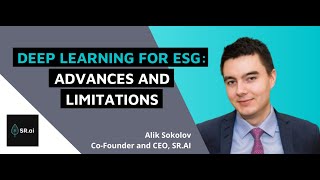
Deep Learning for ESG: Advances and Limitations
Explore recent NLP advances in ESG analysis, including transformer models and transfer learning. Understand the advantages and limitations of current technology in ESG domain.
Zephyr LPWAN Connectivity Options and When to Choose Them
Explore LPWAN technologies supported by Zephyr, comparing their advantages and trade-offs for power, range, and reachability. Learn to choose the best option for your IoT project.

Flux Inpainting - Ultimate Guide
Master flux inpainting techniques using Forge UI for Stable Diffusion and other models. Learn advanced methods to enhance and manipulate AI-generated images effectively.
Navigating Generative AI and Its Risks - Balancing Innovation and Ethics
Explore generative AI applications, deepfake threats, and strategies for combating misinformation. Learn about technological, regulatory, and collaborative approaches to ensure ethical AI development.

Microphysiological Systems Research: Applications in Biopharmaceutics and Advancements in Image Analysis
Explore microphysiological systems in biopharmaceutics, focusing on microvascular network models and advanced 3D image analysis using deep learning for enhanced drug development and disease understanding.
Generative AI for Text to Audio Generation
Explore cutting-edge AI for text-to-audio generation. Learn about AudioLDM, AudioLDM2, and more. Discover applications in sound design for movies, games, and VR. Includes live demos and open-source tools.
Exploring ChatGPT for Improved Observability
Explore ChatGPT's potential for enhancing observability in modern platforms. Learn about AI innovations, deep neural networks, and practical applications in IT operations and decision-making.

Deep Learning Robustness Verification for Few-Pixel Attacks
Explore a novel L0 robustness verifier for neural networks, addressing few-pixel attacks through dynamic programming, sampling, and covering designs to enhance verification efficiency.
Probabilistic Programming with Programmable Variational Inference
Explore a modular approach to variational inference in probabilistic programming, enhancing expressiveness and enabling user-defined objectives with systematic gradient estimation transformations.
Productionize AI and ML Algorithms in Cloud Environments
Explore AI and ML algorithm productionization in cloud environments. Learn development phases, NLP tasks, Hugging Face, MLflow, and AWS deployment for effective model management and serving.
Challenges in Hyperparameter Optimization for Reinforcement Learning - Understanding AutoRL Through AutoML
Explore the complexities of hyperparameter optimization in Reinforcement Learning, examining AutoML tools and methods to better understand and tune RL algorithms for improved performance.
Discovering Black-Box Optimizers via Evolutionary Meta-Learning
Delve into evolutionary meta-learning techniques for discovering black-box optimizers, exploring advanced concepts in evolution strategies and genetic algorithms through self-attention architectures.
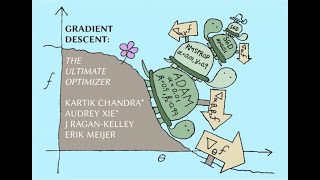
Gradient Descent: The Ultimate Optimizer - Automating Hyperparameter Optimization
Discover how to automatically optimize hyperparameters in gradient-based ML algorithms through an elegant modification to backpropagation, making optimizer tuning more efficient and less sensitive to initial choices.
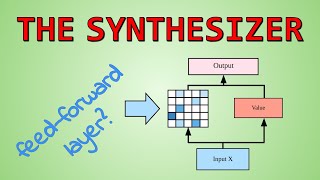
Synthesizer - Rethinking Self-Attention in Transformer Models
Explores alternative attention mechanisms in Transformer models, proposing the Synthesizer model that learns synthetic attention weights without token-token interactions, showing competitive performance across various NLP tasks.

DETR - End-to-End Object Detection with Transformers
Explore DETR, a groundbreaking object detection method using Transformers. Learn about its simplified architecture, innovative loss function, and impressive performance in image analysis tasks.
PyTorch Sentiment Classifier From Scratch With Huggingface NLP Library - Full Tutorial
Build a sentiment classifier using PyTorch, BERT, and Huggingface's NLP library. Learn to process datasets, tokenize text, create tensors, and implement training steps for an IMDB sentiment analysis model.
Graph Convolutional Network Paper Explained
Comprehensive explanation of Graph Convolutional Networks (GCNs), covering theory, derivation, and practical applications in node classification, with insights into their functionality and effectiveness.

Variational Autoencoder From Scratch in PyTorch
Learn to implement a Variational Autoencoder from scratch using PyTorch, covering architecture, training loop, and inference with practical examples and code demonstrations.