Deep Generative Models - Energy Based Models - Lecture 11
Explore energy-based models in deep learning, their applications, and theoretical foundations. Gain insights from Stanford's expert on advanced generative modeling techniques.
Stanford CS236: Deep Generative Models - Lecture 7 - Normalizing Flows
Explore normalizing flows in deep generative models with Stanford's Stefano Ermon. Learn advanced techniques for creating flexible and expressive probability distributions in machine learning.
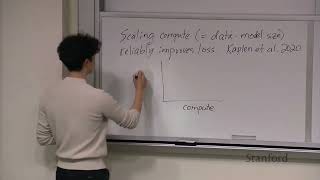
Intuitions on Language Models and Shaping AI's Future - Stanford CS25 Lecture
Explore intuitions on language models and the evolution of Transformer architectures with OpenAI researchers. Gain insights into next-word prediction, scaling laws, and the future of AI development.
Overview of Transformers - Stanford CS25: Lecture 1
Comprehensive introduction to NLP, Transformers, and AI agents, covering history, functionality, recent breakthroughs, applications, and challenges in the field of artificial intelligence.
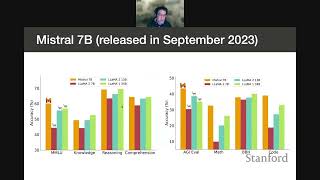
Demystifying Mixtral of Experts - Stanford CS25 Lecture
Explore Mixtral 8x7B, a Sparse Mixture of Experts model, with Albert Jiang. Learn about its architecture, expert routing, and how it processes 47B parameters while using only 13B during inference.
HECTOR - Multimodal Deep Learning Model for Predicting Recurrence Risk in Endometrial Cancer
Multimodal deep learning model HECTOR predicts endometrial cancer recurrence risk using histopathology images and tumor stage, outperforming current standards for personalized treatment decisions.

Deep Learning in Life Sciences - Spring 2021
Explore cutting-edge applications of deep learning in genomics, drug design, protein folding, pathology, and neuroscience. Gain insights into AI's transformative potential in life sciences research and healthcare.
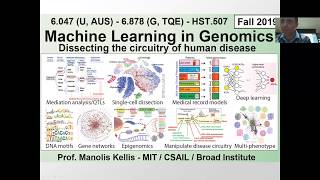
Machine Learning in Genomics - Fall 2019
Comprehensive exploration of computational biology techniques, from dynamic programming to deep learning, applied to genomics, epigenomics, and systems biology. Covers cutting-edge topics like single-cell genomics and genome engineering.
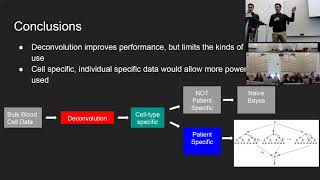
MIT CompBio Course Projects Fall 2019
Explore cutting-edge computational biology projects at MIT, covering topics like epigenetics, protein structures, gene expression, machine learning in cancer research, and more.
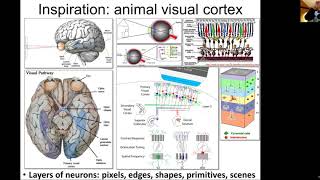
MIT Deep Learning in Life Sciences Spring 2020
Explore deep learning applications in genomics, from neural networks to single-cell analysis. Gain insights into regulatory genomics, epigenomics, and genetics through advanced computational techniques.
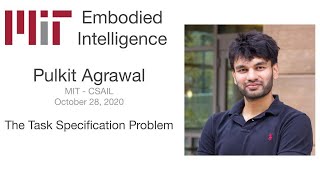
The Task Specification Problem
Exploring challenges in AI task specification, focusing on aligning human communication with machine understanding to improve robustness, transfer, and feature learning in AI systems.
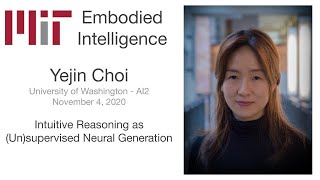
Intuitive Reasoning as Unsupervised Neural Generation
Explore intuitive reasoning in AI through neural generation, covering topics like common sense, language models, and multimodal information with researcher Yejin Choi.
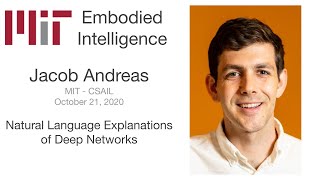
Jacob Andreas - Natural Language Explanations of Deep Networks
Explore strategies for generating natural language explanations of deep networks, covering medical diagnosis, multiagent communication, and neuron descriptions in AI systems.
Building Embodied Autonomous Agents
Explore modular agents for visual navigation, 3D semantic mapping, and embodied instruction following. Learn about self-supervised learning, semantic search policies, and state-of-the-art performance in challenging environments.

Machine Learning with Python
Comprehensive Python tutorial covering machine learning concepts, algorithms, and deep learning with TensorFlow. Includes hands-on projects and real-world applications.
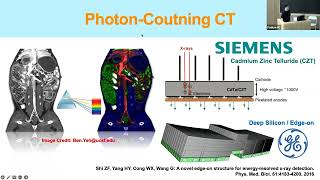
Deep Learning with Diffusion & Large Models
Explore cutting-edge deep learning techniques for CT reconstruction, focusing on diffusion models and large-scale neural networks to enhance image quality and diagnostic accuracy.
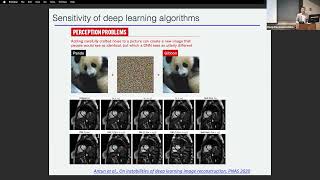
Model-Based Deep Learning - Beyond Unrolling
Explore advanced model-based deep learning techniques beyond unrolling, focusing on innovative approaches for deep reconstruction in neural networks.
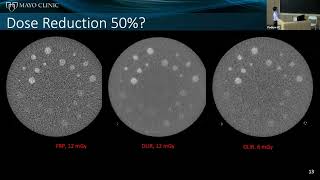
Image Quality Evaluation of Deep Learning Image Reconstruction and Denoising in Clinical CT
Explore advanced techniques for assessing image quality in CT scans using deep learning, focusing on reconstruction and denoising methods for improved clinical outcomes.
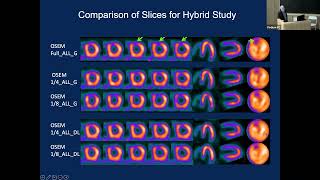
DL Applications in Myocardial Perfusion SPECT Imaging
Explore deep learning applications in myocardial perfusion SPECT imaging, enhancing diagnostic accuracy and efficiency in cardiac imaging techniques.
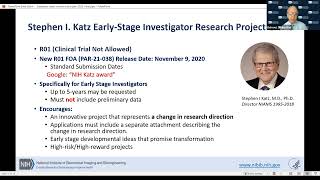
NIH Perspective: Scientific Program and Funding Opportunities for Advanced Imaging and AI at NIBIB
Explore NIBIB's scientific programs and funding opportunities for advanced imaging and AI research, presented by Behrouz Shabestari at Yale University's Deep Reconstruction Workshop.
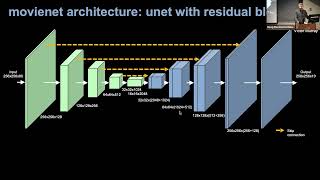
Fast Motion-Resolved 4D MRI Using Convolutional Networks Without Data Consistency
Explore cutting-edge techniques for rapid 4D MRI reconstruction using convolutional networks, focusing on motion-resolved imaging without data consistency constraints.