
Supercharging Multi-LLM Intelligence with CALM - Composition to Augment Language Models
Discover how CALM (Composition to Augment Language Models) revolutionizes multi-LLM integration through advanced projection layers and cross-attention mechanisms for enhanced AI capabilities.
DSPy: Building Self-Improving Language Model Pipelines - Beyond LangChain Templates
Explore DSPy's innovative approach to building self-improving LLM pipelines, featuring automatic prompt engineering and graph-based optimization - moving beyond traditional prompt templates.
Diffusion Transformer and Rectified Flow in Stable Diffusion 3
Dive into the mechanics of Diffusion Transformers, exploring noise distribution, latent space dimensionality, and the innovative Rectified Flow technology powering next-gen AI image generation.
Understanding 4-bit Quantization and QLoRA - Memory Efficient Fine-tuning of LLMs
Dive into memory-efficient fine-tuning of large language models through 4-bit quantization and QLoRA, combining theoretical foundations with practical implementation in Colab.

AI-Enhanced Medical Mask Compliance in Healthcare - Building a Safety Net with Computer Vision
Discover how computer vision and deep neural networks enhance medical mask compliance monitoring through object detection and facial landmark analysis for improved healthcare safety.
Seeing Through the Lens of Transformers - A New Era in Computer Vision
Explore the revolutionary impact of transformer architecture in computer vision, from its origins in language processing to groundbreaking applications in visual tasks and self-attention mechanisms.
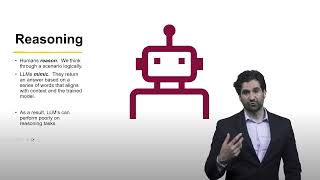
Prompt Engineering for Neuro-Symbolic AI - Part 2
Dive into advanced prompt engineering techniques, exploring the intersection of symbolic methods and deep learning for more effective AI interactions and development.
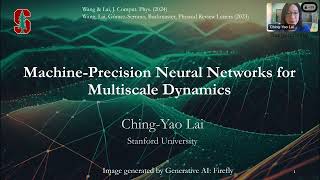
Machine-Precision Neural Networks for Multiscale Dynamics
Discover how multi-stage neural networks can achieve machine-precision accuracy in scientific predictions, addressing spectral bias and improving deep learning applications in multiscale physics problems.
Parameter Efficient Fine-Tuning with Multiple LoRA Adapters for Large Language Models
Dive into parameter efficient fine-tuning with LoRA adapters, exploring matrix factorization, SVD, and advanced configurations for optimizing large language models.
LLM as Next-Generation Operating System - Memory Augmented Systems and Continuous Chat
Explore how memory-augmented LLMs can revolutionize operating systems, focusing on multi-AI integration and continuous chat capabilities for next-generation computing architectures.
StreamingLLM: Enabling Infinite Sequence Length in Large Language Models
Dive into StreamingLLM's framework for extending LLM attention windows to handle infinite sequences, featuring practical implementation insights and code analysis.
Mamba AI: Understanding Selective State Space Models as Transformer Alternatives
Explore the groundbreaking MAMBA architecture and its potential to revolutionize AI through selective state space models, offering a compelling alternative to traditional transformers.
How to Code Long-Context LLMs - LongLoRA Implementation with Llama 2 100K
Dive into fine-tuning techniques for extending LLM context lengths using LongLoRA, featuring practical implementation on Llama 2 and Flash Attention 2 optimization for handling extensive sequences.
Stable Diffusion XL Theory and Code with Shape-Shifting ControlNet
Dive into the advanced mechanics of SDXL and ControlNet, exploring text-to-image diffusion models and shape-shifting techniques for synthetic image manipulation.
Introduction to KERAS 3 Core for PyTorch and JAX
Explore KERAS 3's framework-agnostic capabilities for building neural networks and transformers across TensorFlow, PyTorch, and JAX platforms with advanced customization options.
In-SRAM Computing for Generative AI and Large Language Models
Explore innovative In-SRAM computing architecture and its role in reducing power consumption for large language models and generative AI in datacenter environments.
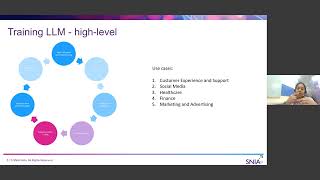
Fine-Tuning Large Language Models - Empowering AI for Specialized Applications
Discover the fundamentals of fine-tuning Large Language Models (LLMs), from basic concepts to advanced techniques, focusing on domain-specific applications and ethical considerations.
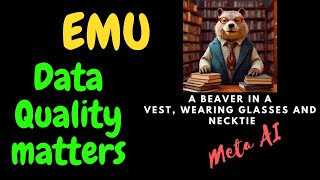
Enhancing Image Generation Models Using Photogenic Needles in a Haystack - Meta's Emu Architecture
Dive into Meta's Emu architecture and quality fine-tuning process, exploring how this modified Latent Diffusion Model achieves exceptional image generation and precise editing capabilities.
LLaVA: Large Language and Vision Assistant - Understanding the First Instruction-Following Multimodal Model
Discover how LLaVA pioneered instruction-tuned multimodal AI, combining language and vision capabilities to create a groundbreaking Large Multimodal Model for advanced visual understanding and interaction.

Quantization in Deep Learning: Types, Algorithms, and Implementation
Explore quantization techniques in deep learning, from uniform to non-uniform approaches, and learn practical implementation strategies for optimizing large-scale neural networks.

LongNet: Understanding Transformer Scaling to 1 Billion Tokens - A Technical Overview
Dive into Microsoft's LongNet transformer architecture, exploring how dilated attention mechanisms enable processing of billion-token sequences and advance the field towards artificial general intelligence.