
Build a Deep Learning Selfie Segmentation Web App Using Gradio
Learn to create a web app for selfie segmentation using Mediapipe, Gradio, and Python. Develop skills in background removal, machine learning integration, and app development with hands-on coding.
Python Basics for Machine Learning - Day 2 of Kaggle's 30 Days of ML Challenge
Learn Python fundamentals for machine learning, covering data manipulation, visualization, and deep learning tools in this comprehensive 30-day challenge.
Coding a Neural Network from Scratch in Pure JAX - Machine Learning with JAX - Tutorial 3
Learn to build and train a neural network classifier using JAX, including weight visualization, embedding analysis with t-SNE, and dead neuron detection.
Managed Training with Amazon SageMaker and Transformers
Explore SageMaker and Hugging Face integration for efficient NLP model training, deployment, and optimization. Learn preprocessing, hyperparameter tuning, and model compression techniques.
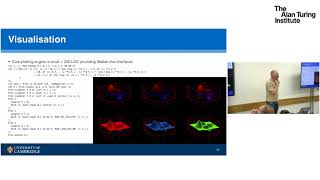
The Design of Functional Numerical Software - Dr. Richard Mortier, University of Cambridge
Explore functional numerical software with Owl, an OCaml library for scientific computing. Learn about its architecture, features, and applications in CPU, GPU, and browser environments.

Dealing with Verification Data Overload in OpenJDK Projects
Explore data visualization and deep learning techniques to efficiently process and analyze massive test logs, enabling quick problem identification and improved monitoring of complex CI/CD pipelines.
Create and Deploy a Lightweight Microservice in WebAssembly
Learn to create and deploy lightweight microservices using WebAssembly, exploring its advantages over traditional containers. Hands-on experience with Rust, JavaScript, AI integration, and cloud deployment.

On-Demand Systems and Scaled Training Using the JobSet API
Explore JobSet API for efficient orchestration of complex workflows, enabling scaled ML training and on-demand HPC systems. Learn deployment techniques and see results from large-scale experiments.
Essential AI Tools and Libraries - Installation Guide for Python, Git, C++, FFmpeg, CUDA, and PyTorch
Comprehensive guide to installing and configuring essential AI tools and libraries on Windows, covering Python, Git, C++ tools, FFmpeg, CUDA, and PyTorch. Includes troubleshooting tips and advanced techniques for optimal setup.
CUTLASS: A CUDA C++ Template Library for Accelerating Deep Learning Computations
Explore CUTLASS, an open-source CUDA C++ template library for optimizing deep learning computations on NVIDIA GPUs. Learn to develop high-performance custom kernels using Tensor Core programming.
Making a Sci-Fi Game with Cohere LLM and Stability AI - Generative AI Tutorial
Learn to create a unique sci-fi game world using Cohere's language model and Stability AI's text-to-image models. Explore generative AI for world-building and game development.
BlindAI - An Open-source Solution for Privacy-friendly AI Deployment
Explore BlindAI, an open-source project leveraging Confidential Computing for privacy-friendly AI deployment. Learn about end-to-end encryption, ONNX model support, and real-world applications in document analysis and medical imaging.
Deep Learning at the Edge
Explore edge computing for deep learning, focusing on architecture, constraints, computer vision, and management of edge components in various applications like wind turbine farms.
A Deep Learning Scheme for Solving Fully Nonlinear Partial Differential Equations
Discover how deep learning algorithms converge to solve complex nonlinear PDEs, with applications in optimal investment problems and transaction cost analysis in financial mathematics.

Scaling LLMs on Google Cloud - Synergy Between Ray, TPU, and GKE
Discover how to optimize LLM deployments using Ray, TPUs, and GKE on Google Cloud, focusing on performance optimization, memory management, and large-scale orchestration techniques.

Distributed Mesh Processing and Geometric Deep Learning for Wind Prediction
Discover how Ray's distributed computing powers real-time wind prediction in urban design through mesh processing, geometric deep learning, and CFD data analysis for architectural innovation.

Stable Diffusion 3.5 and ComfyUI Comparison Review
Discover the key differences between Stable Diffusion 3.5 and ComfyUI.exe through hands-on testing and comparative analysis of their image generation capabilities and workflows.

Training Deep Learning Models in the Cloud - Infrastructure Considerations and Best Practices
Explore deep learning infrastructure considerations for cloud and on-premises deployments, covering scalability, performance optimization, and operational challenges in AI model training.
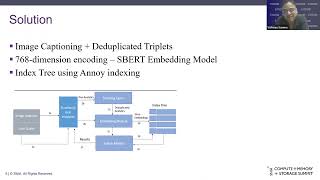
Computational SSD Framework for Unified Semantic Image Retrieval
Discover how to implement computational SSD frameworks for efficient semantic image retrieval using transformer models, unified embedding formats, and intent-based clustering techniques.
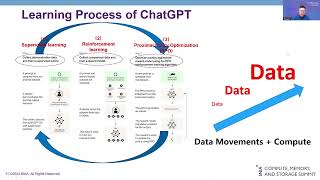
Overcoming Real-World Challenges Between Data and AI Infrastructure
Explore infrastructure innovations for managing AI workloads, optimizing data processing, and achieving lower latency in real-time analytics and predictive modeling across industries.

Pacer and Runner: Cooperative Learning Framework for Single and Cross-Domain Sequential Recommendation
Explore a cooperative learning framework that bridges single and cross-domain sequential recommendations, enhancing recommendation systems through innovative data integration techniques.