
Creating Multiple Consistent Characters with FLUX in ComfyUI - Tutorial
Master the art of generating consistent AI character designs using ComfyUI's FLUX feature, with techniques for maintaining visual coherence across multiple images.

How to Install and Use Stable Diffusion on Windows - Step-by-Step Tutorial
Master the step-by-step process of installing and configuring Stable Diffusion on Windows, from basic setup requirements to generating AI images through the web interface.

Installing Flux in ComfyUI - A Step-by-Step Guide
Learn how to integrate and configure Flux within ComfyUI, including installation steps, workflow setup, and essential resources for enhanced AI image generation capabilities.
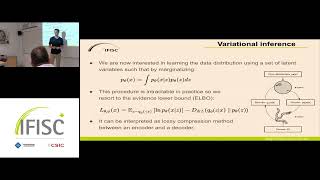
Compressed Representations in Deep Learning: From Algorithmic Information to Autoencoders and Neural Networks
Dive into compressed representations and algorithmic information theory, exploring deep learning concepts and autoencoder applications in modern neural networks.
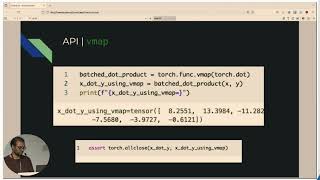
Functional Transforms in PyTorch Using Torch.func
Master functional transforms in PyTorch with torch.func module, covering per-sample-gradients, function vectorization, and model ensembles. Learn practical applications and avoid common pitfalls.
Spectral Analysis of LoRA vs Full Fine-Tuning in Language Models
Delve into the technical comparison between LoRA and full fine-tuning methods for language models, exploring their structural differences, spectral properties, and impact on model performance.
Layer Increasing Network Scaling (LiNeS) - Preventing Catastrophic Forgetting in Language Models
Explore LiNeS, a novel post-training layer scaling technique that prevents catastrophic forgetting in large language models while enhancing multi-task performance and model merging capabilities.

Detail Daemon - Adding Fine Details to ComfyUI Generations
Master ComfyUI's Detail Daemon nodes to enhance image generation with intricate details and refined textures, focusing on skin details and subtle features through 4 specialized nodes.

Stable Diffusion 3.5 Medium - A Review of the New Text-to-Image AI Model
Explore Stable Diffusion 3.5 Medium's capabilities, comparing its performance against SDXL and other models while learning about its advantages for users with lower-end GPUs.
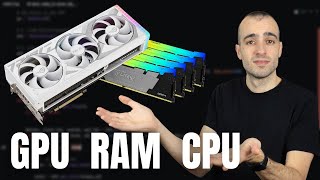
Perfect PC for AI, Object Detection and LLMs - Complete Guide
Learn how to build the optimal PC setup for AI development, focusing on computer vision, object detection, and large language model implementation.
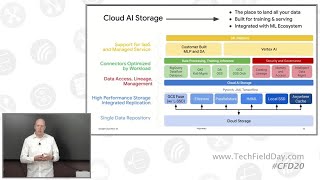
Optimizing Storage Solutions for AI and ML Workloads in Google Cloud
Discover advanced storage solutions optimized for AI/ML workloads, featuring Anywhere Cache, HyperDisk ML, and Cloud Storage FUSE innovations that enhance data accessibility and training efficiency.

AI-Optimized Infrastructure and Workload Management in Google Cloud
Discover how Google Cloud optimizes AI infrastructure through advanced storage solutions, accelerators, and managed services like Parallel Store and Hyperdisk ML for efficient large-scale AI operations.
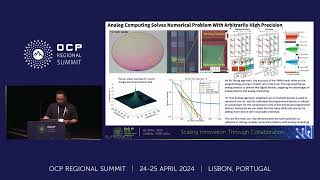
Analog In-Memory Computing with Multilevel Memristive Devices for High Performance Computing
Discover how multilevel memristive devices revolutionize computing by enabling analog in-memory processing, boosting throughput and energy efficiency for deep learning applications and high-performance computing.
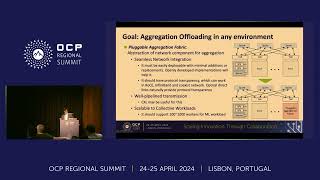
Optcast: Open-Source Aggregation Offloading for Distributed Deep Learning
Discover how to accelerate distributed AI training through open-source in-network aggregation, achieving 1.72x faster performance across multiple GPUs without specialized hardware requirements.
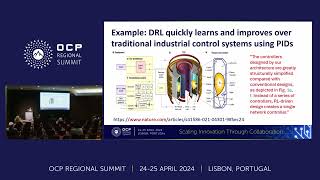
Increasing Energy Efficiency of Server Cooling Using Deep Reinforcement Learning
Discover how Deep Reinforcement Learning optimizes server cooling efficiency, reducing fan energy usage by 40% and achieving 8% overall server energy savings through intelligent thermal management.
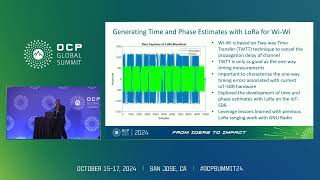
Developing an IoT Software Defined Radio for Wireless Clock Synchronization
Explore wireless clock synchronization through IoT Software Defined Radio, focusing on OCP-TAP Time Cards implementation and LoRa-based Wi-Wi protocol for precise timing distribution.

Machine Learning Software Ecosystems: Frameworks, Compilers, and Models - Part 1
Explore the landscape of ML frameworks, compilers, and models while understanding performance considerations for various hardware platforms and edge computing requirements.
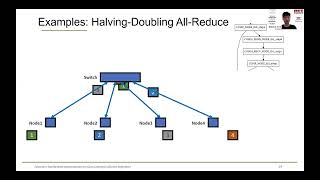
Towards a Standardized Representation for Deep Learning Collective Algorithms
Explore standardized approaches for representing collective algorithms in deep learning, focusing on optimization techniques and implementation strategies for enhanced performance.

Image Recognition Using OpenAI, Streamlit and Snowflake
Discover how to build image recognition applications by combining PyTorch, OpenAI, Streamlit, and Snowflake in this practical demonstration of modern AI integration.
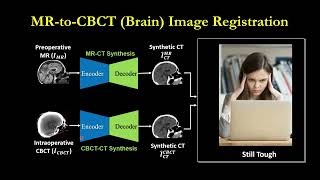
Advances in Intraoperative Imaging and Guidance for Neurosurgery
Discover cutting-edge developments in AI-driven intraoperative imaging, deformable registration, and robotic assistance for neuroendoscopic procedures, focusing on enhanced precision and improved surgical outcomes.
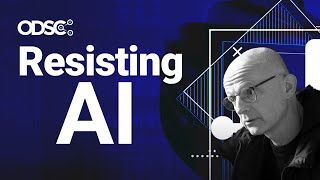
Resisting AI: Understanding Social and Political Dimensions of Artificial Intelligence
Explore the critical social and political implications of AI systems with Dr. McQuillan, examining how deep learning impacts society and discovering alternative approaches rooted in feminist and decolonial perspectives.