A Practical Guide to Deep Learning
Practical guide to computer vision and deep learning, covering neural network programming, training, and refinement techniques for real-world projects.
Deep Learning with CNTK and F#
Explore deep learning with CNTK and F#, covering neural networks, model training, and practical applications in .NET. Learn core concepts and see live demonstrations using real-world datasets.
What You Always Wanted to Know About Deep Learning, but Were Afraid to Ask
Demystifying Deep Learning: key concepts, practical applications, and hands-on training for object recognition. Gain a clear understanding of AI fundamentals and start your journey into machine learning.
Training BERT - Train With Masked-Language Modeling
Learn to fine-tune BERT models using masked language modeling in PyTorch for domain-specific NLP tasks, enhancing performance beyond out-of-the-box capabilities.
Sentence Similarity With Transformers and PyTorch
Learn to measure semantic similarity between sentences using BERT and PyTorch. Explore tokenization, vector creation, and cosine similarity calculation for powerful NLP applications.
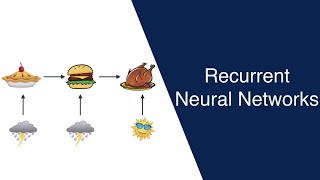
A Friendly Introduction to Recurrent Neural Networks
Explore how computers predict and generate sequences using Recurrent Neural Networks. Learn about vectors, neural networks, and practical applications in cooking, weather, and more.
EfficientNet Paper Walkthrough
Comprehensive walkthrough of the EfficientNet paper, exploring model scaling, proposed methods, and results. Offers insights into innovative approaches for improving neural network efficiency.
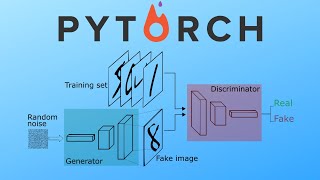
Building Our First Simple GAN
Learn to build a simple Generative Adversarial Network (GAN) using fully connected layers and train it on the MNIST dataset. Explore the architecture, setup, and training process for this fundamental deep learning model.
TensorFlow Tutorial - Neural Networks with Sequential and Functional API
Learn to build neural networks in TensorFlow 2.0 using Keras Sequential and Functional API. Covers model creation, layer feature extraction, and model summaries with hands-on MNIST dataset examples.
How to Learn Deep Learning - The Most Efficient Way to Go From Beginner to Advanced
Comprehensive guide to efficiently learn deep learning, from prerequisites to advanced topics. Covers recommended courses, resources, and practical advice for beginners to progress to an advanced level.
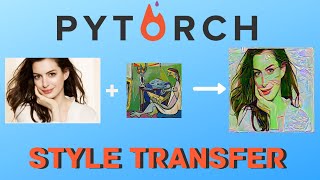
Pytorch Neural Style Transfer Tutorial
Learn to implement Neural Style Transfer from scratch in PyTorch, covering theory and practical coding to blend content and style images for artistic results.

Pytorch Neural Network Example
Step-by-step guide to building a simple neural network using PyTorch, covering network creation, data handling, loss calculation, and accuracy evaluation.

Hugging Face Datasets - Dataset Builder Scripts for Beginners
Learn to create and manage dataset builder scripts for Hugging Face, including download management, Apache Arrow datatypes, and integration with popular machine learning frameworks for efficient model training and fine-tuning.
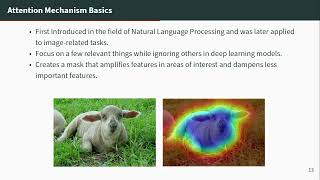
Chan Vese Attention U-Net - An Attention Mechanism for Robust Segmentation
Explore an innovative attention mechanism for robust image segmentation using Chan Vese Attention U-Net, enhancing segmentation accuracy and efficiency.
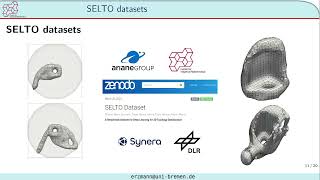
DL4TO: A Deep Learning Library for Sample Efficient Topology Optimization
Explore deep learning techniques for efficient topology optimization using the DL4TO library, enhancing structural design processes.

Latest Breakthroughs in AI Image Generation Tools - Ideogram Canvas, MidJourney, and OpenAI Updates
Discover the latest breakthroughs in AI image generation tools, including Ideogram Canvas's outpainting features, MidJourney's new editor, Stable Diffusion 3.5's capabilities, and OpenAI's innovative consistency models.
Moving Faster: Optimizing Developer Experiences at Facebook
Explore Facebook's optimization of developer workflows and the potential of deep learning to enhance productivity, focusing on tools like React Native, Hack Server, and Nuclide IDE.
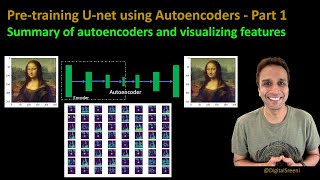
Pre-Training U-Net Using Autoencoders - Autoencoders and Visualizing Features
Explore autoencoders, image reconstruction, and feature visualization in deep learning models through hands-on coding examples and practical demonstrations.
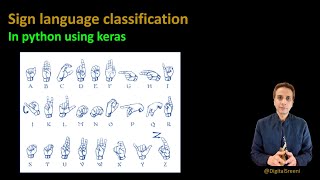
Classification of MNIST Sign Language Alphabets Using Deep Learning
Learn to classify hand sign language alphabets using deep learning, covering data preparation, model creation, and result analysis for 25 classes.
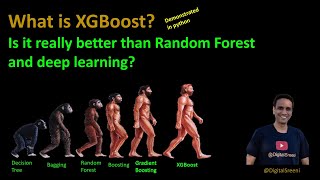
What Is XGBoost and Is It Really Better Than Random Forest and Deep Learning?
Explore XGBoost's advantages over Random Forest and Deep Learning, comparing performance and understanding its unique features for machine learning tasks.
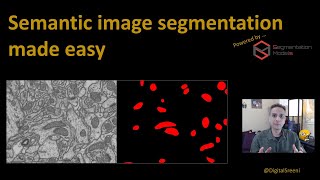
Semantic Segmentation Made Easy - Using Segmentation Models Library
Learn to implement semantic segmentation using the Segmentation Models library, covering model types, backbones, data augmentation, preprocessing, and training on electron microscopy datasets.