Understanding and Implementing Recurrent Neural Networks Using Python
Explore Recurrent Neural Networks: their memory-retaining properties, applications in sequence data analysis, and implementation using Python and Keras. Learn about advanced concepts like BPTT and LSTMs.
Deep Learning with PyTorch for Fun and Profit
Explore practical deep learning applications using PyTorch, including style transfer, speech generation, and text generation. Learn about data preparation, hardware setup, and creating neural network models for creative projects.
Change Music in Two Epochs
Explore deep learning applications in music: instrument detection, isolation, and generation. Learn to build synthesizers, create datasets, and adapt models for increasing complexity.
Building a Powerful Pet Detector in Notebooks
Learn to build and deploy an AI-powered pet breed detector using Azure Notebooks, TensorFlow, and transfer learning techniques. Optimize the model for improved accuracy and create a web service.
Geospatial Analysis Using Python and JupyterHub
Explore geospatial data processing and visualization using Python, covering vector and raster analysis, deep learning applications, and high-performance computing techniques for efficient spatial data handling.
Boosting Research with Machine Learning
Explore machine learning applications in research, from neuron recognition to EEG-based movement prediction. Learn Python techniques for data preparation and analysis using various ML methods.
How to Train an Image Classifier Using PyTorch
Learn to build an image classifier using PyTorch in this hands-on tutorial. Covers data preparation, model selection, training techniques, and evaluation, with practical tips and code examples for immediate implementation.
Classification Based on Missing Features in Deep Convolutional Neural Networks
Explore a novel approach to enhance neural network accuracy and robustness in adversarial situations, focusing on classification based on missing features in deep convolutional models.
Supercharge Your Deep Learning Algorithms with Optimized Software
Optimize deep learning algorithms on Intel architecture using Intel® MKL for training and Intel® nGraph and OpenVINO™ for inferencing, enhancing runtime performance.
TensorFlow 2.0 - TensorFlow Strikes Back
Explore TensorFlow 2.0's new features, including Keras API, eager execution, and improved production pipeline, enhancing usability while maintaining performance and scalability.
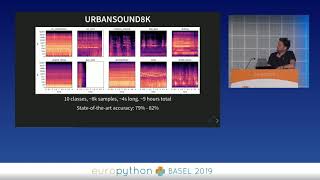
Audio Classification with Machine Learning
Learn to build practical machine learning models for audio classification using spectrograms, CNNs, and techniques like transfer learning and data augmentation with Keras and TensorFlow.
Deep Learning with TensorFlow 2.0
Explore TensorFlow 2.0's updates, including Keras API, and learn to build machine learning models in Python. Discover new features and gain practical insights for getting started.
Train, Serve, Deploy - Story of a NLP Model ft. PyTorch, Docker, Uwsgi and Nginx
Learn to build, train, and deploy NLP translation models using PyTorch, Flask, Docker, uWSGI, and Nginx. Covers data preprocessing, model training, web app creation, containerization, and production serving techniques.
Machine Learning for Everyone
Discover the essentials of machine learning, neural networks, and reinforcement learning in this engaging talk. Gain practical insights and witness a mind-blowing demo to kickstart your ML journey.
Painting with GANs - Challenges and Technicalities of Neural Style Transfer
Explore Neural Style Transfer using GANs, including challenges, technicalities, and applications in gaming, fashion, and mobile apps. Learn about loss functions and see code examples.
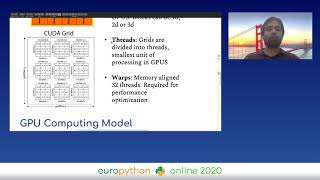
Writing Extensions and Bindings for GPU Made Easy
Learn to optimize deep learning computations by writing custom C and CUDA extensions for GPU, with a focus on image search across billions of items and seamless integration with Python codebases.
Probabilistic Forecasting with DeepAR and AWS SageMaker
Explore probabilistic forecasting with DeepAR, combining deep learning and time series analysis for accurate predictions with uncertainty estimates across multiple related datasets.
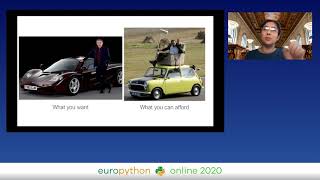
30 Golden Rules of Deep Learning Performance
Discover 30 essential guidelines for optimizing deep learning models, enhancing performance, and achieving better results in AI and machine learning projects.
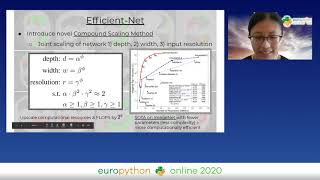
Corona-Net
Explore Corona-Net: an open-source project for COVID-19 diagnosis and symptom segmentation using deep learning models like EfficientNet and U-Net on CT scans.
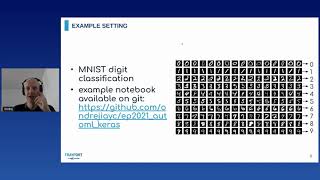
Automated Machine Learning With Keras
Explore automated machine learning with Keras Tuner and AutoKeras, enabling efficient development of high-performance deep learning models while requiring less expertise and effort.
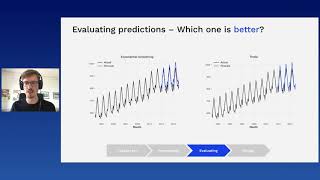
Darts - Unifying Time Series Forecasting Models from ARIMA to Deep Learning
Explore time series forecasting with Darts, a Python library unifying traditional and deep learning models. Learn best practices for preprocessing, backtesting, and achieving quick results in forecasting problems.