MACE: Higher Order Equivariant Message Passing Neural Networks for Fast and Accurate Force Fields
Explore higher-order equivariant message passing neural networks for fast, accurate force fields in computational chemistry. Learn about MACE's innovative approach using four-body messages to enhance efficiency and accuracy.

Contextual AI Models for Single-cell Protein Biology
Explore PINNACLE, a geometric deep learning approach generating context-aware protein representations for enhanced understanding of protein function and interactions across biological contexts.
Smooth, Exact Rotational Symmetrization for Deep Learning on Point Clouds
Explore rotational symmetrization for deep learning on point clouds, enhancing AI models for chemical and materials modeling with exact compliance to physical constraints.
Uncovering and Inducing Interpretable Causal Structure in Deep Learning Models
Explore causal abstraction theory for uncovering and inducing interpretable structures in deep learning models, focusing on faithful explanations and interventions during analysis and training.

The Future of AI for Drug Discovery
Explore the future of AI in drug discovery with leading experts discussing challenges, opportunities, and practical applications of machine learning in molecular research.
Accelerating Cryptic Pocket Discovery with Deep Learning
Explore deep learning techniques for accelerating cryptic pocket discovery in protein structures, focusing on simulation, key degrees of freedom, and tools like PocketMiner and AlphaFold.
A New Perspective on Building Efficient and Expressive 3D Equivariant Graph Neural Networks
Explore advanced techniques for building efficient 3D equivariant graph neural networks, focusing on local substructure encoding and frame transition encoding for improved expressiveness and performance.
Machine Learning for Molecular Structures and Drug Discovery
Explore machine learning applications in molecular structures, generative models, and protein analysis. Learn about tools like LigDream, TorchMD, and PlayMolecules for drug discovery and chemistry research.
Calibration and Generalizability of Probabilistic Models on Low-Data Chemical Datasets
Explore calibration and generalizability of probabilistic models on small chemical datasets. Gain insights into model selection and feature choice for molecular property prediction and design.
Identifiable Deep Generative Models via Sparse Decoding
Explore sparse VAE for unsupervised learning, uncovering identifiable latent factors in high-dimensional data. Discover theoretical guarantees and practical applications in various domains.
A Computational Framework for Solving Wasserstein Lagrangian Flows
Explore a computational framework for solving Wasserstein Lagrangian flows, covering optimal transport variations and applications in single-cell trajectory inference.
Predicting Equilibrium Distributions for Molecular Systems with Deep Learning
Explore deep learning techniques for predicting equilibrium distributions in molecular systems, focusing on the novel Distributional Graphormer framework and its applications in various molecular tasks.
Transformers Meet Directed Graphs - Exploring Direction-Aware Positional Encodings
Explore direction-aware positional encodings for transformers on directed graphs, enhancing performance in code understanding and sorting network correctness testing.
Clifford Group Equivariant Neural Networks
Explore Clifford Group Equivariant Neural Networks for E(n)-equivariant network construction. Discover theoretical foundations, methodology, and applications in various dimensions and tasks.
Is Distance Matrix Enough for Geometric Deep Learning?
Explore geometric deep learning limitations and k-DisGNNs' potential in capturing high-order geometric information, unifying models, and achieving universal function approximation for geometric graphs.
Learning Local Equivariant Representations for Large-Scale Atomistic Dynamics
Explore Allegro, a local equivariant deep learning interatomic potential for efficient, accurate, and scalable atomistic dynamics simulations, including applications in biomolecular systems.
Scallop: A Language for Neurosymbolic Programming
Explore Scallop, a language combining deep learning and logical reasoning for efficient neurosymbolic programming. Learn its key features and applications in diverse AI tasks.
Taming Reachability Analysis of DNN-Controlled Systems via Abstraction-Based Training
Explore a novel abstraction-based approach for efficient reachability analysis of DNN-controlled systems, improving tightness and efficiency over existing methods.
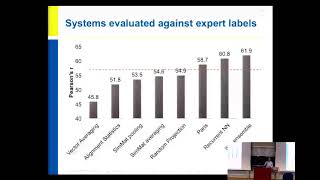
Neuromorphic Language Understanding - Deep Neural Networks for Low-Power Language Processing
Explore recurrent neural networks for language processing and their adaptation to ultra-low power neuromorphic hardware, bridging artificial intelligence with biologically-inspired models of cognition.
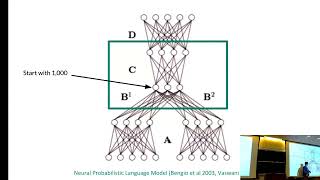
Learning Neural Network Hyperparameters for Machine Translation - 2019
Explore neural network hyperparameter optimization for machine translation, focusing on efficient methods to learn parameters during training without extensive grid searches.
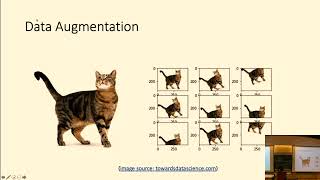
Deep Active Learning: Enhancing Data Efficiency in Machine Learning - Lecture
Explore deep learning's data efficiency, active learning in NLP, and innovative approaches to enhance learning from human interactions in AI systems.