
Generative AI: Fine-Tuning LLM Models Crash Course
Comprehensive guide to fine-tuning LLMs using advanced techniques like QLORA and quantization, covering theoretical concepts and practical implementations with popular models like LLama2 and Google Gemma.
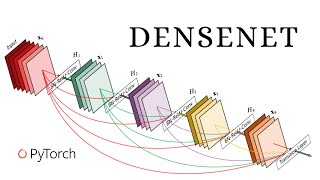
DenseNet Deep Neural Network Architecture Explained
Comprehensive explanation of DenseNet architecture, including its benefits and implementation in PyTorch. Covers theory, results, and practical coding walkthrough for deep learning enthusiasts.
Non-negative Gauss-Newton Methods for Empirical Risk Minimization
Explores non-negative Gauss-Newton methods for empirical risk minimization, discussing adaptivity, convergence analysis, and applications in machine learning optimization.

What is Generative AI - The Turing Lectures
Explore generative AI's capabilities, applications, and controversies with Professor Mirella Lapata. Learn about text, image, speech, and music generation in this comprehensive overview of a rapidly evolving field.
Generative Techniques for Music AI
Explore diverse techniques for AI music generation, from symbolic AI to deep learning, covering optimization algorithms, complex systems, and statistical methods. Gain insights into key approaches and their applications.

The Turing Lectures - Addressing the Risks of Generative AI
Exploring ethical challenges and societal impacts of generative AI, focusing on potential misuse, regulatory gaps, and strategies for responsible development and implementation.

Risks of Generative AI - Ethical and Social Implications
Explore the ethical implications and potential risks of generative AI with expert Mhairi Aitken, discussing societal impacts, regulation challenges, and strategies for responsible development and use.

Fooocus: A User-Friendly Stable Diffusion Web UI for High-Quality Image Generation - Tutorial
Explore Fooocus, a powerful Stable Diffusion Web UI with 200+ styles, automatic model downloads, and advanced features for effortless AI image generation. Learn installation, usage, and creative techniques.
Scallop: A Language for Neurosymbolic Programming
Explore Scallop, a programming language for neurosymbolic learning that combines classical algorithms and deep learning, offering efficient solutions for complex machine learning challenges.
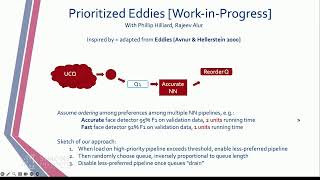
Deep Learning and the Relational Algebra
Exploring the integration of machine learning inference in query processing, including tensor operations and autograd in relational algebra, with insights from early research experiences.
Machine Learning Day: From Generative AI to Vector Databases
Explore cutting-edge Machine Learning topics with expert talks on multimodal generative AI, OpenAI embeddings, vector databases, and building products in the GenAI era.
Machine Learning for LHC Theory - Lecture 1
Explore machine learning applications in high-energy physics, focusing on LHC theory. Learn key concepts and techniques for analyzing complex particle collision data and uncovering new physics insights.

FLUX LoRA Training Tutorial: From Zero to Hero with Kohya SS GUI - 8GB GPU, Windows
Comprehensive guide to FLUX LoRA training using Kohya SS GUI, covering installation, configuration, dataset preparation, training process, and image generation with practical tips for optimal results.
Llama2 7B QLora Fine Tuning with Chain-of-Thought Dataset
Fine-tune Llama2 7B model using QLora with chain-of-thought dataset. Learn step-by-step process, access provided notebooks, and explore CodeLlama implementation for enhanced machine learning capabilities.
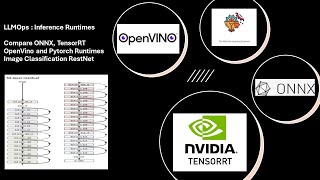
LLMOps: Comparison of OpenVino, ONNX, TensorRT, and PyTorch Inference
Explore model conversion to ONNX, OpenVino, and Tensor-RT formats for optimized CPU and GPU inference, comparing performance against native PyTorch.
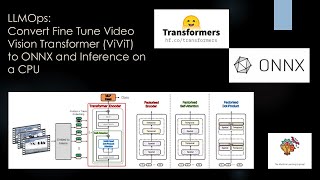
LLMOps: Converting Video Classifier (ViViT) to ONNX and Inference on CPU
Convert a Video Vision Transformer to ONNX format and perform CPU inference, enhancing model portability and deployment flexibility for video classification tasks.
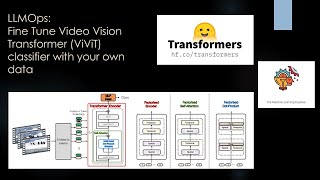
LLMOps: Fine-Tuning Video Classifier (ViViT) with Custom Data
Fine-tune a Video Vision Transformer (ViViT) using custom datasets. Learn to adapt Google's pretrained model for specialized video classification tasks.
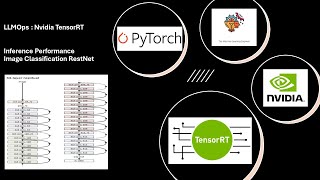
LLMOps: Using Nvidia TensorRT SDK for GPU Inference
Optimize GPU inference using Nvidia TensorRT SDK. Convert models, compare throughput, and explore batch sizes, data precision, and runtime options for enhanced performance.

Inside GPT - Large Language Models Demystified
Demystifying GPT algorithms: architecture, inner workings, and practical applications. Explore NLP fundamentals, train models, and learn to leverage ChatGPT and GPT4 for innovative solutions.
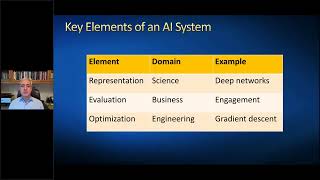
Secrets of Successful AI Projects - Strategies and Pitfalls
Unveiling AI project success: from concept to implementation. Learn key elements, strengths, limitations, and adoption stages. Gain insights on team organization and future trends for effective AI integration.
Local Flux.1 LoRA Training Using AI-Toolkit
Learn to create custom LoRAs for Flux.1 image generation on your PC, enhancing style and object control. Explore the process, requirements, and potential future developments in AI image customization.