The Challenges of Training Infinitely Large Neural Networks
Explore challenges in training infinitely large neural networks, including feature learning incorporation and scaling kernel machines to large datasets, with Professor Mikhail Belkin.

Complete Guide to SUPIR - Enhancing and Upscaling Images Like in Sci-Fi Movies on Your PC for Free
Learn to install, configure, and use SUPIR, an advanced open-source image upscaler and enhancer, for high-quality image restoration on your PC with step-by-step guidance and optimization tips.
Why a Forefather of AI Fears the Future
Renowned AI pioneer explores potential futures with advanced AI, discussing implications and concerns for humanity's trajectory in a world of increasingly sophisticated mechanical minds.
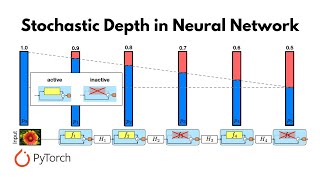
Stochastic Depth for Neural Networks - Implementation and Analysis
Explore stochastic depth in neural networks: a regularization method for residual networks that enhances training speed and test performance. Includes methodology explanation and PyTorch implementation.

Google I/O 2024 - Key AI Advancements and Their Implications
Explore Google I/O 2024's AI innovations: Gemini upgrades, Veo video generation, Trillium TPUs, enhanced search, and Gemini Nano for Android, revolutionizing user interactions across devices and services.

Scaling up Without Slowing Down: Accelerating Pod Start Time in Kubernetes
Explore techniques to optimize Kubernetes pod start times, addressing cold starts and scaling challenges. Learn about various approaches tailored to different workload types and system scales.
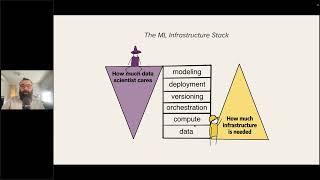
Orchestrating Generative AI Workflows to Deliver Business Value
Explore leveraging Large Language Models in existing software ecosystems using Python. Learn to balance innovation with established practices, applying text-to-image and text-to-speech technologies for robust, production-ready AI systems.

Creating Keras 3 - An Interview with François Chollet
Explore Keras 3 creation, AI research, and AGI with François Chollet. Gain insights on intelligence, machine learning advancements, and the future of AI in this engaging discussion.

Machine Learning Day: From Industry Solutions to Developer Roles
Explore cutting-edge Machine Learning topics with expert speakers, covering LLM solutions, AI's impact on developer roles, and multilingual NLP pipelines in this live event.

GPT-4 Coding Skills: Real-time Voice Changer and Small Neural Network
Explore GPT-4o's coding capabilities through practical tests, including a real-time voice changer and small neural network implementation. Gain insights into AI's potential for software development.

Basic Aspects of Convolutional Neural Networks - Tutorial
Explore fundamental concepts of convolutional neural networks, their architecture, and applications in deep learning. Gain insights into this powerful technique for image and pattern recognition.

xLSTM - Extended Long Short-Term Memory
Explore xLSTM architecture combining LSTM recurrency with transformer-scale training, achieving impressive language modeling results through exponential gating and modified memory structures.
Generative AI Crash Course for Beginners
Comprehensive introduction to Generative AI, covering AI fundamentals, machine learning basics, neural networks, deep learning, and large language models for beginners.

Neural Networks For Your Dog
Learn to build neural networks from scratch in Python, covering perceptrons, gradient descent, and deep learning concepts through simple, engaging explanations and hands-on coding.

Reproducing GPT-2 (124M) from Scratch - Implementation and Optimization
Comprehensive tutorial on reproducing GPT-2 (124M) from scratch, covering implementation, optimization, training setup, and results analysis. Includes practical coding and performance tuning tips.

Legal Challenges of Artificial Intelligence - Facing the Future
Explore legal challenges of AI, from copyright issues to ethical implications, and the potential for human-AI cooperation in various fields like law, medicine, and transportation.
Deep Learning and Numerical Methods Intersections for Improving Molecular and Fluid Dynamics
Explore intersections of deep learning and numerical methods to enhance molecular and fluid dynamics simulations, improving accuracy and efficiency in scientific computations.
Explorations in Exploration: Deep Learning Meets Value of Information for Sequential Experimental Design
Exploring machine learning's role in sequential experimental design, focusing on quantifying information value and improving flexibility in planning future experiments.
Harnessing the Properties of Equivariant Neural Networks for Materials Science
Explore equivariant neural networks for materials science, covering applications, advantages, and future directions in understanding and designing atomic systems.

Scalable MatMul-free Language Modeling - Paper Explained
Explore innovative MatMul-free language modeling techniques using quantization and recurrence, achieving comparable performance to traditional models while significantly reducing computational costs and memory usage.

Object Detection Using Detection Transformer (DETR) for Bone Fracture Dataset
Learn to build an advanced object detection system using DETR, covering data preparation, model implementation, training, and inference with PyTorch, Transformers, and PyTorch Lightning.