
Color Separation and Nuclei Segmentation in Tissue Microarray Cores - Tutorial 344
Learn to extract and analyze high-resolution core images from Tissue Microarrays (TMA) in this 13-minute tutorial. Master color separation techniques, perform nuclei segmentation using the StarDist pretrained deep learning model, and calculate mean inten…
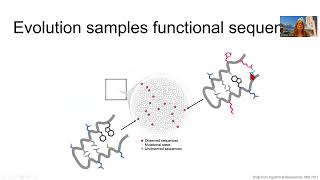
Protein Language Models - Lecture 13
Learn about protein language models and their applications in computational biology, exploring advanced techniques for analyzing and predicting protein structures and functions.

Stable Diffusion Installation Guide 2024 - ControlNet and AI Animations on Your PC
Install Stable Diffusion for AI animations on your PC. Set up GitHub and Hugging Face accounts, download necessary software, and learn to render AI animations. Avoid common issues and integrate tools for efficient workflow.
COMI: Correct and Mitigate Shortcut Learning Behavior in Deep Neural Networks
Explore techniques to correct and mitigate shortcut learning in deep neural networks, enhancing model robustness and generalization capabilities.
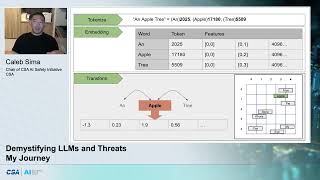
Demystifying LLMs and Their Security Implications - A Business-Friendly Overview
Explore GenAI and LLMs, understanding their operations, security implications, and deployment scenarios. Learn to manage risks, prevent data leakage, and implement practical strategies for safe AI integration.

Scaling AI in Production with PyTorch
Learn to scale AI in production using PyTorch, covering resilient distributed platforms, TorchServe, and strategic partner initiatives for a robust ecosystem.
Marius: Machine Learning over Billion-Edge Graphs - 10x Faster and 5x Cheaper
Discover how Marius optimizes machine learning on billion-edge graphs, achieving 10x faster and 5x cheaper training through innovative data flow architecture and resource utilization.

Data and Machine Learning at League of Legends
Explore unique data challenges in video games, focusing on model deployment and evolving ML stacks in League of Legends since 2009.
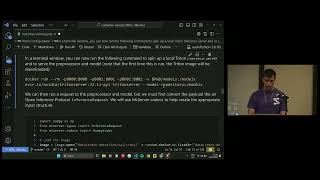
Production ML Serving and Monitoring with Kubernetes
Gain insights into building an MLOps deployment platform using Kubernetes, integrating key technologies for serving and monitoring complex deep learning models.
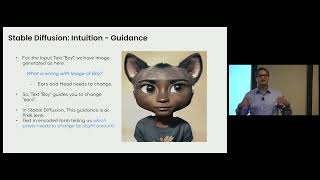
Dreambooth - Stable Diffusion for Custom Images
Explore stable diffusion techniques for creating custom images using Dreambooth. Learn color manipulation, texture enhancement, and image blending to transform ordinary photos into extraordinary art.

Shopping Recommendations at Pinterest
Explore Pinterest's shopping recommendation systems, including engagement-based and embedding-based candidate generation, indexing methods, and deep neural network ranking models.
Machine Learning Tools: Skyline and RL-Scope for Performance Optimization
Explore Skyline and RL-Scope, two innovative tools for optimizing machine learning performance. Learn about interactive profiling, visualization, and debugging for PyTorch networks and cross-stack profiling for deep reinforcement learning.
Leaner, Greener and Faster PyTorch Inference with Quantization
Explore PyTorch quantization techniques to optimize neural networks, reducing size and improving speed without sacrificing accuracy. Learn implementation strategies and real-world applications.
Deep End-to-end Causal Inference and Introduction to Causal Discovery
Explore deep end-to-end causal inference and discover its applications in data-driven decision-making across various domains. Learn about causal discovery, inference, and the Microsoft causal AI suite.
Advancing the Toolchain for Interpreting Human Genetic Variation Using Deep Learning and Single-Cell Genomics
Explore deep learning and single-cell genomics tools for interpreting human genetic variation with Oliver Stegle from EMBL and DKFZ.
Protein Design with Generative Diffusion Models
Explore generative diffusion models for protein design, covering theoretical foundations and applications in sequence and structure generation for optimized engineering and biological insights.
Meaningful Signals Within Deep Learning Models for Biology - Primer and Meeting
Explore deep learning models in biology, from curating meaningful pre-training data to disentangling experimental noise, enhancing performance in biomedical imaging and high-throughput microscopy experiments.
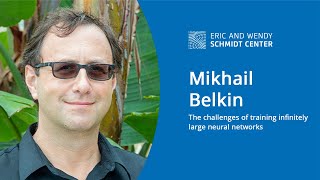
The Challenges of Training Infinitely Large Neural Networks
Explore challenges in training infinitely large neural networks with Mikhail Belkin. Gain insights into foundational advances in machine learning for biomedical applications.
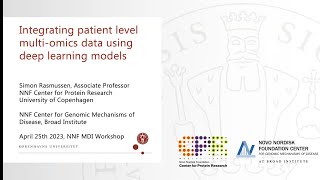
Integrating Patient Level Multi-omics Data Using Deep Learning Models
Explore deep learning models for integrating patient-level multi-omics data, focusing on supervised and unsupervised approaches for predicting outcomes and uncovering latent representations in genomics.
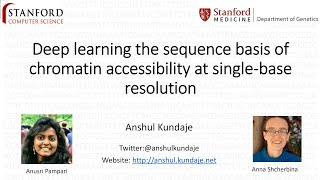
Deep Learning for Genomic Discovery
Explore deep learning techniques for genomic discovery, focusing on high-resolution assays, footprint shapes, and bias correction methods in neural networks.
Multi-omics Variational Autoencoding - Deep Dive and Primer
Explore multi-omics variational autoencoding for integrating complex biological datasets. Learn about MOVE pipeline, data preprocessing, model optimization, and approaches for determining associations between omics variables and categorical labels.