
RTLA Requests and TODOs for Kernel Tracing Infrastructure - Linux Plumbers Conference
Exploring RTLA tool improvements for Linux tracing, including kernel-side histograms, dual tracer support, and enhanced library capabilities for better performance and functionality.
Graphing Tools for Scheduler Tracing
Explore graphing tools for visualizing trace-cmd data, discussing useful visualizations and methods for end users to create custom views of scheduler tracing information.
CNN Confusion Matrix with PyTorch - Neural Network Programming
Learn to build, plot, and interpret a confusion matrix using PyTorch for neural network evaluation, including techniques for disabling gradient tracking and analyzing model performance across different classes.

Data Collector Model in Agent-Based Modeling with Mesa - Session 18
Learn to implement a Data Collector Model in Mesa, enhancing your agent-based modeling skills with Python and improving data analysis capabilities.
Leveraging Compiler Code Instrumentation for Zephyr Tracing and Profiling Tools
Explore a new platform-neutral subsystem for Zephyr using compiler function instrumentation, enabling efficient tracing and profiling across various architectures without proprietary tools.
Creating a Custom Serving Runtime in KServe ModelMesh - Hands-On Experience
Learn to create custom serving runtimes in KServe ModelMesh for ML model deployment. Explore key features, build container images, and run predictions using custom runtimes in this hands-on tutorial.
Cyclic Tests Unleashed: Large-Scale Real-Time Analysis with Jitterdebugger
Explore real-time Linux kernel testing with Jitterdebugger. Learn about cyclic task analysis, latency measurement, and statistical evaluation for improved system performance and reliability.
Creating an IoT Data Layer for Collecting, Storing, and Analyzing Data
Learn to build an IoT data layer for collecting, storing, and analyzing data across edge and cloud environments using Linux and open-source tools. Explore distributed architectures, time series data, and real-time analytics.
Monitoring: A New Approach
Explore modern monitoring techniques, time series databases, and visualization tools for efficient system oversight. Learn about MonitRD, Nagios Core, and Prometheus for enhanced IT infrastructure management.
Federated Monitoring Leveraging Open Source Technologies
Explore federated monitoring using open-source tools, focusing on Kubernetes observability, Grafana integration, and Cortex for scalable metrics storage and querying.
Monitoring: A New Approach
Learn a modern approach to monitoring systems, covering tools, collectors, aggregators, visualizers, and notifiers for effective system oversight and management.
Instrumenting Applications and Alerting with Prometheus
Learn to instrument applications and set up effective alerting using Prometheus. Gain real-time visibility, detect problems quickly, and create observable systems through practical demonstrations and best practices.

How to Use Prometheus's Native Histograms
Explore Prometheus's native histograms for improved SRE tooling. Learn practical usage, SLO tracking, and troubleshooting techniques to enhance your monitoring capabilities.

Cache Me If You Can: How Grafana Labs Scaled Up Their Memcached 42x and Improved Reliability
Discover how Grafana Labs scaled their memcached 42x, improving reliability and cost-effectiveness for large-scale data querying using cloud-based local SSDs and innovative caching strategies.
Kubernetes Deep Dive - Elevating ML Workload Monitoring to Art
Explore strategies for optimizing AI/ML workloads in Kubernetes, combining node health assurance with advanced monitoring techniques. Learn to implement robust detection, recovery, and performance analytics for resilient environments.
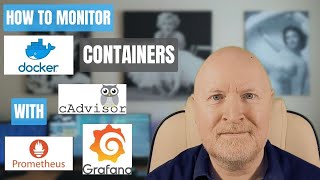
Monitor Docker Containers with cAdvisor, Prometheus, and Grafana
Learn to monitor Docker containers using cAdvisor, Prometheus, and Grafana. Set up a comprehensive monitoring system to track container resources and performance in real-time.
Improve Monitoring and Observability for Kubernetes with Open Source Tools
Explore open-source tools for enhancing Kubernetes monitoring and observability, including log aggregation with Elasticsearch, metrics with Prometheus and Grafana, and exception handling with Sentry.

Inside Kubernetes, Outside the Box - Gaining Visibility with Crossplane
Explore Kubernetes and Crossplane Control Planes for enhanced system visibility and management. Learn to monitor control and data planes, use Prometheus for metrics, and leverage Grafana and Loki for comprehensive system awareness.
Creating Custom ChatGPT-4 Instructions and Functions
Learn to customize ChatGPT-4 for specific tasks, focusing on network/graph data visualizations with Python. Gain step-by-step guidance for creating tailored AI functions, suitable for beginners and professionals alike.
Instrumenting Weights & Biases for PII Data Detection - ML Pipeline Tutorial
Instrumenting W&B for PII detection: Learn to track experiments, analyze data, and perform error analysis in ML pipelines. Apply knowledge to a Kaggle competition using W&B Tables and Artifacts.
Fastest Way to Setup Grafana, Cert-Manager, Prometheus and More in Kubernetes
Streamline Kubernetes deployments: Learn rapid setup of Grafana, Cert-Manager, Prometheus using Helm, Manifests, and Kustomize. Explore package managers, Glasskube tool, and techniques for efficient cluster management.