TensorFlow Tutorial 2022
Comprehensive TensorFlow tutorial covering tensors, data handling, neural networks, and model building. Learn to create, compile, and evaluate machine learning models using practical examples.
Turing Lecture - Algorithmic Accountability - Professor Ben Shneiderman, University of Maryland
Exploring algorithmic accountability and human-centered oversight for safer AI systems. Emphasizes comprehensible, predictable, and controllable designs to prevent failures and improve safety in critical services.
ProtoDash - Fast Interpretable Prototype Selection by Karthik Gurumoorthy
Explore ProtoDash, a fast interpretable prototype selection method for extracting compact representations of large datasets, with applications in causal reasoning, data relationships, and prediction accuracy improvement.
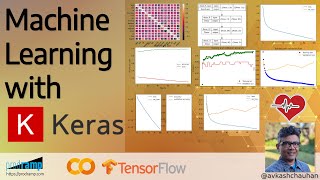
An AI Engineer's Guide to Machine Learning with Keras
Comprehensive guide to building and evaluating machine learning models using Keras, covering data preparation, model creation, training, and performance analysis with practical examples.

Generative Python Transformer Model Released - The Off-Brand Github Copilot
Explore GPyT, an open-source alternative to Github Copilot. Learn how to use this generative Python transformer model for code autocompletion and generation across various programming tasks.
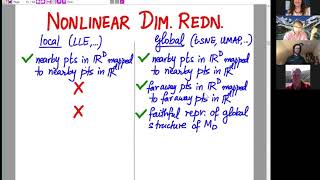
Dimension Reduction - An Overview
Comprehensive overview of dimension reduction techniques, from linear methods like PCA to nonlinear approaches such as LLE, Isomap, t-SNE, and UMAP, with practical application to chemical reaction data.
Machine Learning Tutorial for Beginners
Comprehensive TensorFlow tutorial covering data handling, neural networks, and model building. Learn to clean, analyze, and process data for machine learning applications.
Exploring Kubernetes Observability with OpenTelemetry - Tech Talks
Explore OpenTelemetry for Kubernetes observability, including tracing capabilities for components and apps. Learn integration with Grafana and get an in-depth walkthrough of this powerful open-source toolkit.
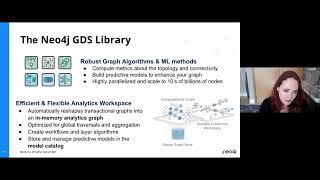
Relationships Matter - Using Connected Data for Better Machine Learning
Explore graph-native ML for enhanced predictions using relationship data. Learn graph feature engineering, ML techniques, and hands-on applications to leverage network structures in your data science models.

Latency SLOs Done Right - Calculating and Setting Accurate Service Level Objectives
Explore accurate latency SLO calculation methods, including histogram-based approaches, to set mathematically correct quantiles and improve service level objectives for better monitoring and performance management.

Model Explanation and Prediction Exploration Using Spark ML
Explore techniques for explaining non-linear models, showing feature contributions, and performing what-if analysis using Spark ML. Implement these methods to enhance model interpretability and enable interactive prediction exploration.
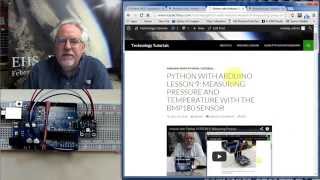
Arduino with Python - Graphing and Plotting Live Data from Arduino with Matplotlib
Learn to graph real-time Arduino sensor data using Python and Matplotlib. Master data streaming, processing, and visualization techniques for temperature and pressure readings from a BMP180 sensor.
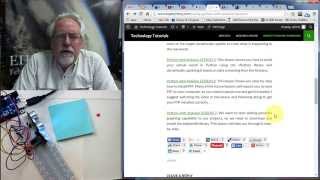
Arduino with Python - Simple Introduction to Matplotlib
Learn to create basic plots and graphs using Matplotlib in Python, including data visualization, customization, and array generation techniques.
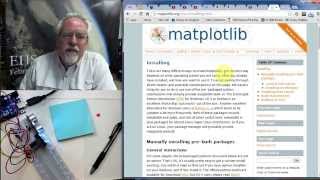
Arduino With Python - Installing Maptplotlib for Graphing and Charting Data
Learn to install and use Matplotlib for powerful data visualization in Python, including arrays, axes, titles, and various plot styles for effective graphing and charting.
Axis IMU - Passing Data From Arduino to Python
Learn to transmit data from Arduino to Python, enabling advanced 3D visualizations and sophisticated data processing for IMU sensors. Explore code implementation and data handling techniques.
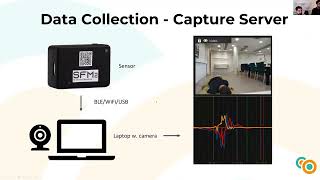
TinyML AutoML Tutorial: Building Production-ready Models with Imagimob AI
Explore Imagimob AI platform for creating production-ready ANN models for time-series data on resource-constrained devices. Learn data visualization, preprocessing, model training, and evaluation techniques.
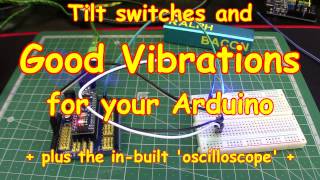
Vibration and Other Switches for Your Arduino
Explore vibration and switch sensors for Arduino projects, including mercury and vibration detectors. Learn to use the Serial Plotter for data visualization and analysis.
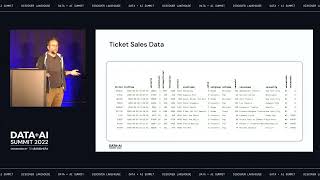
Unsupervised Machine Learning for Scaling Data Quality Monitoring in Databricks
Explore unsupervised ML algorithms for scalable data quality monitoring in Databricks, covering implementation, strengths, weaknesses, and practical applications for effective data management.
Prometheus - Introduction, Deep Dive, and Open Q&A
Comprehensive introduction and deep dive into Prometheus, covering its role in cloud-native metrics monitoring, recent developments, and addressing audience questions.
Day in the Life of a Base Image - The Evolution of Vulnerabilities in Popular Containers
Explore the evolution of vulnerabilities in popular container images, understand security challenges, and learn practical steps to manage and prevent issues in your development process.
Inside Prometheus - An Open Source System That Changed Technology
Explore the journey of Prometheus, from its inception to widespread adoption, and discover how this open-source monitoring system revolutionized the tech industry.