
Looking for Smoke Signals in Financial Statements for Cyber Security
Explore Firetower: a research framework integrating cybersecurity and financial market data to uncover correlations, trends, and predictive indicators for enhanced risk management strategies.
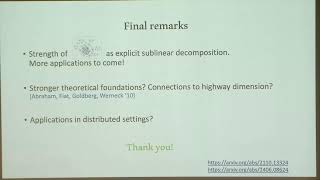
Sublinear Algorithms in Social Networks via Core-Periphery Decomposition
Explore sublinear algorithms for large networks using core-periphery structure and degree distribution. Learn about accelerating tasks like node sampling and shortest path computations.
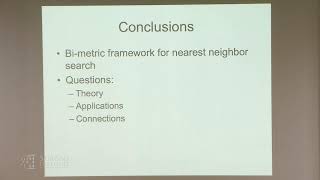
A Bi-metric Framework for Fast Similarity Search
Explore a novel bi-metric framework for efficient nearest neighbor search, combining accurate but costly ground-truth metrics with faster proxy metrics to optimize data structures and query procedures.

Quantitative Research Programs Relating Metacognition and Consciousness
Exploring quantitative approaches to study metacognition and consciousness, focusing on confidence judgments, perceptual awareness, and their neural underpinnings.
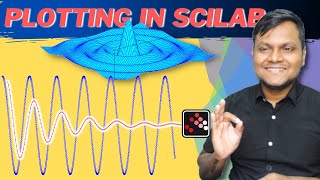
Plotting 2D and 3D Graphs in SCILAB - How to Plot Functions
Learn to create 2D, 3D, polar plots, and animations in Scilab. Master various visualization techniques for numerical computational tasks, enhancing your data representation skills.
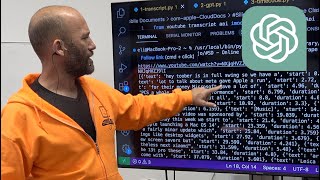
Scraping YouTube with OpenAI API - Python, ChatGPT, and YouTube Transcript API
Learn to scrape YouTube transcripts and leverage OpenAI's API for summarization and topic extraction, enhancing content analysis and accessibility.

Filter Variables with Python - Python Part 15
Learn to filter variables in Python, covering names, ages, phone numbers, and email addresses. Understand the importance of filtering and explore alternatives like RegEx.

Python and Data Storytelling - Avoiding Deaths by PowerPoint
Explore innovative Python tools and data storytelling techniques to create engaging, interactive presentations that captivate audiences and enhance information retention.

Pandas and Dask DataFrame 2.0 - Comparison to Spark, DuckDB and Polars
Explore Dask DataFrame 2.0's improvements, comparing its performance to Spark, DuckDB, and Polars using TPC-H benchmarks. Learn about new features enhancing speed, efficiency, and usability in big data processing.

Building a Data Visualization App for Mobile Phones Using Python
Learn to create mobile data visualization apps using Python tools like NumPy and Matplotlib, without needing specialized mobile development skills.

Python and SQL: Better Together, Powered by DuckDB
Explore DuckDB: A powerful database system integrating seamlessly with Python, offering efficient data processing and easy-to-use SQL capabilities for data scientists and analysts.

Creative Coding with py5 - The Python Version of Processing
Explore py5, a Python framework for creative coding similar to Processing. Learn data visualization, art creation, and educational applications using familiar Python libraries.

A Low Latency Deep Dive of Python with Cython
Explore Python performance optimization using Cython, with microbenchmarks and code analysis to understand bottlenecks and achieve significant speed improvements in data analysis applications.

Using Python to Assess Landslide Risk: A Matter of Life and Death
Exploring Python's role in analyzing river data to predict landslide risk in Southeast Alaska, showcasing its impact on community safety and anxiety reduction during heavy rainfall.

Speed is Not All You Need for Data Processing
Exploring data processing frameworks beyond Pandas, challenging assumptions about speed, and emphasizing practical considerations for choosing tools that best serve data practitioners.

Making Beautiful, Publication Quality Tables in Python - 2024 Update
Explore techniques for creating visually appealing, publication-ready tables in Python, bridging the gap between raw DataFrame output and structured, informative displays.

Times and Dates in Pandas
Explore Pandas' powerful capabilities for handling time-based data, from parsing inputs to performing sophisticated analysis and resampling, enhancing your data manipulation skills.

Ultimate Guide to Web Scraping with Node.js and Python - Puppeteer and Beautiful Soup
Comprehensive guide to web scraping using Node.js with Puppeteer and Python with Beautiful Soup, covering fundamentals, ethical considerations, and practical implementation.

Scalable Data Pipelines for ML - Integrating Argo Workflows and dbt
Discover how to build scalable ML data pipelines by integrating Argo Workflows and dbt. Learn to handle large datasets, optimize infrastructure, and enhance ML project efficiency through robust ELT processes.
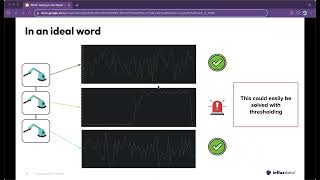
Getting in the Weeds with Time-Series Databases for AI
Explore integrating time-series databases and tools like InfluxDB 3.0 and Bytewax to develop AI-driven applications for effective real-time data capture and management.
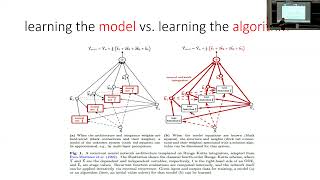
Data and Complex Systems Modeling: Past and Present Perspectives
Explore insights on data-driven modeling of complex systems, blending historical perspectives with current approaches in machine learning and dynamical systems.