Economic and Financial Networks: Models and Analysis - Class 3
Explore economic and financial network models and analysis techniques in this advanced lecture on nonlinear systems in socio-economic complexity.
Time Series Analysis - Class 4
Explore advanced time series analysis techniques in socio-economic complexity, focusing on nonlinear systems applications and cutting-edge research insights.
Economic and Financial Networks: Models and Analysis - Class 4
Explore advanced models and analysis techniques for economic and financial networks in this final session of a comprehensive series.
Materials Informatics - Current Trends and Examples
Explore current trends and examples in Materials Informatics, focusing on data-driven approaches for materials science and engineering advancements.
Time Series Analysis Tools with Applications to Neuroscience - Class 1
Explore time series analysis tools and their applications in neuroscience, focusing on nonlinear dynamics and complex networks in brain function.
Time Series Analysis Tools with Applications to Neuroscience - Class 2
Explore time series analysis tools and their applications in neuroscience, focusing on advanced techniques for understanding complex neural data.
Complex Networks and Applications to Neuroscience - Class 3
Explore complex networks' applications in neuroscience, focusing on advanced concepts and their relevance to brain function and connectivity.
Information Theory Tools for Neuroscience Applications - Class 1 of 3
Explore information theory tools for neuroscience, covering dynamical systems, chaos, complexity measures, and probability distributions in this comprehensive lecture.
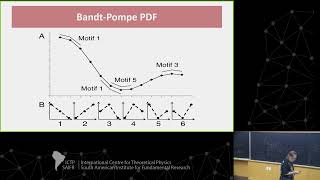
Information Theory Tools for Neuroscience Applications - Class 2
Explore information theory tools for neuroscience, focusing on advanced concepts and practical applications in complex neural systems analysis.
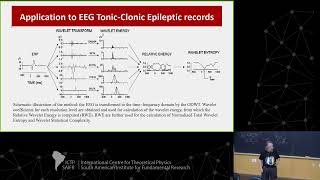
Information Theory Tools for Neuroscience Applications - Class 3
Explore advanced information theory tools and their applications in neuroscience, focusing on complex network analysis and nonlinear dynamics.
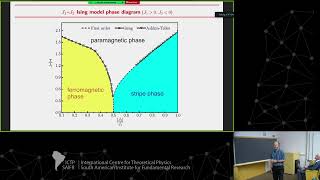
Controlling the Stripe Order in a Diluted Frustrated Magnet
Explore stripe order control in diluted frustrated magnets through random fields, domain formation, and Monte Carlo simulations.
Machine Learning for Quantum Applications - Part 1
Explore machine learning applications in quantum physics, focusing on cutting-edge techniques and their impact on quantum systems research.
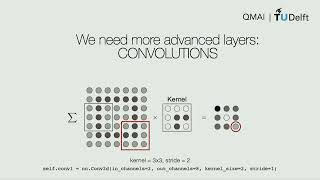
Machine Learning for Quantum Applications - Lecture 2
Explore advanced machine learning techniques for quantum systems, focusing on applications in condensed matter and statistical physics.
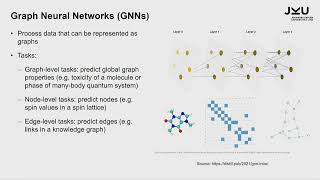
Deep Learning for Quantum Physics and Astronomy
Explore deep learning applications in quantum physics and astronomy, uncovering innovative techniques for data analysis and scientific discovery.
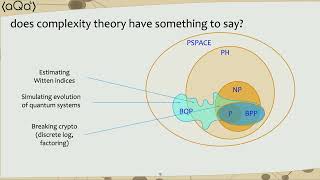
Provable Quantum Learning Advantages for Physics Data
Explore quantum learning advantages for physics data, uncovering provable benefits and applications in scientific research and analysis.
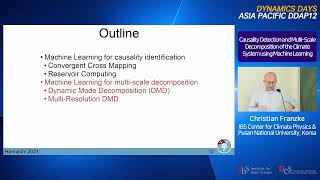
Causality Detection and Multi-Scale Decomposition of the Climate System Using Machine Learning
Explore machine learning approaches for detecting causal relationships and meaningful patterns in climate systems, focusing on Reservoir Computing and Multi-Resolution Dynamic Mode Decomposition techniques.
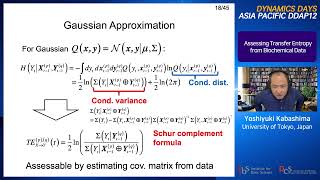
Assessing Transfer Entropy from Biochemical Data
Develop a method to evaluate transfer entropy from biochemical reactions, applying it to the ERBB-RAS-MAPK system for insights into cell fate decisions.
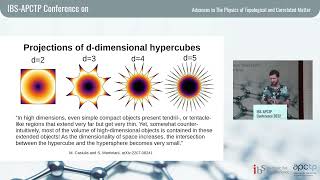
Persistent Homology Analysis of Phase Transitions in Quantum Systems
Explore persistent homology for analyzing phase transitions in complex physical systems. Learn how this topological machine learning method extracts meaningful information from sparse data in condensed matter physics.

Computer Science Graduate School Research and Programming Best Practices
Learn essential research and programming practices for computer science grad school, from version control to experiment organization and data visualization.
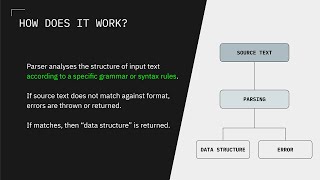
Comparing Libraries to Parse JSON Data in C++
Explore the fastest and simplest C++ libraries for parsing JSON data, comparing their performance and ease of use for efficient data handling in various applications.
Throwing Tools at C++ Ranges - Runtime Performance and Memory Usage Analysis
Explore C++ Ranges with tools for deep analysis, focusing on runtime performance and memory usage. Gain insights through practical examples and tool demonstrations.