Learning Representations for Image-Based Profiling of Perturbations - MPG Primer 2023
Dive into image-based profiling of perturbations, exploring cell painting assays, morphology profiling, and machine learning techniques for predicting compound interactions and cell phenotypes.
Clinical Interpretation of Genes and Variants for Disease Causality - MPG Primer 2022
Dive into clinical interpretation of genes and variants for disease causality with expert Heidi Rehm. Explore standardized approaches, open science, and data sharing in genomic medicine and rare disease gene discovery.
Learning Differentiation Dynamics from Lineage Tracing Datasets
Uncover robust computational approaches for inferring cell dynamics from single-cell transcriptomics integrated with lineage tracing, focusing on the CoSpar method and its applications in hematopoiesis and reprogramming.
Biomedical Science and Machine Learning - A Two-Way Street (2023)
Explore the convergence of biomedical science and machine learning, discovering how these fields synergize to address modern biological questions and drive innovations in data analysis.
Learning to Read and Write Protein Evolution
Explore protein language models and their role in understanding evolutionary rules, predicting mutation effects, and guiding artificial evolution for antibody development and novel protein structures.
The Limits of Virus Discovery and How to Overcome Them - Primer on Sequence Bioinformatics
Explore cutting-edge methods for RNA virus discovery, including ultra-high throughput cloud computing and advanced sequence homology algorithms, to uncover millions of novel viruses by 2030.
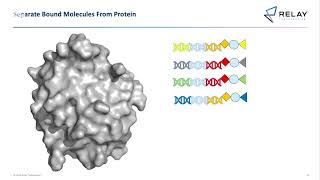
Applying Machine Learning on Drug Discovery Projects
Dive into practical applications of machine learning in drug discovery projects with insights from Relay Therapeutics' Chief Data Officer, Pat Walters.
Machine Learning in Drug Discovery - Lightning Talks
Explore cutting-edge ML applications in drug discovery through lightning talks on antibody optimization, PROTAC design, small molecule binders, and protein-fragment interactions.
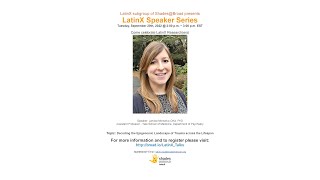
Decoding the Epigenomic Landscape of Trauma across the Lifespan
Explore the epigenomic landscape of trauma across the lifespan with Dr. Janitza Montalvo-Ortiz. Gain insights into computational approaches for studying genomics and epigenomics of neuropsychiatric disorders, focusing on trauma and substance use.
Haplotype Assembly Using Short and Long Reads - 2022
Dive into haplotype assembly techniques using short and long reads. Explore advanced bioinformatics methods for genetic analysis with insights from Ramin Shirali's research at TU Delft.
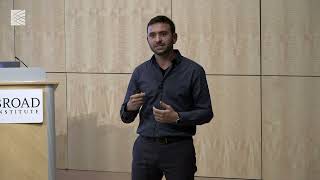
What's Holding Back AI in Drug Discovery?
Explore the challenges impeding AI's progress in drug discovery with insights from DeepCure's CEO Kfir Schreiber, shedding light on potential solutions and future directions.
Temperature Drives Cardiac Function
Uncover how temperature impacts cardiac function, exploring contractility changes during hypothermia and fever, and the potential of electronic health records for data mining.
Artificial Intelligence in Cardiology: Where We Are and Where We Are Going
Explore AI's impact on cardiology, from current applications to future potential. Gain skills to evaluate AI research and understand key terminology.
MIRROR: A Multi-View Reciprocal Recommender System for Online Recruitment - Domain Specific RecSys
Explore a multi-view reciprocal recommender system for online recruitment, enhancing job matching efficiency and candidate-employer satisfaction.
Multimodality Invariant Learning for Multimedia-Based New Item Recommendation - Lecture 6
Explore innovative techniques for multimedia-based new item recommendation using multimodality invariant learning, enhancing recommendation systems' performance and user experience.
Negative Sampling Techniques for Dense Passage Retrieval in a Multilingual Setting - Lecture 4
Explore negative sampling techniques for dense passage retrieval in multilingual settings, enhancing information retrieval across languages.
NFARec: A Negative Feedback-Aware Recommender Model - Recommendation Systems
Explore a novel recommender model that incorporates negative feedback for improved personalized recommendations in complex user-item interaction scenarios.
Achieving Better Beyond-Accuracy Performance in Next Basket Recommendation - Session M3.5
Explore critical insights into beyond-accuracy performance metrics in next basket recommendation systems, challenging current assumptions and methodologies.
Uncertainty-Guided Noisy Correspondence Learning for Efficient Cross-Modal Matching - Multimodal Session 3.3
Explore uncertainty-guided noisy correspondence learning for efficient cross-modal matching in multimodal systems, enhancing data analysis and information retrieval techniques.
DHMAE: A Disentangled Hypergraph Masked Autoencoder for Group Recommendation - Lecture 4
Explore a novel approach to group recommendation using disentangled hypergraph masked autoencoders, enhancing accuracy and efficiency in collaborative filtering systems.
Regulators of Fibroblast Fate and Fibrosis in Cardiac Response to Myocardial Infarction
Uncover the role of fibroblasts in cardiac response to myocardial infarction and explore how transcriptome modifications impact heart recovery and fibrosis in acute and chronic stress.