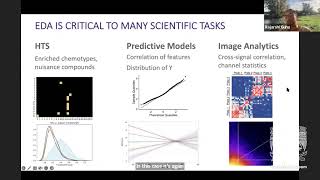
Integration then Interrogation: Exploratory Data Analysis on a Deadline - 2022
Explore strategies for efficient exploratory data analysis, focusing on visualization techniques, predictive modeling, and practical constraints in chemical biology datasets.
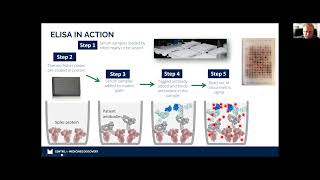
How Molsoft Scarab Helped Fight COVID-19 in the UK
Explore how Molsoft Scarab contributed to COVID-19 research in the UK, presented by Oxford's Dr. Brian Marsden at MolSoft's User Group Meeting.

Machine Learning, AI and Security - Efficient Security with AI
Explore the intersection of machine learning, AI, and security for efficient cybersecurity practices in cloud environments.
5 Ways Cybersecurity Leaders Can Leverage GenAI in 2024
Discover how to leverage GenAI for enhanced cybersecurity, including team augmentation, anomaly detection, and accelerated insights, while maintaining data security and privacy.
Parallelizing Your ETL with Dask on Kubeflow
Leverage Dask's parallelism capabilities on Kubeflow for advanced ETL processing. Learn to use the Dask Operator to optimize resource utilization in interactive Jupyter sessions and pipeline workflows.

End-to-End MLOps for Computer Vision
Explore end-to-end MLOps for Computer Vision, from data gathering to model monitoring. Learn to implement ML pipelines using tools like Amazon SageMaker, Kubernetes, Kubeflow, and MLFlow.
Intro to MLOps: Build, Deploy, and Retrain a Model in Production
Build, deploy, and retrain a production ML model using open-source tools. Learn robust MLOps pipeline techniques for quick model deployment and continuous improvement.
Building an ML Platform from Scratch
Develop a customizable ML platform using open-source tools. Learn to integrate Cookiecutter, DVC, MLFlow, KFServing, and more for a flexible solution tailored to your organization's needs.
Taking MLOps 0-60: How to Version Control, Unify Data and Manage Code Lifecycles
Explore MLOps fundamentals, focusing on version control, data unification, and code lifecycle management for reliable and adaptable machine learning systems.
Trustworthy AI for MLOps
Explore strategies for implementing trustworthy AI in MLOps, addressing operational challenges, and fostering transparency to turn AI into a business advantage.
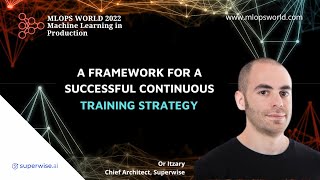
A Framework for a Successful Continuous Training Strategy in MLOps
Develop a robust continuous training strategy for ML models in dynamic data environments, addressing concept drift and optimizing retraining approaches.
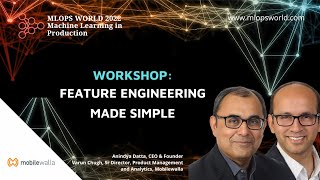
Feature Engineering Made Simple
Master feature engineering techniques to streamline your machine learning workflow. Explore systematic approaches using Anovos, an open-source library for efficient data processing and model building.
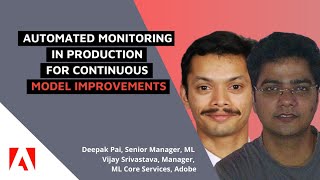
Automated Monitoring in Production for Continuous Model Improvements
Implement automated monitoring for ML models in production. Continuously evaluate performance, visualize metrics, detect degradation, and correlate issues with input data for quick debugging and improvement.
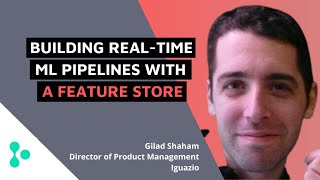
Building Real Time ML Pipelines with a Feature Store
Explore real-time ML pipeline construction using feature stores. Learn to optimize compute efficiency and enhance ML workflows for production environments.

5 Techniques to Increase Adoption Rates via Interpretability
Discover 5 techniques to boost ML project adoption through enhanced model interpretability, fostering trust and bridging gaps between end-users and data scientists.
MLOps for Fairness - Creating Comprehensive Fairness Workflows
Explore MLOps techniques for identifying, measuring, and mitigating bias in ML systems at scale. Learn to create comprehensive fairness workflows using Python tools for industry-level challenges.
MLOps with Dataiku - Considerations for Model Deployment and Monitoring
Explore key MLOps concepts, deployment readiness, and model monitoring strategies. Learn how Dataiku streamlines MLOps processes for efficient AI industrialization.
How to Treat Your Data Platform Like a Product - 5 Key Best Practices
Discover 5 key best practices for treating your data platform as a product, ensuring reliability and scalability for maximum business value.
Accelerating Deployment of AI with MLOps Orchestration
Explore MLOps orchestration to simplify AI deployment using Kubernetes and open-source tools. Learn to build efficient ML pipelines, from data preparation to model monitoring, accelerating business value across various use cases.
Implementing SecMLOps at Every Stage of the ML Pipeline
Implement SecMLOps at every stage of the ML pipeline to address security challenges, comply with data privacy laws, and ensure robust ML system architecture.
Deploying and Managing Machine Learning Models at Scale - A Hands-On Workshop
Deploy and manage ML models at scale. Hands-on workshop covers creation, deployment, monitoring, and management using real-life scenarios. Gain practical experience with Seldon Deploy, explainers, and outlier detection.