AI in Drug Discovery: What Do We Need for Being Successful?
Explore AI's role in drug discovery with Sanofi-Aventis scientist Christoph Grebner, discussing key success factors and industry insights.
Decoding Biology with Data Abundance - Machine Learning in Drug Discovery
Explore data-driven approaches to decode biology and revolutionize drug discovery with insights from Recursion's AI and Digital Sciences expert.
Machine Learning for Discovery of Translatable Targets and Biomarkers - Keynote
Explore machine learning applications in drug discovery with Daphne Koller's keynote on translatable targets and biomarkers at the Broad Institute Symposium.
PROTPARDELLE: An All-Atom Protein Generative Model - Broad Institute Machine Learning in Drug Discovery Symposium 2023
Explore PROTPARDELLE, an all-atom protein generative model, presented by Stanford's Possu Huang at the Broad Institute's Machine Learning in Drug Discovery Symposium.
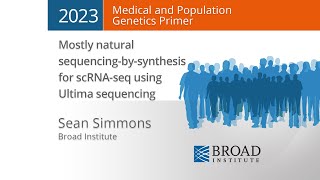
Mostly Natural Sequencing-by-Synthesis for scRNA-seq Using Ultima Sequencing - 2023 MPG Primer
Explore natural sequencing-by-synthesis for scRNA-seq using Ultima sequencing. Learn about experiment design, data quality, analysis techniques, and biological insights in single-cell genomics.
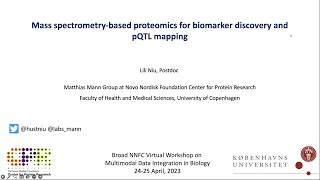
Mass-Spectrometry-Based Proteomics for Biomarker Discovery and pQTL Mapping
Explore mass spectrometry-based proteomics techniques for biomarker discovery and pQTL mapping in this workshop by Lili Niu from the University of Copenhagen.
Ladders to Cures Symposium 2023 - Advances in Rare Disease Research and Therapies
Explore cutting-edge research and developments in rare disease therapies through expert talks on genetics, drug development, biomarkers, and patient-centric approaches.
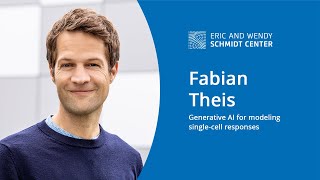
Generative AI for Modeling Single-Cell Responses
Explore generative AI applications in single-cell response modeling, covering data integration, representation learning, and multiomics analysis for biomedical insights.
Contrastive Models for Case-Control Changes in Sequencing - Models, Inference and Algorithms
Explore contrastive latent variable models for analyzing differential expression in sequencing data, enhancing case-control comparisons in transcriptomics with novel approaches to capture condition-specific variations.
GRN-Guided Simulation of Single-Cell RNA-Seq and Primer on Causal GANs
Explore GRouNdGAN for simulating single-cell RNA-seq data and learn about CausalGANs for gene regulatory network analysis and in-silico perturbation experiments.
Meaningful Signals Within Deep Learning Models for Biology - Primer and Meeting
Explore deep learning models in biology, from curating meaningful pre-training data to disentangling experimental noise, enhancing performance in biomedical imaging and high-throughput microscopy experiments.
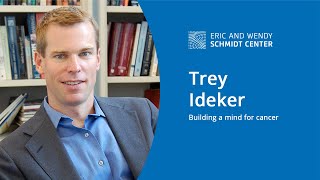
Building a Mind for Cancer
Explore innovative approaches to understanding cancer through AI and machine learning with Trey Ideker's insightful presentation on building a computational mind for cancer research.
Foundation Models for Therapeutic Design and Treatment Prediction
Explore foundation models for therapeutic design and treatment prediction, focusing on novel insights in biomedical research and machine learning advancements.
Harmonization of Deeply Sequenced Genomes - MPG Primer 2023
Explore genome harmonization techniques for deeply sequenced data, covering quality control, structural variants, and PCA analysis using cloud computing.
MPG Primer: suSIEx - Medical and Population Genetics 2023
Explore suSIEx, a cutting-edge method for analyzing genetic data in medical and population genetics. Learn its principles, applications, and potential impact on understanding complex traits and diseases.
Individual-level Tissue-Specific Imputed Transcriptomes in Drug Target Prioritization and Disease Risk Prediction
Explore tissue-specific transcriptomes for drug target prioritization and disease risk prediction. Learn about TWAS, co-localization, polygenic risk scores, and phenome-wide scans in genetics research.
Tissue-Aware Conservation Inference Toolkit (TACIT) for Relating Enhancer Genetic Variation to Complex Phenotypes
Explore TACIT, a toolkit for relating enhancer genetic variation to complex phenotypes. Learn about tissue-aware conservation inference and its applications in medical and population genetics.
Integrating Patient Level Multi-omics Data Using Deep Learning Models
Explore deep learning models for integrating patient-level multi-omics data, focusing on supervised and unsupervised approaches for predicting outcomes and uncovering latent representations in genomics.
Deep Learning for Genomic Discovery
Explore deep learning techniques for genomic discovery, focusing on high-resolution assays, footprint shapes, and bias correction methods in neural networks.
Copy Number Alterations in Slide-seq Data - MPG Primer 2023
Explore spatial copy number alteration detection in Slide-seq-like spatial transcriptomics data. Learn basic genetics principles related to human populations and disease.
Inferring Single Cell Profiles from Histology and Generating Omics Data from Images
Explore cutting-edge machine learning techniques for inferring single-cell profiles from histology images and generating omics data from various imaging modalities, bridging the gap between imaging and genomics.