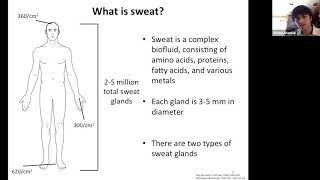
What's in Your Sweat: Health and Disease Insights - Stanford Radiology PHIND Seminar 2020
Explore sweat analysis for health monitoring, focusing on metabolite detection, chronic kidney disease applications, and the potential for non-invasive diagnostics in precision medicine.

Establishing a Health Baseline with Your Physician
Discover the importance of establishing a health baseline with your physician to create a personalized wellness plan and achieve your health goals.

Diagnosing Complex and Mystery Conditions - Stanford's Consultative Medicine Approach
Stanford doctors discuss diagnosing complex medical conditions, highlighting their team-based approach at the Consultative Clinic. They explore diagnostic challenges, cognitive biases, and strategies to help patients with unexplained symptoms pursue accu…
Harnessing Data for Social Impact - Empowering Communities through Visualization and Social Computing
Explore innovative tools combining visualization, HCI, and AI to empower communities in addressing complex societal issues like urban planning and climate change, fostering inclusive decision-making.
How Can Privacy Exist in a Data-Driven World? - Stanford Seminar
Exploring privacy in a data-driven world through transparency tools, user studies, and artistic collaborations to reframe privacy as a societal value.

Top Skills of a Product Manager and How to Develop Them
Seasoned product managers share key skills for success in PM roles, including transitioning careers, startup vs. mature company dynamics, and strategies for skill development and work-life balance.
Deep Generative Models - Maximum Likelihood Learning - Lecture 4
Explore maximum likelihood learning in deep generative models with Stanford's Stefano Ermon. Gain insights into advanced AI techniques and their applications in this comprehensive lecture.
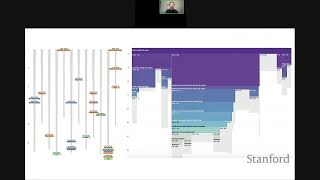
Human-Machine Symbiosis in Data Visualization
Exploring human-machine configurations for data visualization tasks, focusing on interactive analysis of event sequence data and visualization authoring through manipulable semantic components.

Robot Learning in the Era of Large Pretrained Models - Stanford Seminar
Exploring interactive robot learning with large pretrained models, focusing on visual representations, data collection strategies, and leveraging language models for robotics applications.
AI Transforms Health Care - The Future of Medicine and Health Care
Explore AI's transformative role in healthcare, focusing on ethical implementation, data structure, and real-world applications. Learn about Stanford's innovative AI projects and their impact on patient care.
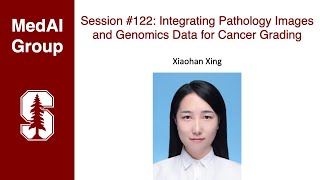
Integrating Pathology Images and Genomics Data for Cancer Grading
Innovative AI methods for integrating pathology images and genomics data to enhance cancer grading accuracy, addressing modality challenges and improving performance when genomics data is missing.

MIT Computational Biology - Genomes, Networks, Evolution, Health - Fall 2018
Comprehensive exploration of computational biology, covering genomics, networks, evolution, and health applications through advanced algorithms, data analysis, and cutting-edge research topics.
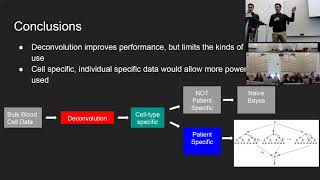
MIT CompBio Course Projects Fall 2019
Explore cutting-edge computational biology projects at MIT, covering topics like epigenetics, protein structures, gene expression, machine learning in cancer research, and more.
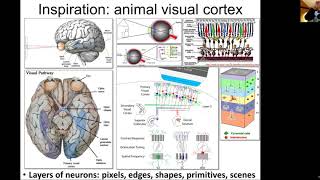
MIT Deep Learning in Life Sciences Spring 2020
Explore deep learning applications in genomics, from neural networks to single-cell analysis. Gain insights into regulatory genomics, epigenomics, and genetics through advanced computational techniques.
Diverse Data and Efficient Algorithms for Robot Learning
Explore diverse data collection and efficient algorithms for robot learning, focusing on large-scale approaches and reinforcement learning for deformable object manipulation.

Mathematics of Big Data and Machine Learning, IAP 2020
Explore artificial intelligence and machine learning with a focus on data handling challenges, covering topics from associative arrays to bio sequence cross-correlation and Kronecker graphs.

Missing Semester IAP 2020
Comprehensive series on essential computing skills, covering shell scripting, vim, data wrangling, version control, debugging, metaprogramming, and security for enhanced productivity.

Risk and Financial Crises - Probability Theory in Financial Markets
Explore probability theory in financial crises context, covering expected value, variance, covariance, and regression analysis. Learn about risk decomposition and the limitations of normal distribution assumptions in finance.

Modeling Mortgage Prepayments and Valuing Mortgages
Explore mortgage prepayment modeling and valuation, including refinancing complexities, forecasting methods, and risk management strategies for investors and banks.
Biomedical Informatics Strategies to Enhance Individualized Predictive Models
Explore strategies for enhancing individualized predictive models in biomedical informatics, focusing on cutting-edge approaches and their potential impact on personalized healthcare.
Method of Detection - The Critical Missing Link in U.S. Cancer Registries
Explore the crucial role of detection methods in U.S. cancer registries, highlighting their impact on patient outcomes and healthcare strategies.